Why Well-Behaved Children and Learning Are Not Always Connected
Discover why well-behaved children and learning are not always linked. A deep, expert perspective for parents and educators by LevelUp Online Education.
BEHAVIOUR MANAGEMENT FOR TEACHERS
LevelUp Online Education
4/7/20264 min read

Introduction: The Quiet Child Myth We Rarely Question
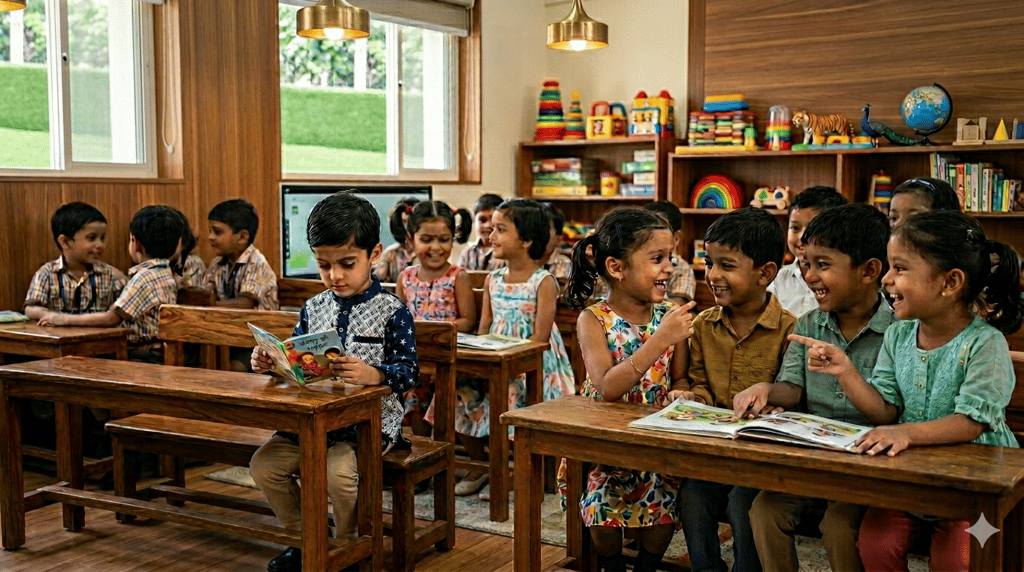
Walk into any classroom, and you’ll likely notice a pattern. The child who sits quietly, follows instructions, and never disrupts the class is often labeled as the “ideal student.” Parents feel proud. Teachers feel relieved.
But here’s a question we rarely ask—
Is that child actually learning?
The assumption that well-behaved children and learning go hand in hand is deeply rooted in traditional education systems. However, in modern Early Childhood Care and Education (ECCE), this belief is not just outdated—it can be misleading.
At LevelUp Online Education, we train educators to look beyond surface-level behavior and understand what real learning actually looks like.
The Difference Between Compliance and Learning
Let’s start with a hard truth:
Obedience is not the same as understanding.
A child may:
Sit quietly
Nod when the teacher speaks
Complete worksheets neatly
But still:
Not grasp the concept
Not question anything
Not engage mentally
This is where the confusion between well-behaved children and learning begins.
True learning is active. It is messy. It involves curiosity, mistakes, and sometimes—even noise.
A silent classroom is not always a sign of effective teaching. Sometimes, it is a sign of suppressed curiosity.
Why “Well-Behaved” Can Be Misleading
1. Fear-Based Behavior, Not Learning
Some children behave well because they are afraid—of being scolded, judged, or corrected.
These children:
Avoid asking questions
Do not express confusion
Stay within “safe boundaries”
They appear disciplined, but internally, they are disengaged.
This creates a dangerous illusion where well-behaved children and learning seem connected, when in reality, learning is not happening at all.
2. Passive Learning vs Active Thinking
A well-behaved child often becomes a passive learner.
They:
Listen, but don’t reflect
Follow, but don’t explore
Complete tasks, but don’t internalize
At LevelUp, we emphasize that real learning requires participation, questioning, and exploration.
If a child never challenges or interacts, their cognitive growth remains limited—even if their behavior is “perfect.”
3. Suppressed Curiosity
Curiosity is the foundation of early learning.
But what happens when a child learns that:
Asking too many questions is “bad behavior”?
Moving around is “disruptive”?
Expressing ideas is “unnecessary”?
They begin to suppress their natural instincts.
This is where the myth of well-behaved children and learning becomes harmful—it discourages the very traits that drive development.
What Real Learning Actually Looks Like
Let’s reframe the picture.
A child who is truly learning may:
Ask endless “why” questions
Make mistakes and try again
Get excited, distracted, and curious
Challenge ideas
Engage in discussions
To a traditional system, this may look like “less disciplined behavior.”
But to an educator trained through LevelUp, this is deep learning in action.
A Classroom Reality Check
In one of our teacher training sessions at LevelUp, a trainee shared an observation:
“There was a child who never spoke in class—always calm and obedient. But during an activity, when encouraged, he couldn’t explain even basic concepts.”
In contrast, another child who was often labeled “talkative”:
Asked questions
Participated actively
Explained ideas confidently
This example clearly shows the gap between well-behaved children and learning.
Behavior alone cannot be used as a measure of understanding.
The Emotional Side of “Good Behavior”
Children are not naturally quiet—they are expressive.
When a child is excessively well-behaved, it’s important to ask:
Are they confident or hesitant?
Are they engaged or withdrawn?
Are they comfortable or cautious?
Sometimes, “good behavior” is a sign of:
Low confidence
Fear of making mistakes
Lack of emotional safety
In such cases, learning becomes secondary to “not getting into trouble.”
What Educators Must Do Differently
At LevelUp Online Education, we train educators to shift their mindset.
1. Redefine What “Good” Looks Like
A good classroom is not silent—it is engaged.
Encourage:
Questions
Discussions
Exploration
Break the myth that well-behaved children and learning are always aligned.
2. Observe, Don’t Assume
Instead of judging behavior, observe:
Participation levels
Curiosity
Concept clarity
A quiet child may need encouragement—not praise for silence.
3. Create Safe Learning Spaces
Children learn best when they feel safe to:
Make mistakes
Speak freely
Express ideas
When fear is removed, behavior becomes natural—and learning becomes deeper.
4. Encourage Active Learning Methods
Use:
Activity-based learning
Storytelling
Hands-on experiences
These methods ensure that children are not just behaving—but actually understanding.
What Parents Need to Understand
Parents often say:
“My child is very well-behaved in class.”
While this is appreciated, it should not be the only measure of success.
Ask deeper questions:
Does my child enjoy learning?
Do they ask questions at home?
Can they explain what they learned?
Because the connection between well-behaved children and learning is not guaranteed.
A child who speaks, questions, and explores is often learning far more than a child who simply follows instructions.
The Risk of Rewarding Silence
When we constantly reward:
Quietness
Obedience
Stillness
We unintentionally:
Discourage curiosity
Reduce confidence
Limit expression
This creates a system where children prioritize “being good” over “learning well.”
And that is a long-term loss.
LevelUp’s Approach: Beyond Behavior, Towards Understanding
At LevelUp Online Education, we focus on developing educators who:
Understand child psychology
Recognize different learning styles
Encourage active participation
Value curiosity over compliance
We train teachers to look beyond the surface and truly understand the relationship between well-behaved children and learning.
Because education is not about control—it is about connection.
Conclusion: Rethinking What We Praise
It’s time to shift our perspective.
Instead of saying:
“What a well-behaved child!”
Let’s start asking:
“What is this child learning?”
“How is this child thinking?”
“Is this child curious and confident?”
Because the goal of education is not to create obedient children.
It is to create thinking, questioning, and confident learners.
And sometimes, the child who talks, questions, and explores…
is the one who is truly learning.
Final Thought
The idea that well-behaved children and learning always go together is comforting—but incomplete.
As educators and parents, we must look deeper.
Northern Hills Supremus, A-306, Opp. Northern Heights, Dahisar East, Mumbai, Maharashtra 400068
LevelUp
admissions@leveluponline.in
© 2026. All rights reserved

levelup_online_education




LevelUp Online Education