Why Repetition in Early Childhood Learning Builds Stronger Brains | LevelUp Online Education
Discover why repetition in early childhood learning is essential for brain development, confidence, and long-term success. Learn how LevelUp Online Education applies it effectively.
EARLY CHILDHOOD CARE EDUCATION
LevelUp Online Education
4/14/20264 min read
Introduction: Rethinking What “Boring” Really Means
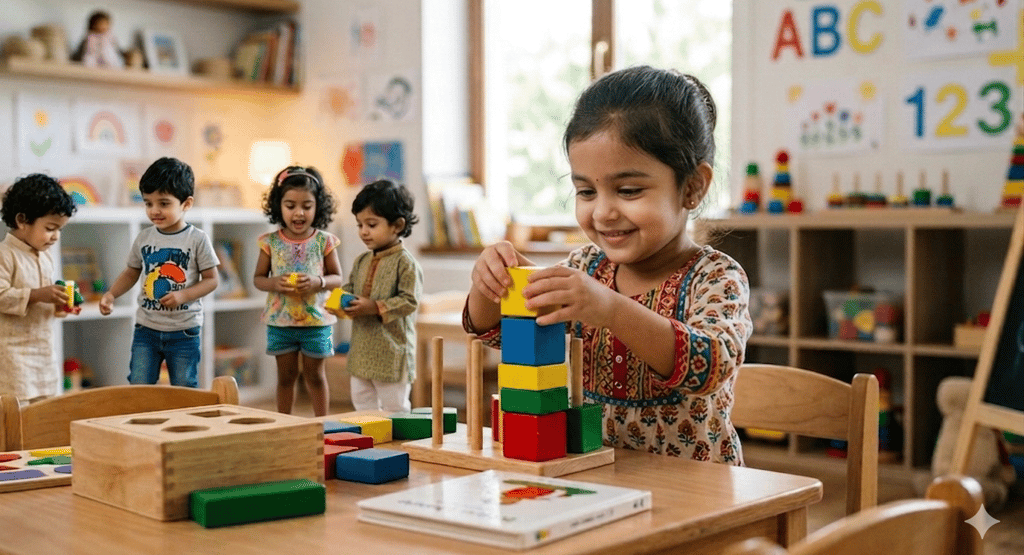
When a child asks to repeat the same story, game, or activity again and again, adults often assume it’s unnecessary—or worse, boring. From an adult perspective, repetition feels like a lack of progress.
But in early childhood, repetition is not a sign of stagnation—it is a sign of growth in progress. What looks repetitive on the outside is actually a deeply active process inside the brain.
This is why repetition in early childhood learning plays such a critical role. It is not about doing the same thing again—it is about strengthening, refining, and mastering what has been introduced.
At LevelUp Online Education, repetition is not avoided—it is intentionally designed to support meaningful and lasting learning.
The Science Behind Repetition: How the Brain Learns
To understand why repetition matters, we need to understand how the brain develops.
Every new experience creates a neural connection. However, a single exposure is not enough to make that connection strong or lasting. The brain requires repeated activation of the same pathway to reinforce it.
Each time a child repeats an activity:
Neural pathways become stronger
Processing becomes faster
Understanding becomes deeper
This is the biological foundation of repetition in early childhood learning. Without repetition, learning remains temporary. With repetition, it becomes permanent.
In simple terms, repetition tells the brain: “This is important—store it, strengthen it, and use it.”
From Exposure to Mastery: Why One-Time Learning Isn’t Enough
There is a common misconception that once a concept is introduced, learning has happened. In reality, exposure is only the first step.
Children need multiple opportunities to:
Practice
Make mistakes
Adjust their understanding
Try again with more confidence
This process is where real learning occurs.
Through repetition in early childhood learning, children move from uncertainty to clarity. What initially feels difficult becomes familiar, and eventually effortless.
For example, when a child repeatedly practices a rhyme, they are not just memorizing words—they are improving pronunciation, rhythm, memory, and confidence simultaneously.
The Emotional Role of Repetition in Learning
Learning is not only cognitive—it is emotional.
Children feel secure when they know what to expect. Repetition creates predictability, which reduces anxiety and builds confidence. When a child repeats an activity they are familiar with, they experience a sense of control and success.
This emotional reinforcement is a key aspect of repetition in early childhood learning. It allows children to approach learning without fear of failure.
At LevelUp, this emotional safety is seen as essential. A confident child is more likely to explore, participate, and take initiative.
Why Children Naturally Seek Repetition
Interestingly, children do not need to be forced into repetition—they naturally gravitate towards it.
They will:
Revisit the same activity multiple times
Ask for the same story repeatedly
Practice the same skill until they feel satisfied
This behavior is not accidental. It reflects how the brain is wired to learn.
Through repetition in early childhood learning, children are actively testing their abilities, refining their skills, and building confidence in what they can do.
Interrupting this process too early can limit the depth of their learning.
Repetition and Independent Learning: Building Confidence Over Time
One of the most powerful outcomes of repetition is independence.
Initially, children rely on guidance. But as they repeat an activity, they begin to internalize the steps. Gradually, they need less support and start taking initiative on their own.
This is where repetition in early childhood learning becomes transformative. It shifts children from being dependent learners to confident, self-driven individuals.
For instance, a child who has repeatedly practiced sorting or matching will eventually apply that skill independently in new contexts. This is not just learning—it is the development of thinking ability.
At LevelUp Online Education, repetition is used strategically to build this independence, ensuring children don’t just learn—but learn how to learn.
When Repetition Fails: The Problem Is Not the Method
If repetition is so powerful, why does it sometimes feel ineffective?
The issue is not repetition itself, but how it is implemented.
Repetition becomes ineffective when it is:
Mechanical and forced
Lacking variation
Disconnected from real understanding
However, when repetition is:
Engaging
Contextual
Slightly varied each time
It becomes a powerful learning tool.
This is why structured repetition in early childhood learning is essential. It must be intentional, not accidental.
The LevelUp Approach: Making Repetition Meaningful
At LevelUp Online Education, repetition is carefully designed to maintain both engagement and effectiveness.
Key strategies include:
1. Learning Through Play
Children revisit concepts through games and activities rather than drills.
2. Multi-Sensory Reinforcement
Concepts are repeated using visual, auditory, and tactile methods for deeper understanding.
3. Gradual Progression
Each repetition introduces a slight variation or challenge, keeping learning dynamic.
4. Real-Life Application
Children apply repeated concepts in everyday situations, making learning meaningful.
Through this approach, repetition in early childhood learning becomes a tool for growth rather than monotony.
The Long-Term Impact: Beyond Early Learning
The benefits of repetition extend far beyond early childhood.
Children who experience meaningful repetition:
Develop stronger focus
Build patience and resilience
Gain confidence in problem-solving
Become independent learners
These are not just academic skills—they are life skills.
This is the lasting impact of repetition in early childhood learning. It builds a strong foundation not just for school, but for lifelong learning.
Conclusion: Repetition Is Growth in Action
Repetition is often misunderstood because adults view it through their own lens of efficiency and speed.
But for children, repetition is not about doing the same thing—it is about doing it better each time.
It strengthens the brain, builds confidence, and creates independence. It transforms exposure into mastery and curiosity into capability.
Northern Hills Supremus, A-306, Opp. Northern Heights, Dahisar East, Mumbai, Maharashtra 400068
LevelUp
admissions@leveluponline.in
© 2026. All rights reserved
levelup_online_education




LevelUp Online Education