Why Practical Exposure Matters More Than Theory in Teaching
Discover why practical learning in teaching is more effective than theory alone. Learn how real-world exposure helps teachers and students build confidence, skills, and meaningful learning experiences.
PRACTICAL EXPERIENCE IN TEACHING
LevelUp Online Education
5/26/20265 min read
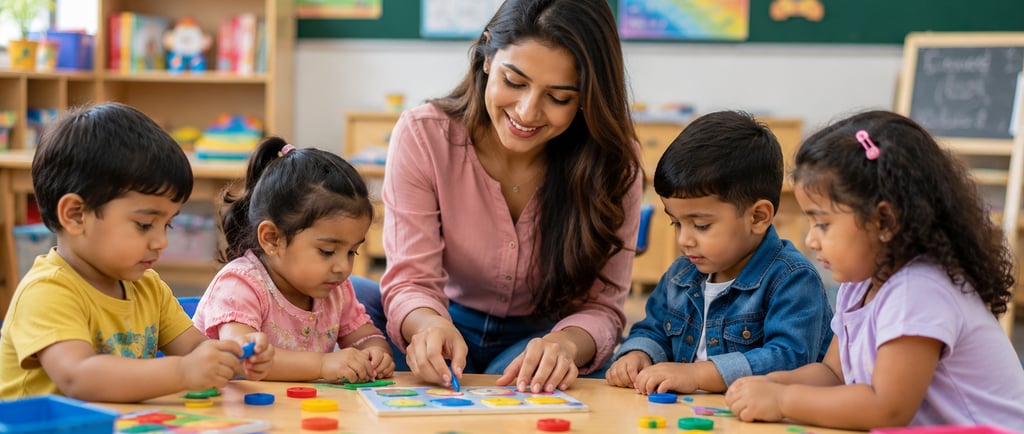
In today’s rapidly changing educational world, one question is becoming more important than ever: Is theoretical knowledge alone enough to prepare a teacher for the classroom? The simple answer is no. While theory provides the foundation, it is practical exposure that transforms a teacher into an effective educator.
Many aspiring teachers spend months studying child psychology, classroom management, lesson planning, and educational philosophies. They may score well in exams and understand concepts deeply on paper. But the real challenge begins when they step into an actual classroom filled with energetic, emotional, curious, and unique children.
This is where practical learning in teaching becomes essential.
Teaching is not a profession that can be mastered only through textbooks. It is a human-centered field where real experiences, observation, communication, patience, and adaptability matter every single day. Both parents and teachers are now realizing that practical exposure creates stronger educators who can truly understand children and guide them effectively.
The Difference Between Knowing and Doing
There is a huge difference between reading about teaching and actually teaching.
For example, a trainee teacher may study classroom management strategies in theory. They may learn about maintaining discipline, engaging students, and handling conflicts. However, when a classroom suddenly becomes noisy, a child starts crying, or two students begin fighting, the real test begins.
At that moment, confidence does not come from memorized definitions. It comes from experience.
This is why practical learning in teaching plays a crucial role in teacher training. It helps aspiring educators apply concepts in real-life situations rather than only understanding them academically.
A person may know how swimming works theoretically, but they cannot truly swim until they enter the water. Teaching works in the same way.
Real Classrooms Teach Lessons That Books Cannot
Every child is different. Some children learn quickly, while others need repeated explanations. Some are expressive, while others are shy. Some may struggle emotionally, socially, or academically.
No textbook can fully prepare a teacher for these real classroom dynamics.
When teachers gain practical exposure through internships, demonstrations, observations, and teaching practice, they begin to understand:
How children behave in different situations
How emotions affect learning
How to communicate with parents effectively
How to handle unexpected classroom challenges
How to make learning engaging and interactive
These are lessons that cannot be learned only through theory.
This is why schools today increasingly prefer educators who have strong practical learning in teaching rather than only theoretical qualifications.
Practical Exposure Builds Confidence in Teachers
One of the biggest struggles new teachers face is lack of confidence.
Many talented aspiring educators feel nervous during their first classroom experience because they have spent more time studying theory than practicing actual teaching.
Practical exposure changes this completely.
When teachers regularly interact with children during training, they slowly become comfortable speaking, explaining concepts, managing groups, and handling classroom situations. Over time, their fear reduces and confidence grows naturally.
Confidence is extremely important because children easily sense a teacher’s energy. A confident teacher creates a secure and positive learning environment, while an anxious teacher may struggle to maintain engagement.
This is another reason why practical learning in teaching is becoming more valuable in modern education systems.
Parents Today Want Teachers Who Understand Children Practically
Parents are no longer looking only for “qualified” teachers. They want educators who can genuinely connect with children emotionally and academically.
A teacher who has practical experience understands that children are not robots who learn the same way. They know how to:
Identify learning difficulties
Encourage shy children
Support emotional development
Use creative teaching methods
Make classrooms enjoyable and safe
Parents trust teachers who can understand their child beyond marks and grades.
For example, if a child struggles with attention span, an experienced teacher may introduce activity-based learning instead of simply scolding the child. Such practical understanding creates better outcomes for students.
This shows how practical learning in teaching directly benefits not only educators but also children and parents.
Teaching Requires Emotional Intelligence
Teaching is deeply emotional work.
Children may come to school carrying stress from home, fear of failure, social anxiety, or behavioral challenges. A teacher must learn how to respond with patience, empathy, and understanding.
These emotional skills cannot develop through theoretical notes alone.
Practical exposure helps teachers observe emotions in real time. They learn how to comfort a crying child, motivate an insecure student, or calm an anxious classroom.
Over time, teachers develop emotional intelligence — one of the most important qualities in education.
In fact, many experienced educators believe that emotional intelligence matters even more than academic knowledge in early childhood and primary education.
This is why practical learning in teaching creates educators who are more compassionate, aware, and effective.
Practical Learning Encourages Creativity
Theory often focuses on “what to teach,” but practical exposure teaches educators “how to teach.”
This difference is extremely important.
A teacher may know phonics rules perfectly, but practical experience helps them discover fun ways to teach phonics through songs, games, storytelling, and activities.
Similarly, a math teacher may learn formulas in theory, but practical teaching helps them explain concepts using real-life examples that children understand easily.
Children learn best when lessons are interactive and engaging. Practical exposure encourages teachers to experiment, innovate, and adapt according to classroom needs.
As a result, practical learning in teaching helps create classrooms where learning feels exciting instead of stressful.
Modern Education Needs Skill-Based Teachers
Today’s education system is changing rapidly. Schools are moving toward experiential learning, activity-based education, and child-centered teaching approaches.
This means teachers must develop practical skills such as:
Communication
Presentation
Observation
Creativity
Problem-solving
Technology integration
Classroom adaptability
Unfortunately, theory alone cannot develop these abilities effectively.
Teachers who receive practical training are better prepared for modern classrooms because they have already experienced real teaching environments during their learning journey.
This is exactly why institutions that emphasize practical learning in teaching often produce stronger and more successful educators.
The Gap Between Degrees and Real Readiness
One major problem in education today is that many teacher training programs focus heavily on theory while giving limited practical exposure.
As a result, some graduates complete certifications but still feel unprepared for actual classrooms.
This creates a gap between qualification and readiness.
A teacher may hold impressive degrees but still struggle with:
Student engagement
Classroom control
Parent communication
Lesson delivery
Time management
Practical exposure bridges this gap.
When aspiring educators teach regularly during training, they become job-ready before entering professional schools. They understand the realities of teaching and develop the confidence needed to succeed.
This is another reason why practical learning in teaching should be a core part of every teacher training program.
Children Learn Better Through Practical Methods Too
Interestingly, the same principle applies to students as well.
Children remember experiences more than lectures.
For example:
A science experiment teaches more effectively than reading a chapter.
Role-play develops communication better than memorization.
Hands-on activities improve understanding faster than passive listening.
Teachers who have practical exposure understand this deeply because they themselves learned through experience.
As a result, they naturally create more interactive and meaningful classrooms for students.
The Future of Teaching Belongs to Practical Educators
The future of education will not belong to teachers who simply deliver textbook information. It will belong to educators who can inspire, connect, guide, and adapt.
Artificial intelligence and technology can provide information instantly. But human connection, emotional understanding, creativity, and real classroom management can only come from experienced educators.
This is why practical exposure matters more than ever before.
Strong teachers are not built only in lecture halls. They are shaped inside real classrooms, through real interactions, real mistakes, real observations, and real learning experiences.
Ultimately, practical learning in teaching creates educators who are confident, compassionate, adaptable, and truly prepared for the realities of modern education.
Conclusion
Theory is important because it provides knowledge and direction. However, teaching is a profession where knowledge alone is not enough.
A great teacher is someone who can apply that knowledge effectively in real-life situations.
Practical exposure helps teachers understand children better, manage classrooms confidently, communicate meaningfully with parents, and create engaging learning environments. It transforms theoretical understanding into real educational impact.
For aspiring educators, parents, and institutions alike, the message is clear: practical experience is not an optional addition to teacher training — it is the heart of effective teaching itself.
Northern Hills Supremus, A-306, Opp. Northern Heights, Dahisar East, Mumbai, Maharashtra 400068
LevelUp
admissions@leveluponline.in
© 2026. All rights reserved


levelup_online_education




LevelUp Online Education