Why Play-Based Learning in ECCE Boosts Brain Development in Children
Discover the science behind play-based learning in ECCE and how it enhances brain development, creativity, and emotional growth in young children
EARLY CHILDHOOD CARE EDUCATION
LevelUp Online Education
5/1/20263 min read
Introduction: Learning That Feels Like Joy, Not Pressure
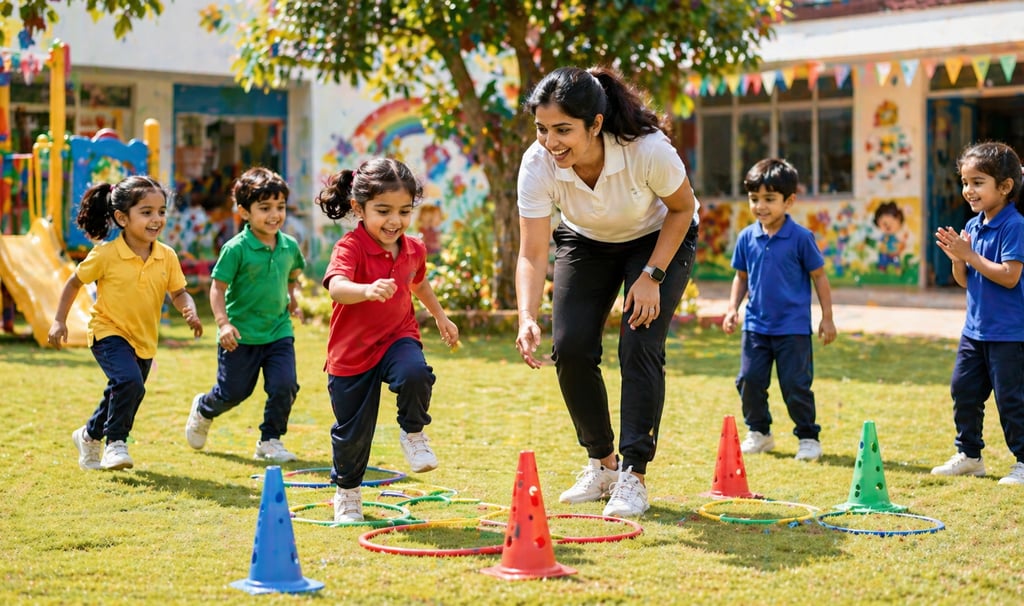
What if the most powerful learning moments in a child’s life don’t come from structured lessons, but from laughter, curiosity, and play?
In early childhood, learning is not meant to feel like instruction—it’s meant to feel like discovery. This is where play-based learning in ECCE becomes not just effective, but essential.
At LevelUp Online Education, we strongly emphasize that play is not a break from learning—it is learning. And science backs this up.
From brain development to emotional intelligence, play builds the foundation for lifelong success. Let’s explore why.
What Is Play-Based Learning in ECCE?
Before diving into the science, it’s important to understand what we mean by play-based learning in ECCE.
It is an approach where children learn through:
Exploration
Imagination
Hands-on experiences
Social interaction
Instead of memorizing facts, children:
Build towers to understand balance
Role-play to develop language
Experiment to learn cause and effect
This method aligns perfectly with how young brains are naturally wired to learn.
The Brain Science: Why Play Is Powerful
1. Play Builds Neural Connections
During early childhood, the brain forms over 1 million neural connections per second. These connections shape how children think, feel, and learn.
When children engage in play-based learning in ECCE, they:
Activate multiple areas of the brain
Strengthen neural pathways
Improve memory and retention
For example:
A simple activity like sorting blocks helps develop:
Logical thinking
Pattern recognition
Fine motor skills
This is not random—it’s deeply neurological.
2. Play Enhances Executive Function Skills
Executive functions are the brain’s control system. They include:
Attention
Problem-solving
Self-control
Through play:
Children learn to wait their turn
Solve conflicts
Follow rules in games
These experiences strengthen the prefrontal cortex—the part of the brain responsible for decision-making.
This is why play-based learning in ECCE is directly linked to better academic and life outcomes.
Emotional Intelligence Begins in Play
3. Play Teaches Emotional Regulation
When children play, they experience:
Winning and losing
Excitement and frustration
Cooperation and conflict
These moments teach them how to:
Manage emotions
Express feelings
Develop empathy
For instance:
A child pretending to be a teacher or parent is actually practicing emotional understanding.
This makes play-based learning in ECCE a powerful tool for emotional development—not just academics.
4. Social Skills Are Built Naturally
In structured classrooms, social interaction can feel forced. But in play:
Communication happens organically
Collaboration becomes natural
Leadership emerges spontaneously
Children learn:
How to negotiate
How to share
How to listen
These are life skills—not just school skills.
The Role of Imagination in Cognitive Growth
5. Pretend Play Boosts Creativity and Language
Imaginative play is where magic happens.
When a child pretends:
A box becomes a spaceship
A stick becomes a wand
A classroom becomes a world
They are developing:
Abstract thinking
Storytelling ability
Vocabulary expansion
Research shows that children engaged in imaginative play have stronger language skills and creativity.
This is a core strength of play-based learning in ECCE.
Learning by Doing: The Power of Active Engagement
6. Hands-On Learning Improves Retention
Children don’t learn best by listening—they learn by doing.
When they:
Touch
Build
Experiment
They retain information better.
For example:
A child learning numbers through counting toys understands concepts far more deeply than memorizing numbers.
This is why play-based learning in ECCE leads to:
Better understanding
Longer retention
Stronger conceptual clarity
Reducing Stress, Increasing Learning
7. Play Lowers Cortisol Levels
Traditional pressure-based learning can increase stress in children.
High stress:
Blocks learning
Reduces focus
Affects emotional well-being
Play, on the other hand:
Releases dopamine (the “feel-good” hormone)
Encourages curiosity
Creates a safe learning environment
When children feel safe and happy, they learn better.
This is another scientific reason why play-based learning in ECCE is so effective.
Real-World Application: What This Looks Like in Classrooms
At LevelUp Online Education, we train educators to implement play meaningfully—not randomly.
Examples of Play-Based Learning Activities:
Role Play Corners: Enhancing language and social skills
Sensory Play: Developing cognitive and motor skills
Story-Based Learning: Improving imagination and comprehension
Game-Based Math Activities: Making abstract concepts tangible
Each activity is designed with intention, backed by research.
Because play is not just fun—it is structured learning in disguise.
The Problem with Ignoring Play
Let’s address an uncomfortable truth.
When play is removed from early education:
Learning becomes rigid
Creativity declines
Anxiety increases
Engagement drops
Children may memorize—but they don’t truly understand.
Ignoring play-based learning in ECCE can lead to:
Lack of curiosity
Poor emotional development
Weak problem-solving skills
And these gaps become harder to fix later.
What Parents and Educators Must Understand
Play is often misunderstood as “wasting time.”
But in reality:
Play is preparation for life
Play is how children process the world
Play is how learning becomes meaningful
As educators and parents, the shift we need is simple: From controlling learning → to facilitating exploration
Why LevelUp Emphasizes Play-Based Learning
At LevelUp Online Education, our approach is rooted in:
Research-backed methodologies
Child-centered teaching practices
Practical, real-world application
We train educators to:
Design purposeful play activities
Observe and guide learning
Balance structure with freedom
Because the goal is not just to teach—but to nurture thinkers, creators, and confident individuals.
Conclusion: Play Is Not Optional—It’s Foundational
The science is clear.
Children don’t just enjoy play—they need it to learn effectively.
From brain development to emotional intelligence, from creativity to confidence—everything begins with play.
play-based learning in ECCE is not a trend. It is the foundation of meaningful early education.
Northern Hills Supremus, A-306, Opp. Northern Heights, Dahisar East, Mumbai, Maharashtra 400068
LevelUp
admissions@leveluponline.in
© 2026. All rights reserved
levelup_online_education




LevelUp Online Education