Why Observation Skills for Teachers Are Essential for Student Success
Discover why observation skills for teachers improve learning, classroom management, student development, and personalized teaching experiences.
LevelUp Online Education
7/21/20265 min read
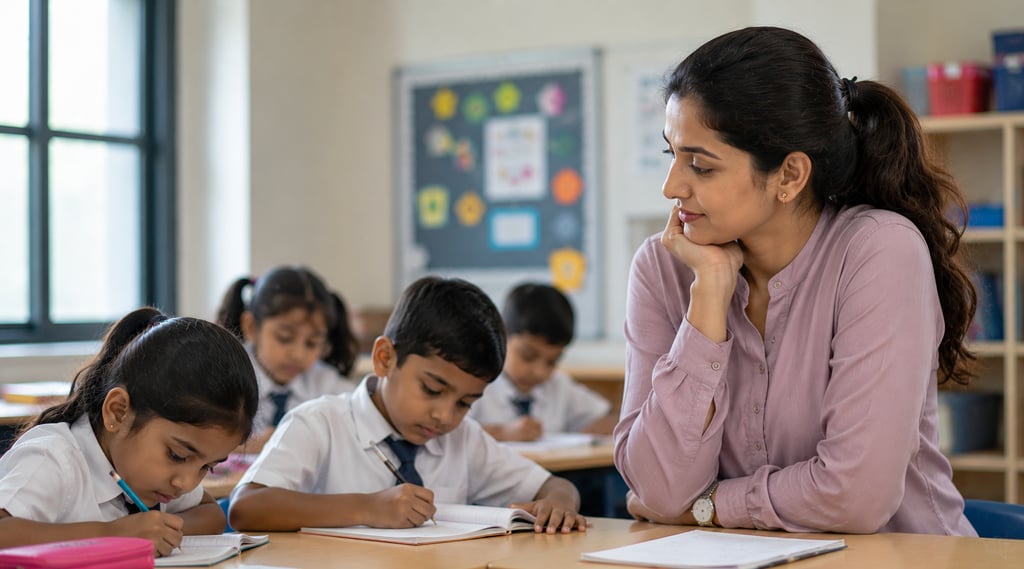
Teaching is often associated with speaking, explaining, and guiding students through lessons. While these are essential responsibilities, one of the most powerful teaching skills happens quietly. It is the ability to observe.
The best educators are not simply great speakers. They are exceptional observers. They notice the child who suddenly becomes quiet, the student who hesitates before answering, the learner who grasps concepts quickly, and the one who needs a different approach. These small observations often reveal more than any test or worksheet ever can.
Developing strong observation skills for teachers allows educators to understand students beyond academic performance. It helps identify learning styles, emotional needs, behavioral patterns, and hidden strengths that may otherwise go unnoticed.
Observation is not about watching students. It is about understanding them.
Observation Is the Foundation of Effective Teaching
Every classroom is filled with students who learn differently.
Some children are confident enough to raise their hands immediately.
Others understand concepts but remain silent.
Some require movement to stay engaged, while others prefer visual learning or storytelling.
Without careful observation, it becomes easy to assume that every learner is progressing in the same way.
Observation helps teachers recognize these differences and adjust their teaching methods accordingly.
The more teachers observe, the better they understand how students learn.
Every Child Communicates Without Words
Children often express their feelings through actions rather than words.
A teacher with strong observation skills notices subtle changes such as:
Reduced participation
Lack of eye contact
Frequent distractions
Changes in body language
Unusual silence
Increased enthusiasm
Frustration during activities
Curiosity about specific topics
These behaviors provide valuable insights into a child's emotional and academic needs.
Sometimes the most important conversations begin with something a teacher quietly notices.
Observation Helps Identify Learning Styles
Every learner processes information differently.
Some students learn best through:
Pictures and diagrams
Stories and discussions
Hands-on activities
Music and rhythm
Reading independently
Group collaboration
Observation allows teachers to identify which teaching methods produce the best learning outcomes for individual students.
Instead of delivering the same lesson to everyone, educators can create more personalized learning experiences.
Personalization begins with paying attention.
Early Identification Leads to Early Support
Many learning challenges first appear through small classroom behaviors.
A student may consistently:
Reverse letters
Avoid reading aloud
Forget instructions
Lose concentration quickly
Struggle with writing tasks
Become anxious during assessments
Careful observation helps teachers recognize these patterns early.
Early identification allows educators to provide timely support, involve parents appropriately, and recommend additional guidance when necessary.
Addressing challenges early often prevents larger learning difficulties later.
Observation Strengthens Classroom Management
Classroom management is not only about responding to behavior.
It is about anticipating it.
Teachers who observe carefully often recognize warning signs before disruptions occur.
They notice:
Students losing focus
Group dynamics changing
Rising frustration
Decreasing participation
Signs of boredom
These observations allow teachers to modify activities, introduce movement, ask engaging questions, or provide encouragement before problems escalate.
Observation helps prevent challenges instead of simply reacting to them.
Understanding Strengths Builds Confidence
Observation is not only useful for identifying struggles.
It also helps teachers discover strengths that standardized assessments may never reveal.
Some students demonstrate:
Leadership abilities
Creativity
Curiosity
Problem-solving skills
Kindness toward classmates
Strong communication
Artistic talent
Exceptional memory
Recognizing these strengths allows teachers to encourage students in meaningful ways.
Children become more confident when someone notices what they do well.
Sometimes a teacher's observation becomes the first step toward discovering a lifelong passion.
Observation Builds Stronger Parent Communication
Parents appreciate teachers who provide meaningful insights rather than general comments.
Instead of saying:
"Your child is doing well."
An observant teacher can share:
Classroom participation
Learning preferences
Social interactions
Areas of improvement
Confidence levels
Progress over time
These observations create more productive conversations during parent meetings.
Parents gain a deeper understanding of their child's development beyond grades.
Thoughtful observations strengthen trust between teachers and families.
Observation Encourages Inclusive Education
Modern classrooms include students from different backgrounds, cultures, languages, and learning abilities.
Observation helps teachers ensure every child feels included.
By carefully observing participation patterns, educators can identify:
Students who rarely speak
Children who prefer individual work
Learners needing additional encouragement
Students who naturally support peers
This understanding helps teachers create balanced classroom experiences where everyone has opportunities to contribute.
Inclusive teaching begins with noticing who may be left behind.
Observation Supports Emotional Well-Being
Academic success cannot be separated from emotional health.
Students experiencing stress, anxiety, or personal challenges often show subtle behavioral changes before expressing their feelings verbally.
Observant teachers may notice:
Withdrawal from friends
Reduced enthusiasm
Mood changes
Difficulty concentrating
Sudden decline in participation
Responding with empathy and support creates an emotionally safe classroom.
Sometimes simply asking, "Is everything okay?" can make a significant difference in a child's day.
Observation allows teachers to recognize these moments.
Reflection Makes Observation More Powerful
Observation becomes even more valuable when combined with reflection.
After every lesson, teachers can ask themselves:
Which students participated actively?
Who needed additional support?
Which activities generated the most engagement?
What confused learners?
Which teaching strategies worked best?
Reflecting on classroom observations helps teachers continuously improve their practice.
Every lesson becomes an opportunity for professional growth.
Observation Improves Lesson Planning
Teachers who observe carefully create more effective lesson plans.
Instead of relying solely on textbooks, they design learning experiences based on what students actually need.
Observation helps teachers determine:
Appropriate pacing
Activity selection
Grouping strategies
Assessment methods
Differentiated instruction
Teaching becomes more responsive because it is based on real classroom experiences rather than assumptions.
Better observation leads to better planning.
Technology Supports Observation, Not Replaces It
Digital tools can help teachers monitor attendance, assessment scores, and participation.
However, technology cannot fully understand emotions, confidence, curiosity, or motivation.
Only teachers can recognize the smile of a student who finally understands a difficult concept.
Only teachers notice the quiet child who suddenly begins participating.
Technology provides data.
Observation provides understanding.
The two work best together.
Observation Is a Skill That Can Be Developed
Some people believe observation is a natural talent.
In reality, it improves through intentional practice.
Teachers can strengthen observation skills by:
Watching without rushing to conclusions
Taking brief classroom notes
Listening carefully during discussions
Reflecting after lessons
Looking for positive behaviors
Observing individual progress over time
Avoiding assumptions
Staying curious about every learner
Small improvements in observation create significant improvements in teaching effectiveness.
Like every professional skill, observation grows stronger with consistent practice.
The Most Memorable Teachers Notice What Others Miss
Students rarely forget teachers who truly understood them.
Many lifelong educational relationships begin because a teacher noticed something others overlooked.
Perhaps it was hidden artistic talent.
Perhaps it was declining confidence.
Perhaps it was exceptional curiosity.
Observation allows teachers to respond not just to academic performance but to the whole child.
This creates meaningful educational experiences that extend far beyond classroom learning.
Final Thoughts
Teaching is often described as the art of explaining, but equally important is the art of observing.
Developing observation skills for teachers empowers educators to understand students more deeply, personalize learning, strengthen classroom management, improve parent communication, and support emotional well-being.
Every classroom is filled with valuable information waiting to be noticed. The child who quietly needs encouragement, the learner ready for greater challenges, the student discovering a hidden strength, or the moment when understanding finally appears on a young face all become visible through careful observation.
The most effective teachers do not simply teach lessons. They pay attention to the learners in front of them.
When educators master the art of observation, they create classrooms where every child feels seen, understood, supported, and inspired to reach their full potential.
Northern Hills Supremus, A-306, Opp. Northern Heights, Dahisar East, Mumbai, Maharashtra 400068
LevelUp
admissions@leveluponline.in
© 2026. All rights reserved


levelup_online_education




LevelUp Online Education