Why More Teaching Does Not Always Mean More Learning | Effective Learning in ECCE
Discover why more teaching does not always lead to better outcomes. Learn how to foster effective learning in ECCE through meaningful, child-centered approaches.
ECCE TEACHERS
LevelUp Online Education
4/16/20264 min read
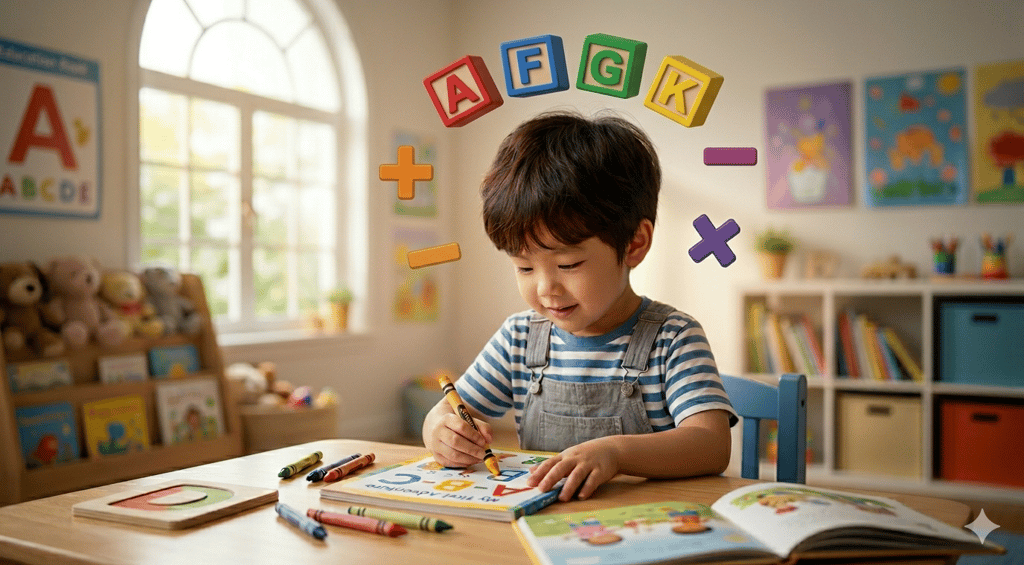
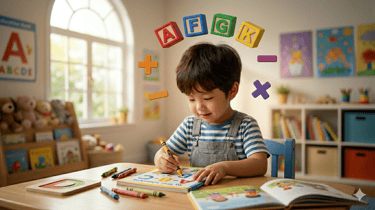
In the world of early childhood education, there is a common assumption: the more we teach, the more children will learn. It sounds logical, even reassuring. After all, structured lessons, detailed instructions, and constant guidance appear to be signs of a “productive” classroom.
But here’s the uncomfortable truth—more teaching does not always mean more learning.
In fact, in many cases, excessive teaching can overwhelm, disengage, and even limit a child’s natural ability to learn. At LevelUp Online Education, where the focus is on nurturing holistic development, it becomes essential to rethink how learning truly happens.
This is where the idea of effective learning in ECCE begins to shift the conversation—from how much we teach to how meaningfully children learn.
The Illusion of “More Teaching = More Learning”
Many educators and parents equate teaching with learning. A classroom filled with instructions, worksheets, and constant corrections may look efficient, but it often creates passive learners.
Children in such environments:
Follow instructions without understanding
Memorize instead of exploring
Depend on adults instead of thinking independently
This approach may produce short-term results, but it rarely supports effective learning in ECCE, where curiosity, creativity, and emotional growth matter just as much as academic skills.
Learning Happens in the Mind, Not in the Lesson Plan
Teaching is what the educator does. Learning is what happens inside the child.
And these two are not always directly proportional.
A child may sit through hours of teaching but retain very little if:
They are not emotionally engaged
The pace does not match their developmental stage
They are not given opportunities to explore and question
True effective learning in ECCE happens when children are active participants, not passive recipients.
This is why a child building a tower with blocks may learn more about balance, problem-solving, and persistence than a child completing a structured worksheet.
The Power of “Less Teaching, More Space”
Sometimes, the most powerful teaching happens when the teacher steps back.
Creating space for children to:
Think independently
Make mistakes
Ask questions
Discover solutions
…leads to deeper and more meaningful learning experiences.
When educators reduce unnecessary instructions, children begin to:
Develop critical thinking
Build confidence
Take ownership of their learning
This shift is at the heart of effective learning in ECCE, where the goal is not just to deliver content, but to develop capable, curious learners.
Over-Teaching Can Lead to Cognitive Overload
Young children have limited cognitive capacity. When too much information is delivered at once, it can overwhelm their brains.
This often results in:
Reduced attention span
Frustration or disengagement
Superficial understanding
Instead of absorbing knowledge, children may simply try to “keep up.”
In contrast, effective learning in ECCE respects a child’s pace. It allows time for processing, reflection, and repetition—because learning is not a race; it is a journey.
The Role of Curiosity in Real Learning
Children are naturally curious. They are born learners.
But excessive teaching can unintentionally suppress this curiosity.
When everything is explained, demonstrated, and directed:
There is no room for wonder
No reason to ask “why?”
No opportunity to explore alternatives
On the other hand, when educators encourage exploration and open-ended questioning, children become active learners.
This is the essence of effective learning in ECCE—not giving all the answers, but inspiring children to seek them.
Quality Over Quantity: A Shift in Mindset
It’s not about how much you teach—it’s about how deeply children understand.
A single meaningful activity can have far greater impact than multiple rushed lessons.
For example:
A storytelling session that sparks imagination
A group activity that builds social skills
A simple experiment that encourages inquiry
These experiences create lasting impressions and contribute to effective learning in ECCE by connecting knowledge with real-life understanding.
The Emotional Side of Learning
Learning is not just cognitive—it is deeply emotional.
Children learn best when they feel:
Safe
Valued
Encouraged
Over-teaching often comes with constant correction and instruction, which can:
Lower confidence
Create fear of making mistakes
Reduce willingness to participate
In contrast, effective learning in ECCE focuses on building a positive emotional environment where children feel free to explore and express themselves.
The Teacher’s Role: From Instructor to Facilitator
One of the most important shifts in modern education is redefining the role of the teacher.
Instead of being the “center of knowledge,” the teacher becomes:
A guide
A facilitator
An observer
This means:
Asking questions instead of giving answers
Encouraging exploration instead of directing every step
Supporting learning instead of controlling it
At LevelUp Online Education, this philosophy is deeply embedded in teacher training programs, emphasizing effective learning in ECCE through child-centered approaches.
Real Learning Is Not Always Visible Immediately
Another reason why more teaching feels necessary is the need for immediate results.
But real learning:
Takes time
Happens gradually
Often becomes visible later
A child who appears “slow” today may be deeply processing information and showing remarkable understanding tomorrow.
Trusting this process is key to fostering effective learning in ECCE, where long-term growth matters more than short-term performance.
Finding the Balance
This doesn’t mean teaching is unnecessary. Teaching is essential—but it must be intentional, thoughtful, and responsive.
The goal is to find a balance between:
Guidance and independence
Structure and flexibility
Instruction and exploration
When this balance is achieved, children not only learn—they thrive.
And that is the true goal of effective learning in ECCE.
Conclusion: Rethinking What It Means to Teach
More teaching does not automatically lead to more learning.
In fact, sometimes, doing less allows children to learn more.
As educators and parents, the focus must shift from:
“How much did I teach today?”
to“How deeply did the child learn today?”
Because learning is not about filling a child’s mind with information—it is about igniting curiosity, building confidence, and nurturing a lifelong love for learning.
Northern Hills Supremus, A-306, Opp. Northern Heights, Dahisar East, Mumbai, Maharashtra 400068
LevelUp
admissions@leveluponline.in
© 2026. All rights reserved
levelup_online_education


LevelUp Online Education