What You Actually Learn vs What You Expect in Teacher Training | Practical Teacher Training Skills
Discover the gap between expectations and reality in teacher training. Learn how practical teacher training skills prepare educators for real classrooms, child psychology, communication, classroom management, and parent interaction.
PRACTICAL TEACHER TRAINING SKILLS
LevelUp Online Education
5/27/20265 min read
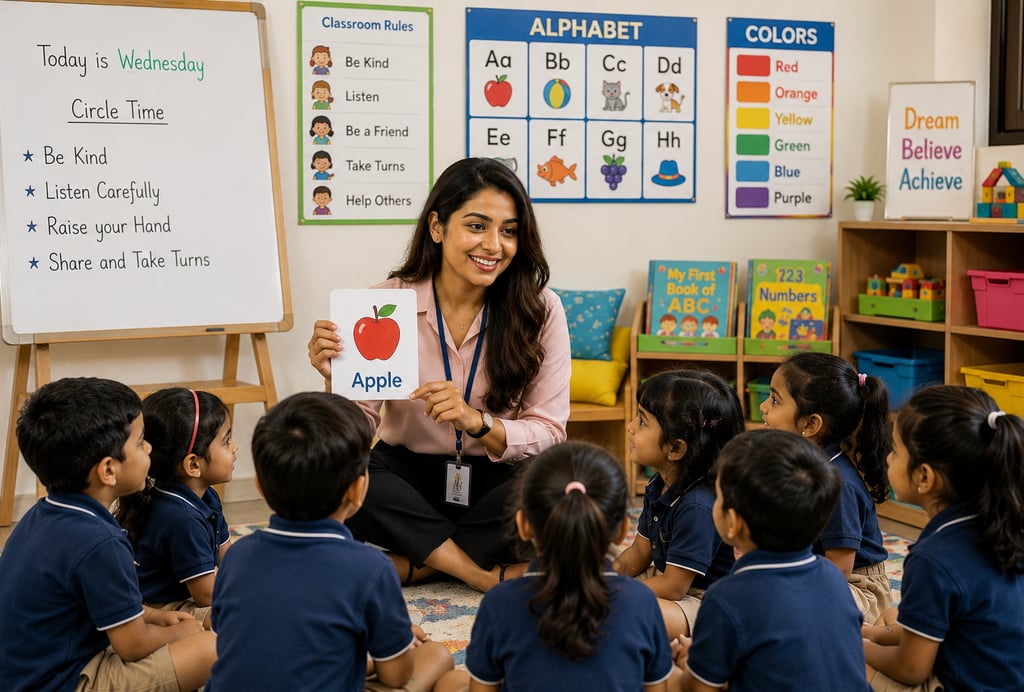
Many aspiring teachers enter teacher training programs with beautiful expectations. They imagine learning colorful activities, storytelling techniques, lesson planning, and creative classroom decoration ideas. Some believe teaching young children is simply about loving kids and knowing rhymes. Others expect a smooth and joyful journey where every child listens, every parent cooperates, and every classroom feels perfect.
But once the training actually begins, reality slowly unfolds.
Teacher training is not just about learning how to teach alphabets or conduct fun activities. It is about understanding children deeply, managing emotions, handling unexpected situations, communicating with parents, building patience, and learning how to become emotionally strong in a demanding profession.
This is where many educators experience the biggest surprise.
The difference between expectations and reality in teacher training is not disappointing—it is eye-opening. And honestly, this is what makes a good teacher truly prepared for the real world.
The Expectation: “Teaching Will Mostly Be About Academics”
Many future educators enter training programs expecting to focus mainly on subjects, lesson plans, and classroom teaching methods.
They imagine learning:
Phonics and grammar
Rhymes and storytelling
Craft activities
Worksheets and assessments
Classroom games
While these are definitely important, they are only one part of teaching.
The Reality: Teaching Is Deeply Emotional Work
One of the biggest things teachers actually learn during training is emotional management.
A child crying for their mother.
A toddler refusing to participate.
A student struggling silently.
A parent comparing their child with others.
A child showing behavioral changes because of problems at home.
These situations are not covered through theory alone.
Teacher training teaches educators how to respond with empathy, patience, and emotional intelligence. This is where practical teacher training skills become more important than textbook knowledge.
Teachers slowly realize that children do not always need perfect teaching methods first—they need emotional safety first.
And that changes everything.
The Expectation: “Children Will Naturally Listen to Teachers”
Many new educators assume classroom control happens automatically once they become teachers.
They expect children to:
Sit quietly
Follow instructions
Complete activities peacefully
Respect rules immediately
But real classrooms are very different.
The Reality: Classroom Management Is a Skill
One of the most valuable things teachers actually learn is classroom management.
Children have different personalities, learning styles, energy levels, and emotional needs. Some are confident. Some are anxious. Some seek attention constantly. Some struggle with focus.
Teacher training helps educators understand:
How to create routines
How to handle tantrums calmly
How to redirect disruptive behavior
How to encourage shy children
How to maintain discipline without fear
This is where practical teacher training skills become essential in everyday teaching life.
A good teacher is not the one with the loudest voice.
A good teacher is the one who can create connection and trust.
The Expectation: “Parents Will Always Support Teachers”
Before entering the profession, many teachers believe parents and educators naturally work together smoothly.
But teacher training reveals another reality.
The Reality: Parent Communication Is One of the Hardest Parts of Teaching
Sometimes parents are anxious.
Sometimes they are overprotective.
Sometimes they expect unrealistic academic performance from young children.
Sometimes they compare schools, teachers, and children constantly.
Teacher training prepares educators to handle these conversations professionally and sensitively.
Teachers learn:
How to discuss developmental concerns
How to give feedback without hurting emotions
How to manage difficult conversations
How to build trust with families
How to work as partners instead of opponents
For parents reading this, this is important to understand:
Teachers are not only teaching children—they are balancing emotional relationships with entire families.
That responsibility is huge.
The Expectation: “Theory Knowledge Will Be Enough”
Many students initially focus heavily on certificates, notes, and theory modules.
They assume academic knowledge alone creates great teachers.
The Reality: Practical Exposure Changes Everything
A teacher may know child psychology in theory, but handling twenty energetic preschoolers at once is completely different.
This is why internships, live teaching practice, observations, and demonstrations matter so much.
Real learning happens when teachers:
Stand in front of actual students
Handle unexpected classroom situations
Adapt lessons instantly
Observe child behavior closely
Learn from mistakes
This is where practical teacher training skills truly develop.
No textbook can fully prepare a teacher for real classroom emotions, real-time decisions, or human connection.
Experience becomes the greatest teacher.
The Expectation: “Teaching Is a Soft and Easy Profession”
Society often underestimates teaching, especially early childhood education.
People sometimes assume preschool teachers simply sing songs, play games, and spend time with children.
But teacher training reveals the truth behind the profession.
The Reality: Teaching Requires Mental Strength
Teachers multitask constantly.
They observe learning delays, monitor emotional well-being, maintain safety, communicate with parents, prepare lessons, manage classroom energy, and support every child differently—all at the same time.
Many educators realize during training that teaching is not emotionally “easy.”
It requires:
Patience
Observation skills
Emotional control
Creativity
Adaptability
Continuous learning
This is why strong practical teacher training skills are necessary for long-term success in education.
Teaching is not just a profession.
It is responsibility, psychology, leadership, and caregiving combined together.
The Expectation: “Every Child Learns the Same Way”
New educators often assume all children understand concepts similarly.
But teacher training introduces them to the reality of neurodiversity and individual learning differences.
The Reality: Every Child Needs a Different Approach
Some children learn visually.
Some learn through movement.
Some need repetition.
Some require emotional reassurance before learning begins.
Teacher training helps educators understand:
Dyslexia
ADHD
Speech delays
Sensory sensitivities
Different learning styles
Social-emotional development
This awareness transforms how teachers see children.
Instead of labeling children as “weak” or “difficult,” educators begin understanding their unique needs.
And honestly, this understanding benefits parents deeply too.
Because when teachers are trained properly, children feel seen instead of judged.
The Expectation: “Teachers Need to Be Perfect”
Many aspiring teachers feel pressure to know everything immediately.
They fear mistakes and assume experienced teachers never struggle.
The Reality: Good Teachers Keep Learning Forever
One of the most powerful lessons teacher training teaches is humility.
Even experienced educators continue learning:
New teaching strategies
Child psychology updates
Technology tools
Inclusive education methods
Communication techniques
Great teachers evolve constantly.
In fact, some of the best educators are those who openly admit:
“I am still learning too.”
This mindset creates growth, confidence, and authenticity in classrooms.
And this is another reason why practical teacher training skills matter more than memorized theory.
Why This Reality Check Is Actually Beautiful
At first, the reality of teacher training may feel overwhelming.
But over time, educators realize something important:
Teacher training is not only shaping teaching skills—it is shaping human beings.
It teaches patience.
It teaches empathy.
It teaches observation.
It teaches resilience.
It teaches communication.
It teaches emotional intelligence.
Most importantly, it teaches teachers how to impact lives beyond academics.
For parents, understanding this journey creates deeper respect for educators.
And for aspiring teachers, understanding reality early helps build stronger confidence instead of unrealistic expectations.
Final Thoughts
The gap between expectation and reality in teacher training is not a negative thing—it is what prepares teachers for the real world.
Yes, teachers learn activities, lesson planning, and educational techniques.
But more importantly, they learn how to understand children, support families, manage emotions, and grow through experience.
That is the true heart of education.
And in today’s world, where children need emotional connection as much as academic guidance, strong practical teacher training skills are no longer optional—they are essential.
Northern Hills Supremus, A-306, Opp. Northern Heights, Dahisar East, Mumbai, Maharashtra 400068
LevelUp
admissions@leveluponline.in
© 2026. All rights reserved


levelup_online_education




LevelUp Online Education