The Power of Positive Language in Early Childhood Classrooms
Discover how positive language in early childhood classrooms builds confidence, strengthens relationships, improves behavior, and creates lifelong learners.
EARLY CHILDHOOD EDUCATORS
LevelUp Online Education
7/24/20265 min read
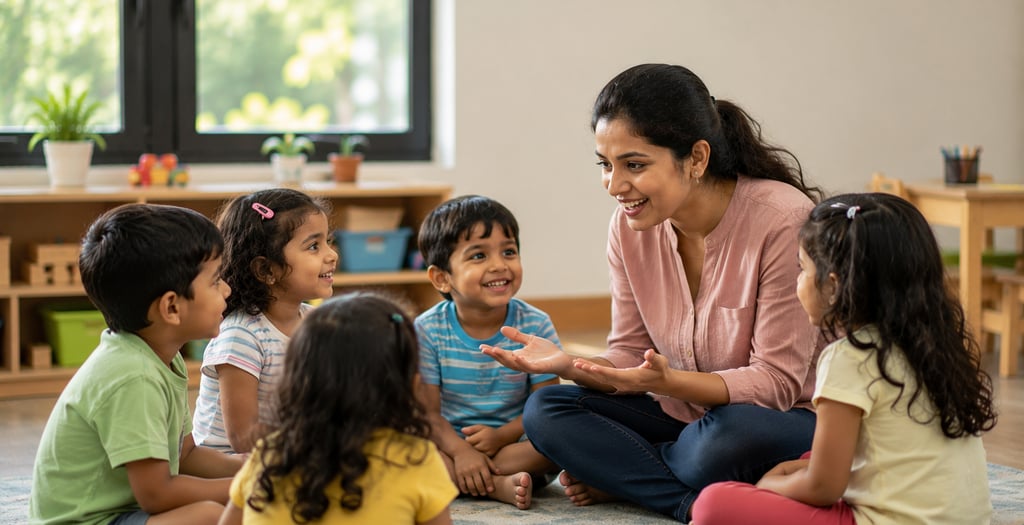
The words teachers choose every day have a lasting impact on young children. In early childhood classrooms, language is more than a tool for instruction. It shapes confidence, influences behavior, strengthens relationships, and creates the emotional environment in which children learn and grow.
Young learners are highly impressionable. They absorb not only what teachers teach but also how teachers communicate. A kind word can encourage a hesitant child to participate. A thoughtful response can help a child overcome frustration. A positive sentence can inspire confidence that lasts far beyond the classroom.
Developing the habit of using positive language in early childhood classrooms is one of the most effective ways teachers can nurture emotionally secure, confident, and curious learners. Positive communication does not mean ignoring mistakes or avoiding discipline. It means guiding children with respect, encouragement, and empathy while helping them learn the right behaviors.
When teachers intentionally choose positive words, they create classrooms where children feel safe, valued, and motivated to learn.
Young Children Learn Through Every Interaction
Early childhood education is built on daily conversations.
Children constantly observe how teachers speak, respond, and react in different situations.
Simple phrases like:
"I know you can do it."
"Let's try again together."
"Thank you for helping your friend."
"You worked very hard."
carry enormous emotional value.
These interactions shape how children think about themselves and their abilities.
Positive language teaches children that learning is a journey, not a competition.
Positive Words Build Confidence
Confidence develops through repeated experiences of encouragement.
Many young children hesitate when learning something new.
They may fear making mistakes or worry about disappointing adults.
Teachers who use encouraging language help children replace fear with confidence.
Instead of saying:
"You are wrong."
Teachers can say:
"Let's explore another way."
"You're getting closer."
"That's a great effort."
"Can you think of another idea?"
These responses encourage children to keep trying rather than giving up.
Over time, confidence grows because children believe effort is valued.
Language Shapes Classroom Behavior
Children respond not only to instructions but also to the way those instructions are delivered.
Positive language focuses on desired behaviors instead of unwanted actions.
For example, instead of saying:
"Don't run."
Teachers can say:
"Let's walk safely."
Instead of:
"Stop shouting."
Teachers can say:
"Let's use our indoor voices."
This simple shift tells children what they should do rather than only what they should avoid.
Clear, positive instructions reduce confusion and encourage cooperation.
Positive Communication Strengthens Relationships
Strong teacher-child relationships begin with respectful communication.
Children are more likely to trust teachers who:
Listen patiently
Speak calmly
Show empathy
Acknowledge feelings
Encourage participation
Celebrate effort
Positive language helps children feel emotionally secure.
When trust develops, children become more willing to ask questions, express ideas, and seek help when needed.
Meaningful learning begins with meaningful relationships.
Mistakes Become Learning Opportunities
Every child makes mistakes.
The way teachers respond determines whether children become discouraged or motivated.
Positive language transforms mistakes into opportunities for growth.
Instead of focusing only on incorrect answers, teachers can ask:
"What were you thinking?"
"Let's solve this together."
"Can you try another way?"
"You're learning something new."
Children begin seeing mistakes as a natural part of learning rather than something to fear.
This mindset encourages resilience and perseverance.
Positive Language Supports Emotional Development
Young children are still learning how to recognize and manage emotions.
Teachers play a significant role in helping children develop emotional awareness.
Positive language includes acknowledging feelings respectfully.
For example:
"I can see you're feeling upset."
"It's okay to feel frustrated."
"Let's take a moment together."
"You handled that very kindly."
These responses help children identify emotions while learning healthy ways to express them.
Emotional development becomes part of everyday classroom conversations.
Encouragement Inspires Independence
Children gradually become independent when teachers encourage problem-solving instead of providing every answer.
Positive language encourages children to think independently.
Teachers can ask:
"What do you think?"
"How could we solve this?"
"Can you show me your idea?"
"What should we try next?"
These questions communicate trust in the child's abilities.
Children become more confident decision-makers because teachers believe in their potential.
Positive Language Encourages Participation
Some children naturally participate in classroom discussions.
Others remain quiet despite understanding the lesson.
Teachers who use encouraging language create opportunities for every child to contribute.
Simple phrases like:
"I'd love to hear your idea."
"Thank you for sharing."
"That's an interesting thought."
"Let's listen to everyone."
help children feel valued.
Participation increases because students know their voices matter.
Parents Notice Positive Communication
Children often repeat classroom conversations at home.
Parents quickly recognize teachers who communicate with kindness and encouragement.
Positive communication also strengthens teacher-parent relationships.
During parent interactions, teachers who focus on growth can say:
"Your child is becoming more confident."
"We've seen wonderful improvement."
"They're trying new challenges."
"We're working together on this skill."
Parents appreciate balanced communication that celebrates progress while addressing areas for development constructively.
Positive Language Creates Inclusive Classrooms
Every classroom includes children with different personalities, learning styles, and backgrounds.
Positive language ensures every child feels respected and included.
Teachers promote inclusion by:
Appreciating different ideas
Encouraging teamwork
Respecting individual differences
Celebrating small achievements
Using welcoming language
Inclusive communication helps children develop empathy while creating a sense of belonging.
Every child deserves to feel accepted.
Teachers Become Powerful Role Models
Children learn by imitation.
When teachers consistently use respectful language, children begin communicating similarly with classmates.
They learn to:
Encourage friends
Apologize sincerely
Resolve conflicts peacefully
Express gratitude
Offer compliments
Positive classroom communication gradually becomes part of children's everyday behavior.
Teachers influence not only academic learning but also lifelong communication habits.
Positive Language Supports Better Learning
Research and classroom experience consistently show that children learn more effectively when they feel emotionally safe.
Positive language creates an environment where children are willing to:
Ask questions
Explore ideas
Solve problems
Participate confidently
Learn from mistakes
When fear decreases, curiosity increases.
Learning becomes enjoyable rather than stressful.
Children remember positive learning experiences long after individual lessons are forgotten.
Small Changes Create Big Impact
Developing positive communication habits does not require dramatic changes.
Simple daily improvements make a significant difference.
Teachers can begin by:
Replacing criticism with guidance
Recognizing effort regularly
Using encouraging phrases
Listening without interrupting
Praising kindness
Offering constructive feedback
Speaking calmly during challenges
These small habits gradually transform classroom culture.
Positive language becomes a natural part of teaching.
The Lasting Influence of Positive Words
Many adults still remember encouraging words spoken by their teachers years ago.
A single sentence can influence confidence, motivation, and self-belief for a lifetime.
Young children may not remember every lesson they learned, but they often remember how their teacher made them feel.
Teachers who consistently choose positive language leave lasting impressions that extend far beyond early childhood education.
Kind words become lifelong memories.
Final Thoughts
Words have extraordinary power, especially during the early years of a child's life. Every conversation, instruction, encouragement, and response contributes to a child's emotional, social, and academic development.
Using positive language in early childhood classrooms helps teachers build confidence, strengthen relationships, improve classroom behavior, encourage resilience, and create learning environments where every child feels safe to explore, participate, and grow.
Positive communication is not about avoiding challenges or pretending everything is perfect. It is about guiding children with empathy, respect, and encouragement while helping them become confident learners and compassionate individuals.
The most meaningful lessons often begin with the simplest words.
Northern Hills Supremus, A-306, Opp. Northern Heights, Dahisar East, Mumbai, Maharashtra 400068
LevelUp
admissions@leveluponline.in
© 2026. All rights reserved


levelup_online_education




LevelUp Online Education