Success in Early Childhood: Are We Measuring the Right Things? | Measuring Success in Early Childhood
Are grades and milestones enough to define success? Discover why measuring success in early childhood requires a broader focus on emotional, social, and developmental growth.
EARLY CHILDHOOD EDUCATORS
LevelUp Online Education
6/10/20264 min read
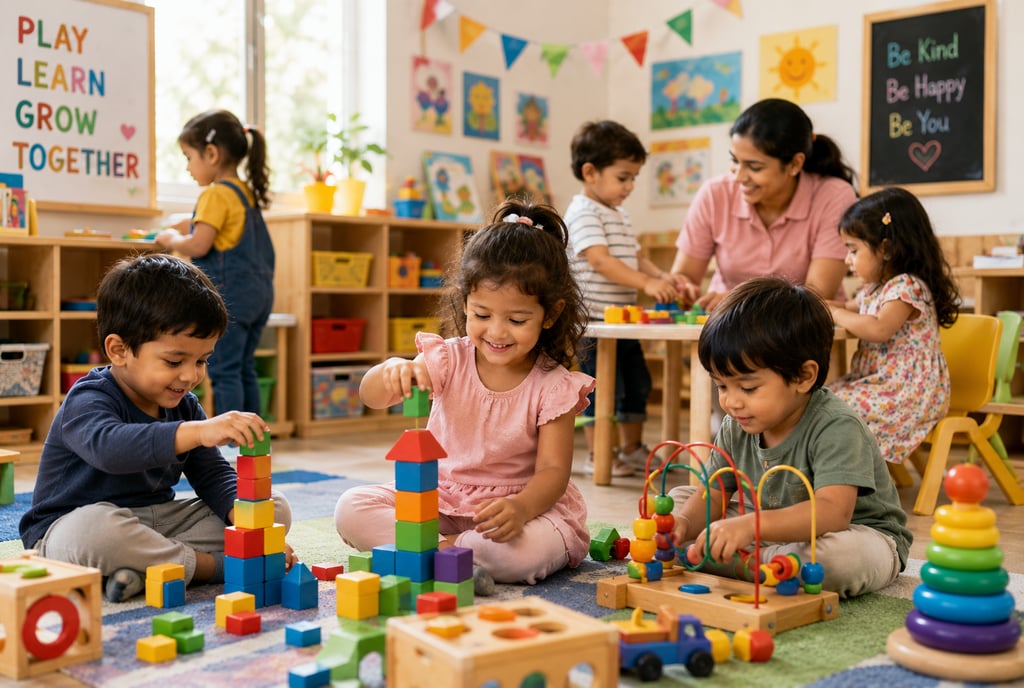
When people talk about success in childhood, the conversation often revolves around numbers. How early did a child start reading? Can they count to 100? Are they performing better than their peers? While academic achievements certainly matter, they are only one small part of a much bigger picture.
In today's competitive world, parents and educators are increasingly concerned about preparing children for future success. However, an important question often gets overlooked: Are we actually measuring the right things?
The early years of a child's life are not just about learning letters, numbers, and facts. They are about building the foundation for lifelong learning, emotional well-being, resilience, creativity, and healthy relationships. When we focus only on academic milestones, we may miss many of the qualities that truly determine success later in life.
This is why the conversation around measuring success in early childhood needs to evolve.
The Traditional Definition of Success
For decades, success in education has been measured using visible and quantifiable outcomes. Parents and teachers often celebrate when children:
Learn to read early
Write neatly
Memorize information quickly
Complete worksheets accurately
Score well in assessments
While these achievements can indicate developmental progress, they do not tell the whole story.
A child who can read fluently at age four may still struggle with emotional regulation. Another child who takes longer to learn letters may possess remarkable empathy, creativity, and problem-solving abilities. Yet society often praises the first child more than the second.
The challenge with traditional assessments is that they tend to focus on what can be easily measured rather than what truly matters in the long run.
Why Early Childhood Success Is More Complex
Children are not machines designed to achieve milestones on a fixed timeline. Each child develops differently based on their experiences, temperament, environment, and opportunities.
When discussing measuring success in early childhood, it is important to recognize that development occurs across multiple domains:
Cognitive development
Social development
Emotional development
Physical development
Language development
Creative development
A child's growth in one area may not always match their growth in another. This variation is completely normal and should be respected rather than viewed as a problem.
Success during the early years should therefore be understood as holistic development rather than academic achievement alone.
The Importance of Emotional Intelligence
One of the most overlooked indicators of future success is emotional intelligence.
Can a child recognize their feelings?
Can they express emotions appropriately?
Can they manage frustration when things do not go their way?
Can they show empathy toward others?
Research consistently shows that emotional skills influence relationships, mental health, academic performance, and workplace success later in life.
A preschooler who learns how to calm themselves after disappointment is developing a skill that may benefit them for decades. Yet emotional regulation rarely appears on report cards.
This highlights why measuring success in early childhood should include emotional competencies alongside academic progress.
Social Skills Matter More Than We Think
Many of life's opportunities are shaped by our ability to interact with others.
In early childhood settings, social development can be observed when children:
Take turns during play
Resolve conflicts peacefully
Share resources
Cooperate in group activities
Build friendships
These interactions may seem simple, but they lay the groundwork for communication, leadership, teamwork, and collaboration in adulthood.
A child who learns how to work effectively with peers gains valuable life skills that cannot be measured through standardized testing.
For educators and parents, social competence should be considered a key part of measuring success in early childhood.
Curiosity: The Engine of Lifelong Learning
Children are naturally curious. They ask endless questions, explore their surroundings, and experiment with new ideas.
Unfortunately, when educational environments become overly focused on performance, curiosity can sometimes be replaced by pressure.
A child who asks "Why?" repeatedly is not being difficult—they are demonstrating a desire to learn.
Instead of measuring how much information children can memorize, we should also observe:
How often they ask questions
Their willingness to explore
Their enthusiasm for discovery
Their ability to think creatively
Curiosity fuels innovation, problem-solving, and lifelong learning. These qualities often contribute more to future success than early academic achievements alone.
Resilience: A Powerful Predictor of Future Success
Life inevitably presents challenges, setbacks, and disappointments.
Children who develop resilience learn how to recover from difficulties rather than giving up when things become hard.
Resilience can be seen when a child:
Tries again after making a mistake
Learns from failure
Accepts constructive feedback
Persists during difficult tasks
These experiences build confidence and adaptability.
Unfortunately, many adults unintentionally protect children from failure, believing it helps them succeed. In reality, overcoming manageable challenges helps children develop the resilience they will need throughout life.
Therefore, resilience should be an essential component of measuring success in early childhood.
Creativity Deserves More Recognition
Creativity is often associated with art, music, and imagination. However, creative thinking extends far beyond these activities.
Creative children:
Find unique solutions to problems
Think independently
Generate original ideas
Adapt to changing situations
In a rapidly evolving world, creativity is becoming one of the most valuable human skills.
Yet traditional educational systems sometimes prioritize correct answers over imaginative thinking.
When evaluating children's growth, educators should ask not only what children know but also how they think. This broader perspective strengthens our approach to measuring success in early childhood.
The Role of Parents and Educators
Parents and educators play a critical role in shaping how children view success.
When adults focus exclusively on achievements, children may begin to believe their worth depends on performance.
Instead, adults can celebrate:
Effort over perfection
Growth over comparison
Progress over competition
Learning over outcomes
Simple statements such as "I noticed how hard you worked" or "You kept trying even when it was difficult" encourage a growth mindset.
These messages teach children that success is not about being better than others but about continually learning and developing.
Rethinking Assessment in Early Childhood
Assessment remains important because it helps educators understand children's developmental needs. However, assessments should provide a complete picture of a child's growth.
Effective early childhood assessment may include:
Observations during play
Portfolio collections
Developmental checklists
Parent feedback
Child reflections
Social and emotional observations
These approaches capture aspects of development that traditional tests often miss.
When educators adopt a broader perspective, measuring success in early childhood becomes more meaningful, accurate, and supportive of children's overall well-being.
Conclusion
Success in early childhood cannot be reduced to reading levels, test scores, or academic milestones alone. While these indicators have value, they represent only one piece of a much larger developmental journey.
Children who are emotionally secure, socially competent, curious, resilient, and creative possess qualities that will support them throughout their lives. These skills influence not only academic achievement but also happiness, relationships, adaptability, and future career success.
As parents and educators, we must broaden our understanding of what success truly means. By embracing a holistic approach to measuring success in early childhood, we can ensure that every child is recognized not only for what they know, but also for who they are becoming.
Northern Hills Supremus, A-306, Opp. Northern Heights, Dahisar East, Mumbai, Maharashtra 400068
LevelUp
admissions@leveluponline.in
© 2026. All rights reserved
levelup_online_education


LevelUp Online Education