School Readiness for Children: A Mother's Biggest Lesson
Discover the biggest lesson one mother wishes she had known about school readiness for children before her child started school. Read her journey.
TEACHER TRAINING CENTRE
LevelUp Online Education
6/30/20265 min read
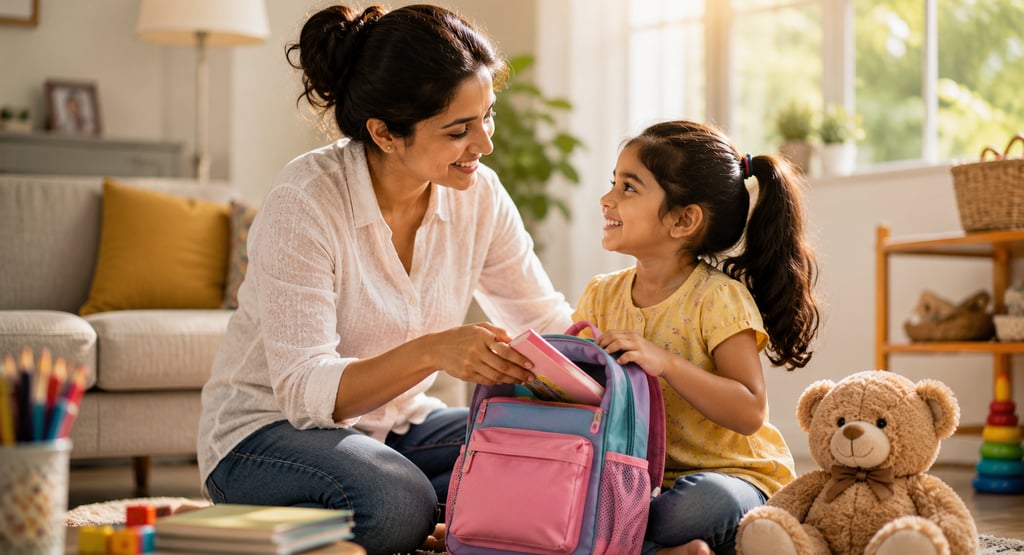
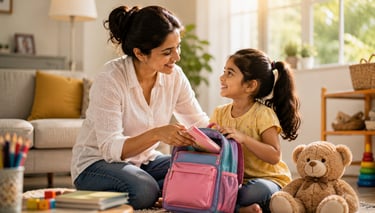
The day I dropped my child off at school for the very first time, I thought I had done everything right.
I had bought the perfect school bag. The lunch box matched the water bottle. Every notebook had neat labels. We had practiced writing letters, counting numbers, and even memorizing colors and shapes.
As I watched my little one walk through the school gate, I felt proud.
But within a few weeks, I realized something that completely changed the way I looked at parenting and education.
I had prepared my child for school.
I had not prepared my child for learning.
That difference changed everything.
If someone had told me this earlier, I would have spent far less time worrying about academics and much more time building the skills that truly matter. Looking back, this became my biggest lesson about school readiness for children, and I hope every parent hears it before their child's first day of school.
The Mistake Most Parents Make
Like many parents, I believed that getting my child "school ready" meant teaching the alphabet before admission.
I downloaded worksheets.
I bought educational toys.
I made my child practice writing every evening.
Whenever relatives visited, I proudly asked my child to recite poems or count numbers.
Everyone applauded.
I thought we were doing great.
But school introduced challenges that no workbook had prepared us for.
My child struggled to wait for a turn.
Sharing toys felt difficult.
Following classroom routines was overwhelming.
Speaking to the teacher confidently took time.
Even small changes in routine caused anxiety.
That's when I realized that education begins long before academics.
The Biggest Lesson I Learned
The most important lesson I wish someone had told me is this:
A child's emotional confidence matters far more than early academic achievement.
Children who feel emotionally secure are naturally curious.
They ask questions.
They explore.
They make mistakes without fear.
They recover from setbacks faster.
Those qualities help them learn throughout life.
Knowing numbers at age four may impress adults.
Feeling confident enough to raise a hand in class helps a child for years.
This became my new understanding of school readiness for children.
Confidence Cannot Be Taught Overnight
Confidence grows through everyday experiences.
I noticed that my child became more independent whenever I allowed small responsibilities at home.
Packing a school bag.
Putting shoes away.
Choosing clothes.
Helping set the dining table.
These tiny activities silently built decision-making skills.
Instead of correcting every mistake, I started allowing room for trial and error.
Sometimes the water bottle stayed empty.
Sometimes socks didn't match.
Instead of immediately fixing everything, I gently guided my child.
Over time, confidence replaced hesitation.
Emotional Skills Are Hidden Superpowers
Schools teach subjects.
Parents build emotional foundations.
One evening my child came home upset because another child didn't want to play.
Earlier, I would have solved the problem immediately.
Instead, we talked.
"What do you think happened?"
"How did it make you feel?"
"What could you try tomorrow?"
That conversation became more valuable than any worksheet.
Children need emotional vocabulary.
They need to understand disappointment, excitement, frustration, and kindness.
When emotions make sense, classrooms become less frightening.
Curiosity Is More Valuable Than Memorization
Before school, I focused on giving answers.
Now I focus on asking questions.
Instead of saying,
"This is a butterfly."
I ask,
"What do you notice about its wings?"
Instead of correcting every wrong answer, I encourage thinking.
Children learn deeply when they discover.
Curiosity creates lifelong learners.
Memorization creates short-term performance.
That shift transformed learning inside our home.
Communication Matters More Than Perfect Pronunciation
I once worried that my child should pronounce every word perfectly before school.
Today I care more about whether my child feels comfortable expressing thoughts.
Can they ask for help?
Can they explain a problem?
Can they tell a teacher they feel unwell?
Can they describe how they feel?
Communication builds confidence.
Children who can express themselves usually adjust to school more comfortably.
Play Is Not a Waste of Time
I used to think free play was simply entertainment.
Now I know it is serious learning.
Building blocks teach problem-solving.
Pretend play develops imagination.
Outdoor games improve teamwork.
Drawing builds creativity.
Storytelling strengthens language.
The best learning often looks like children simply having fun.
This realization completely changed how I planned our evenings.
Independence Is Built One Habit at a Time
Many parents unknowingly do everything for their children because it feels faster.
I did too.
I packed the bag.
I buttoned the shirt.
I cleaned every mess.
Eventually, I realized I was solving problems my child could learn to solve independently.
Now we do many tasks together.
My child pours water.
Keeps books in place.
Folds small clothes.
Organizes crayons.
These simple habits prepare children for classroom routines far better than endless writing practice.
Teachers Need Partners, Not Perfect Students
One of the most meaningful conversations I had was with my child's teacher.
She didn't ask whether my child could read fluently.
She asked,
"Does your child enjoy learning?"
That question stayed with me.
Teachers can teach reading.
They can teach mathematics.
But when children come to school feeling safe, curious, and emotionally supported, teaching becomes easier for everyone.
Parents and teachers are not on opposite teams.
They are partners working toward the same goal.
Every Child Has Their Own Timeline
Perhaps the hardest lesson for me was stopping comparisons.
Another child may read earlier.
Someone else may write beautifully.
Another might speak confidently.
Children grow differently.
Comparing them steals joy from both the parent and the child.
Growth is not a race.
Every child deserves patience.
The goal isn't to create the smartest child in the classroom.
The goal is to nurture a child who enjoys learning.
What I Would Do Differently Today
If I could go back in time before my child's first day of school, I would spend less time buying educational flashcards and more time creating meaningful experiences.
I would read together every night.
I would encourage more conversations.
I would let my child make small decisions.
I would celebrate effort instead of perfection.
I would spend more afternoons playing instead of practicing handwriting.
Most importantly, I would remind myself that childhood is not a competition.
It is a foundation.
Everything we build during these early years shapes how children think about learning for the rest of their lives.
That is the heart of school readiness for children.
Final Thoughts
Looking back, I don't regret teaching my child letters and numbers.
Those skills certainly have their place.
What I regret is believing they were the most important preparation for school.
They weren't.
The greatest gift we can give our children before they enter a classroom is not early academics. It is confidence, emotional security, curiosity, independence, kindness, and the belief that making mistakes is part of learning.
If you're preparing your child for school today, remember this one lesson that changed my perspective forever:
Don't just prepare your child to enter school. Prepare them to love learning.
Because children who love learning don't just succeed in school. They succeed in life.
Northern Hills Supremus, A-306, Opp. Northern Heights, Dahisar East, Mumbai, Maharashtra 400068
LevelUp
admissions@leveluponline.in
© 2026. All rights reserved
levelup_online_education




LevelUp Online Education