Preschool Teacher Training: 5 Essential Skills Every Educator Learns
Discover the top 5 skills educators develop through Preschool Teacher Training. Learn how classroom management, child development, communication, and teaching strategies help teachers succeed in early childhood education.
PRESCHOOL MANAGEMENT
LevelUp Online Education
6/17/20264 min read
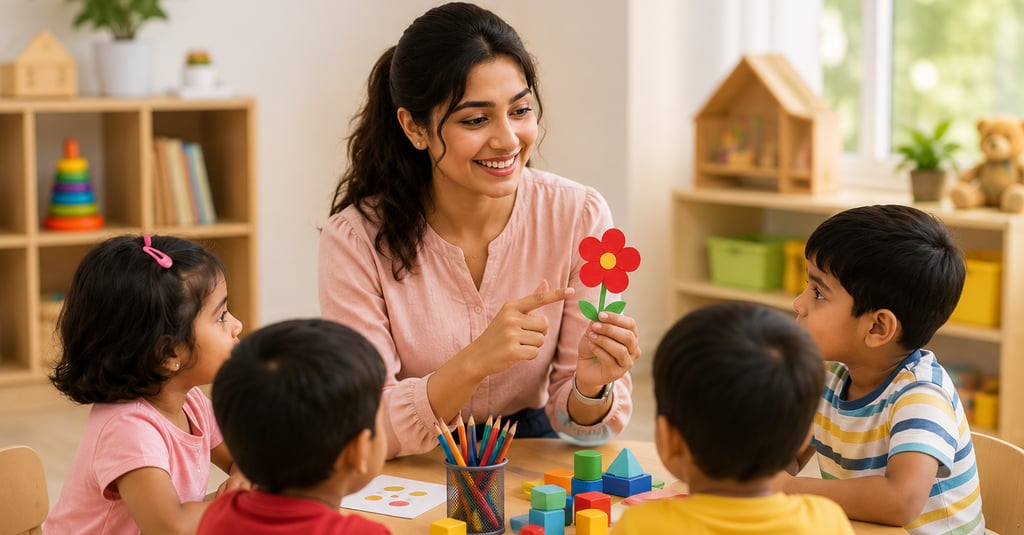
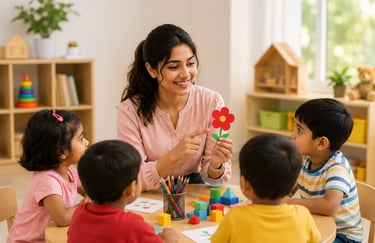
The early years of a child’s life are often called the foundation years, and for good reason. During this stage, children develop the cognitive, emotional, social, and language skills that shape their future learning journey. Behind every confident learner is a skilled educator who understands how young children think, feel, and learn.
This is where Preschool Teacher Training plays a transformative role. It equips educators with the practical knowledge, classroom strategies, and child development insights needed to create meaningful learning experiences. While many people assume teaching preschool is simply about singing songs and supervising playtime, the reality is far more complex. Effective preschool teaching requires specialized skills that can significantly influence a child's growth and development.
In this blog, we explore five essential skills educators develop through Preschool Teacher Training and how these skills help them become more confident, capable, and impactful in the classroom.
1. Understanding Child Development
One of the most valuable lessons educators gain through Preschool Teacher Training is a deep understanding of child development.
Every child develops at their own pace. Some children become verbal communicators early, while others may excel in physical activities or creative expression. Without proper knowledge of developmental milestones, educators may struggle to support children effectively.
Through training, teachers learn:
Cognitive development stages
Language acquisition patterns
Social and emotional growth
Physical and motor skill development
Age-appropriate learning expectations
This understanding helps teachers identify each child's strengths and challenges. Instead of expecting all children to learn in the same way, trained educators adapt their teaching methods to meet individual needs.
For example, if a four-year-old struggles with writing, a trained teacher recognizes that strengthening fine motor skills through activities like clay modeling, threading beads, or painting may be more beneficial than forcing pencil work.
This skill allows educators to create realistic expectations and provide meaningful support that promotes healthy development.
2. Effective Classroom Management
Managing a classroom full of energetic preschoolers is no easy task. Young children are naturally curious, active, and easily distracted. Maintaining a positive learning environment requires more than discipline—it requires strategy.
A major focus of Preschool Teacher Training is helping educators develop effective classroom management techniques.
Teachers learn how to:
Establish classroom routines
Set clear expectations
Manage transitions smoothly
Encourage positive behavior
Reduce conflicts among children
Build respectful teacher-child relationships
Rather than relying on punishment, trained educators learn positive behavior management approaches that encourage self-regulation and cooperation.
For instance, instead of repeatedly telling children to "sit quietly," a trained teacher might use visual schedules, engaging songs, or movement breaks to maintain focus and reduce restlessness.
Strong classroom management creates an environment where children feel secure, engaged, and ready to learn. It also reduces teacher stress and improves overall classroom productivity.
3. Creating Engaging Learning Experiences
Children learn best when they are actively involved in the learning process. Simply delivering information is not enough in early childhood education.
One of the most practical skills developed through Preschool Teacher Training is the ability to design engaging, child-centered learning experiences.
Teachers learn how to:
Plan developmentally appropriate activities
Use play-based learning techniques
Integrate storytelling into lessons
Encourage exploration and discovery
Foster creativity and imagination
Design hands-on learning experiences
A trained educator understands how to transform everyday moments into learning opportunities.
A simple activity like planting seeds can teach children about science, observation, patience, vocabulary, and responsibility. Similarly, building with blocks can strengthen problem-solving skills, spatial awareness, teamwork, and creativity.
Through Preschool Teacher Training, educators learn how to make learning meaningful, interactive, and enjoyable. As a result, children become more curious, motivated, and enthusiastic about learning.
4. Communication and Relationship Building
Preschool educators interact with more than just children. They communicate regularly with parents, caregivers, colleagues, and school administrators.
Strong communication skills are therefore a critical component of Preschool Teacher Training.
Teachers learn how to:
Communicate effectively with young children
Build trust with families
Conduct parent-teacher interactions professionally
Share developmental observations
Address concerns with empathy and confidence
Collaborate with colleagues
Children thrive when educators and families work together. Parents want to understand their child's progress, strengths, and areas of improvement. Trained teachers know how to provide constructive feedback while maintaining positive relationships.
For example, if a child is struggling with social interactions, a trained educator can discuss the concern with parents in a supportive and solution-focused manner rather than creating anxiety or blame.
Strong communication also helps teachers build emotional connections with children. When children feel heard, respected, and valued, they become more confident and willing to participate in learning activities.
This relationship-building skill has a lasting impact on both classroom culture and child development.
5. Observation, Assessment, and Individualized Support
Every child enters the classroom with unique abilities, interests, and learning styles. Effective teaching begins with understanding each child's individual needs.
A crucial outcome of Preschool Teacher Training is learning how to observe, assess, and support children effectively.
Teachers are trained to:
Observe children's behavior and learning patterns
Document developmental progress
Identify learning strengths and challenges
Adapt teaching strategies
Provide individualized learning support
Monitor growth over time
Observation is one of the most powerful tools in early childhood education. It allows educators to understand how children learn and what support they may need.
For instance, a teacher may notice that a child who rarely participates in group discussions expresses ideas confidently through drawing. This observation helps the teacher create opportunities for the child to communicate in ways that match their strengths.
Assessment in preschool is not about exams or grades. It is about understanding children and supporting their growth effectively.
Through Preschool Teacher Training, educators learn how to use observations to make informed teaching decisions that benefit every child in the classroom.
Why These Skills Matter More Than Ever
Today's preschool classrooms are evolving rapidly. Educators are expected to support diverse learners, integrate innovative teaching methods, foster emotional well-being, and prepare children for future academic success.
Without proper preparation, these responsibilities can feel overwhelming.
That is why Preschool Teacher Training has become increasingly important for aspiring and experienced educators alike. It bridges the gap between passion and professional expertise.
The skills gained through training help teachers:
Build confidence in the classroom
Support children's holistic development
Create engaging learning environments
Strengthen relationships with families
Respond effectively to classroom challenges
Advance their professional careers
Most importantly, these skills empower educators to make a meaningful difference in children's lives during their most critical years of development.
Conclusion
Great preschool teachers are not born—they are developed through learning, practice, and professional training. The ability to understand child development, manage classrooms effectively, create engaging learning experiences, communicate with confidence, and provide individualized support are skills that define exceptional educators.
Through Preschool Teacher Training, teachers gain the knowledge and practical expertise needed to nurture young learners with confidence and purpose.
As the demand for high-quality early childhood education continues to grow, investing in Preschool Teacher Training is one of the most valuable steps educators can take toward building a successful and fulfilling teaching career.
Northern Hills Supremus, A-306, Opp. Northern Heights, Dahisar East, Mumbai, Maharashtra 400068
LevelUp
admissions@leveluponline.in
© 2026. All rights reserved
levelup_online_education


LevelUp Online Education