
Phonics and Emotional Learning: Building Reading Confidence in Early Childhood
Discover how phonics and emotional learning work together to build reading confidence, emotional security, and communication skills in young children through real-life learning experiences.
JOLLY PHONICS
LevelUp Online Education
5/14/20265 min read
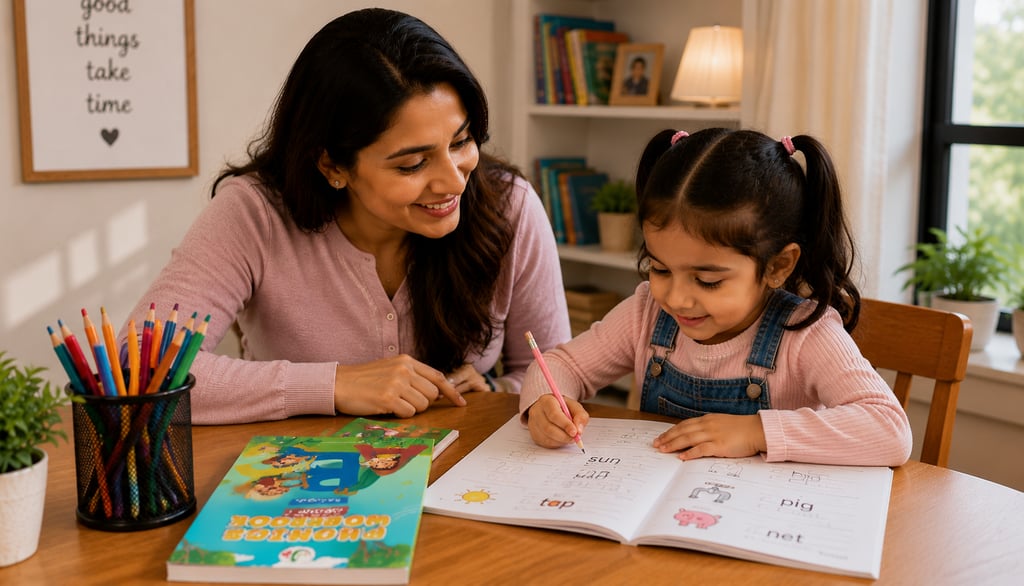

Learning to read is one of the biggest milestones in a child’s early years. But reading is not only about recognizing letters or sounding out words. Behind every hesitant reader is a child experiencing emotions—fear, excitement, curiosity, frustration, or pride. This is why the connection between phonics and emotional learning is becoming increasingly important in early childhood education.
Children do not learn effectively when they feel pressured, embarrassed, or emotionally disconnected. They learn best when they feel safe, encouraged, and emotionally supported. When phonics instruction is combined with emotional learning, reading becomes more than an academic skill—it becomes a confidence-building journey.
In classrooms and homes across the world, educators and parents are realizing that emotional security directly affects literacy development. A child who believes, “I can do this,” is far more likely to engage with reading than a child who fears making mistakes.
Why Emotions Matter in the Reading Process
Imagine a five-year-old child reading aloud in class for the first time. The child pauses, struggles with a word, and notices other children watching. If the environment feels judgmental, the child may immediately associate reading with anxiety.
Now imagine the same situation in a nurturing classroom where the teacher smiles warmly, patiently guides the child through the sounds, and celebrates the effort instead of perfection. The child feels safe enough to try again.
That emotional difference changes the entire learning experience.
Research and classroom observations consistently show that emotions influence memory, concentration, and participation. Young learners absorb language more effectively when they feel emotionally connected to the process. This is where phonics and emotional learning become deeply interconnected.
Phonics teaches children how sounds connect to letters, while emotional learning teaches them resilience, self-confidence, patience, and communication. Together, they create strong and motivated readers.
Reading Confidence Begins With Small Emotional Wins
Many adults underestimate how emotional reading can be for children. A child sounding out a simple three-letter word may seem ordinary to us, but for them, it can feel like climbing a mountain.
Small successes matter.
When a child successfully reads a word like “cat” independently for the first time, they experience achievement. That feeling builds motivation. Over time, repeated positive experiences shape a child’s belief in their own abilities.
Teachers who understand phonics and emotional learning often focus on celebrating progress rather than correcting every mistake immediately. They know that confidence grows through encouragement.
For example:
Praising effort instead of perfection
Allowing children time to think
Using gentle correction methods
Encouraging peer support
Creating pressure-free reading sessions
These strategies help children associate reading with positivity rather than fear.
The Hidden Emotional Struggles Behind Reading Difficulties
Sometimes, children who struggle with reading are not lacking intelligence or capability. They may simply feel emotionally overwhelmed.
A child who repeatedly hears phrases like:
“You are too slow.”
“Why can’t you read properly?”
“Other children can do it.”
may begin to develop reading anxiety. Eventually, they avoid books altogether because reading becomes connected with shame or failure.
This is why emotional sensitivity is essential in literacy instruction.
One preschool teacher shared the story of a child who refused to participate in reading activities for months. Instead of forcing the child to read aloud, the teacher began using playful phonics games, storytelling circles, and emotional encouragement. Gradually, the child started identifying sounds voluntarily. By the end of the year, the same child eagerly participated in reading sessions.
This real-world example shows how phonics and emotional learning can transform not just reading ability, but a child’s entire attitude toward learning.
How Storytelling Strengthens Emotional Learning
Stories naturally help children understand emotions. Through characters and situations, children learn empathy, kindness, courage, and emotional expression.
When phonics activities are connected with storytelling, learning becomes meaningful. Instead of memorizing sounds mechanically, children emotionally connect with language.
For instance:
A story about friendship can teach both phonics sounds and empathy.
A story about overcoming fear can encourage resilience.
A story about helping others can build emotional awareness.
Teachers can ask questions like:
“How do you think the character felt?”
“What would you do in that situation?”
“Have you ever felt nervous like this?”
These discussions build emotional intelligence alongside literacy skills.
In many modern classrooms, phonics and emotional learning are being integrated through interactive reading circles, role play, puppet storytelling, and expressive reading activities.
Creating Emotionally Safe Reading Environments
Children thrive in emotionally secure environments. The atmosphere of a classroom or home significantly affects how confidently children approach reading.
An emotionally safe reading environment includes:
Warm teacher-child interactions
Positive body language
Patient listening
Opportunities for mistakes without embarrassment
Encouragement of individual learning pace
Children should never feel that reading is a performance they must perfect. Instead, it should feel like exploration.
One effective approach used by many educators is “shared reading.” In this method, the teacher and child read together rather than placing the child under pressure to read alone. This reduces anxiety and builds confidence gradually.
Similarly, parents can support phonics and emotional learning at home by:
Reading bedtime stories regularly
Avoiding criticism during mistakes
Appreciating effort
Turning reading into bonding time rather than a task
Children remember emotional experiences more deeply than instructional methods.
The Role of Teachers in Building Reading Confidence
Teachers play a powerful emotional role in literacy development. Their tone, patience, facial expressions, and reactions can either motivate or discourage young learners.
An emotionally aware phonics teacher understands that every child learns differently. Some children become confident readers quickly, while others need extra emotional reassurance.
Effective teachers:
Observe emotional signals
Adapt teaching styles
Encourage participation gently
Use playful learning strategies
Build trust before pushing performance
In classrooms where phonics and emotional learning are prioritized, children are more willing to take risks, ask questions, and attempt unfamiliar words.
Confidence is not built through pressure—it is built through emotional safety and consistent encouragement.
Why Emotional Learning Improves Long-Term Literacy
Children who feel emotionally secure while learning to read often develop a healthier relationship with education overall.
Confident readers are more likely to:
Participate in class discussions
Explore books independently
Express themselves clearly
Develop curiosity
Enjoy lifelong learning
On the other hand, emotionally stressed learners may associate reading with discomfort, causing avoidance behaviors later.
This is why early childhood education must focus not only on academic outcomes but also emotional experiences. The combination of phonics and emotional learning supports both literacy and emotional resilience.
Reading is ultimately about communication, understanding, and connection. Emotional learning helps children engage with language on a deeper human level.
Practical Activities That Combine Phonics and Emotional Learning
Educators and parents can use simple activities to blend emotional learning with phonics instruction:
Emotion Sound Cards
Children identify phonics sounds while discussing emotions shown on picture cards.
Feeling Story Circles
Children read simple phonics-based stories and talk about characters’ feelings.
Confidence Reading Time
Each child reads without interruption or correction to build self-belief.
Kindness Word Hunts
Children search for positive words like “help,” “love,” and “care” during phonics activities.
Mirror Reading
Children practice reading while smiling into a mirror to reduce nervousness and build confidence.
These activities make reading emotionally engaging instead of mechanically repetitive.
Conclusion
Teaching children to read is not only about teaching sounds and letters. It is about helping children believe in themselves. A confident child learns more openly, communicates more freely, and participates more willingly.
When educators combine structured phonics instruction with emotional support, children develop both literacy skills and emotional resilience. The integration of phonics and emotional learning helps children feel safe enough to make mistakes, brave enough to try again, and proud enough to celebrate progress.
In the real world, successful readers are not simply children who can decode words quickly. They are children who feel confident using language to express themselves, connect with others, and explore the world around them.
Northern Hills Supremus, A-306, Opp. Northern Heights, Dahisar East, Mumbai, Maharashtra 400068
LevelUp
admissions@leveluponline.in
© 2026. All rights reserved


levelup_online_education




LevelUp Online Education