Performance-Driven Childhood: Hidden Costs for Young Children
Discover how a performance-driven childhood affects emotional well-being, creativity, confidence, and learning. Learn how parents and educators can create healthier childhood experiences.
ECCE
LevelUp Online Education
6/1/20264 min read
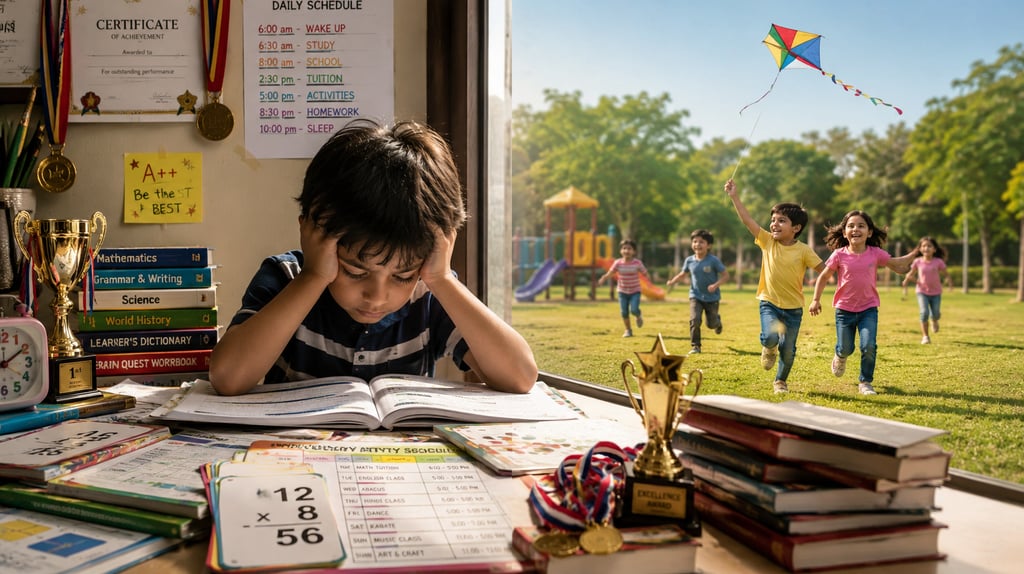

Childhood was once viewed as a time for exploration, curiosity, play, and gradual learning. Today, however, many children are growing up in an environment where achievement is emphasized from an increasingly young age. From academic milestones and extracurricular accomplishments to social media-worthy talents, children are often expected to perform, excel, and stand out.
This growing trend has led to what experts describe as a performance-driven childhood—a childhood where success, productivity, and measurable outcomes often become more important than the learning journey itself.
While encouraging children to develop skills and confidence is important, excessive pressure to perform can have unintended consequences. For parents of young learners and early childhood educators, understanding these hidden costs is essential for creating environments where children can truly thrive.
What Is a Performance-Driven Childhood?
A performance-driven childhood occurs when a child's value becomes closely tied to achievements, results, or external recognition rather than personal growth and well-being.
In such environments, children may experience pressure to:
Achieve academic excellence at an early age
Participate in multiple enrichment activities
Reach developmental milestones quickly
Win competitions and awards
Meet adult-defined standards of success
While these expectations often come from good intentions, they can gradually transform childhood into a constant cycle of evaluation and comparison.
Children begin to believe that being "good enough" depends on what they accomplish rather than who they are.
Why Is This Trend Increasing?
Several modern factors have contributed to the rise of the performance-driven childhood.
1. Increased Academic Competition
Many parents worry about future educational opportunities and career success. As a result, structured learning often begins earlier than ever before.
Preschoolers may already be expected to demonstrate literacy, numeracy, and advanced cognitive skills that previous generations developed later through natural experiences.
2. Social Media Comparisons
Parents are constantly exposed to images and videos of children achieving remarkable things. Whether it is reading early, playing musical instruments, speaking multiple languages, or winning competitions, these comparisons can create unrealistic expectations.
What is often overlooked is that every child develops at a unique pace.
3. Overscheduled Childhoods
Many children move from one activity to another with little downtime. Their days may include school, tuition classes, sports training, dance lessons, and enrichment programs.
Although these activities offer benefits, excessive scheduling can reduce opportunities for free play, imagination, and relaxation.
4. Society's Focus on Achievement
Modern culture frequently celebrates outcomes rather than effort. Success stories often highlight extraordinary accomplishments, unintentionally sending children the message that average experiences are not valuable.
The Hidden Emotional Costs
The effects of a performance-driven childhood are often invisible at first. Children may appear successful on the surface while struggling internally.
Increased Anxiety
When children constantly feel evaluated, they may begin to worry excessively about making mistakes.
Simple challenges can become sources of stress because children fear disappointing parents, teachers, or themselves.
Over time, this anxiety can affect sleep, concentration, and overall emotional well-being.
Fear of Failure
Children need opportunities to fail safely.
Failure teaches resilience, problem-solving, and perseverance. However, in a highly performance-focused environment, mistakes may feel unacceptable.
As a result, some children avoid trying new activities altogether because they fear not succeeding immediately.
Lower Self-Worth
Children who receive praise only for achievements may begin to associate their worth with results.
Instead of thinking:
"I am valuable because I am me."
They may think:
"I am valuable only when I perform well."
This mindset can create long-term challenges in self-esteem and confidence.
The Impact on Creativity and Curiosity
One of the most overlooked consequences of a performance-driven childhood is the effect on creativity.
Young children are naturally curious. They ask questions, experiment, imagine, and explore without worrying about outcomes.
However, when activities become focused solely on measurable results, children may become less willing to take creative risks.
For example:
They may draw only what they think adults will approve.
They may avoid asking unusual questions.
They may prioritize correct answers over creative thinking.
Innovation begins with curiosity. When curiosity is suppressed, meaningful learning can also suffer.
The Loss of Play-Based Learning
Research consistently shows that play is essential for healthy development.
Through play, children learn:
Communication skills
Problem-solving abilities
Emotional regulation
Collaboration
Creativity
Self-confidence
Yet in many cases, play is being replaced by structured instruction designed to produce visible achievements.
The reality is that children do not learn best when they are constantly performing. They learn best when they are actively engaged, emotionally secure, and genuinely interested.
Parents and educators should remember that play is not a distraction from learning—it is one of the most powerful forms of learning.
How Early Educators Can Respond
Early childhood educators play a crucial role in balancing expectations and child development.
Celebrate Effort Instead of Outcomes
Instead of saying:
"You got all the answers right!"
Try saying:
"You worked really hard to solve that problem."
This encourages a growth mindset and helps children value persistence.
Create Safe Spaces for Mistakes
Children should understand that mistakes are part of learning.
When educators model acceptance of errors, children become more willing to explore, experiment, and learn.
Protect Time for Play
Even in academically focused environments, opportunities for unstructured exploration remain essential.
Play allows children to develop skills that cannot always be measured by tests or worksheets.
Observe the Whole Child
Educators should assess not only academic progress but also emotional well-being, social skills, confidence, and creativity.
These qualities are equally important indicators of healthy development.
What Parents Can Do at Home
Parents often want the best for their children, but supporting development does not require constant performance.
Allow Children to Be Children
Not every moment needs to be educational or productive.
Boredom, imagination, outdoor play, and family conversations all contribute to development.
Reduce Comparisons
Every child follows a unique developmental timeline.
Comparing children can create unnecessary pressure and undermine confidence.
Praise Character and Effort
Recognize kindness, curiosity, resilience, empathy, and persistence—not just achievements.
These qualities help children succeed throughout life.
Listen to Emotional Signals
Pay attention to signs of stress, frustration, or anxiety.
Children may not always verbalize their feelings, but changes in behavior often reveal when pressure becomes overwhelming.
Finding a Healthier Balance
The goal is not to eliminate ambition or achievement. Children benefit from challenges, goals, and opportunities to develop their talents.
The key is balance.
A healthy childhood allows room for:
Learning and play
Achievement and rest
Structure and exploration
Success and failure
Growth and joy
When adults focus exclusively on outcomes, childhood can become a race. When adults focus on development, childhood becomes a journey.
Conclusion
The rise of the performance-driven childhood reflects society's growing emphasis on achievement and measurable success. While encouraging children to reach their potential is important, excessive pressure can come at a significant cost.
Parents and early educators have an opportunity to redefine success—not as perfect performance, but as healthy development, emotional well-being, curiosity, creativity, and lifelong learning.
Children deserve more than impressive achievements. They deserve a childhood that allows them to explore, wonder, make mistakes, build relationships, and discover who they are.
Northern Hills Supremus, A-306, Opp. Northern Heights, Dahisar East, Mumbai, Maharashtra 400068
LevelUp
admissions@leveluponline.in
© 2026. All rights reserved


levelup_online_education




LevelUp Online Education