
Invisible Work of Preschool Teachers: What Training Doesn’t Show
Explore the invisible work of preschool teachers through real classroom case studies. A deep, insightful guide for parents and educators to understand what truly shapes early learning.
PRESCHOOL TEACHERS
LevelUp Online Education
4/6/20264 min read
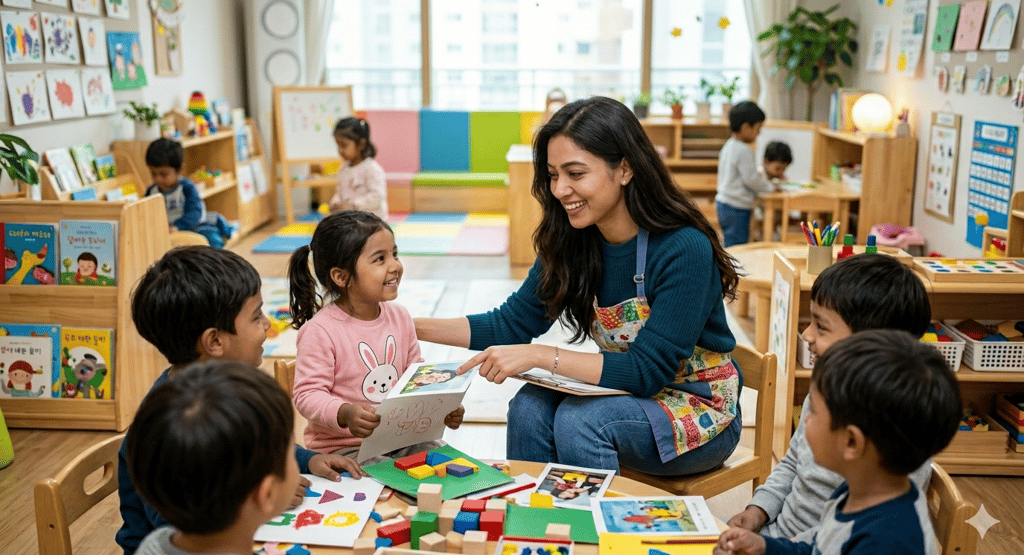

When we think of preschool teachers, we often imagine cheerful classrooms filled with rhymes, colors, and playful learning. But beneath this vibrant surface lies something far deeper — the invisible work of preschool teachers that no formal training fully prepares them for.
This is not just about teaching. It is about observing, understanding, adapting, and emotionally supporting young children in ways that often go unnoticed.
Let’s look beyond the visible — into the real work that shapes a child’s early years.
What Is the “Invisible Work” in Preschool Teaching?
The invisible work of preschool teachers includes everything that doesn’t show up in lesson plans but defines the learning experience.
It is the silent effort behind:
Emotional support
Behavioral understanding
Individual attention
Creating a safe and nurturing environment
These are not additional responsibilities — they are the foundation of meaningful early education.
1. Emotional Labour: Holding Space for Tiny Emotions
A preschool classroom is full of emotions — fear, excitement, frustration, joy — often all at once.
Teachers constantly support children who are still learning how to express themselves. A child crying at drop-off or refusing to participate is not being “difficult” — they are communicating something deeper.
Case Study: When Comfort Matters More Than Curriculum
At LevelUp Online Education, a trainee teacher faced a situation where a 3-year-old cried every day during drop-off.
Instead of forcing engagement, she changed her approach:
Created a consistent goodbye ritual
Allowed the child to hold a comfort object
Stayed physically present for reassurance
Within two weeks, the child began settling in and participating.
This is the invisible work of preschool teachers — responding to emotions before expecting learning.
2. Observation: The Skill That Works Quietly
Preschool teachers are constantly observing — not to judge, but to understand.
They notice:
Who hesitates to join group activities
Who struggles silently
Who needs encouragement
Case Study: The Quiet Child Who Was Almost Missed
A LevelUp-certified educator noticed a child who was always quiet and well-behaved.
But through careful observation, she realized:
The child avoided interaction
Rarely expressed themselves
Showed low confidence
She introduced small group interactions and gentle encouragement.
Over time, the child began participating more actively.
This reflects the invisible work of preschool teachers — recognizing needs that are not immediately visible.
3. Personalization: Teaching Beyond One-Size-Fits-All
Every child learns differently. Yet, teachers manage an entire classroom.
They constantly adapt:
Simplifying for one child
Extending learning for another
Changing methods in real time
This flexibility is a core part of the invisible work of preschool teachers, where teaching is not fixed — it is responsive.
4. Behaviour Management: Understanding, Not Controlling
In early childhood, behavior is communication.
Instead of labeling children, skilled teachers ask:
What is the child trying to express?
Is there a need behind this reaction?
Case Study: “Difficult” or Just Misunderstood?
During her internship, a LevelUp educator worked with a child often labeled as “aggressive.”
Instead of punishment, she:
Observed patterns and triggers
Noticed communication difficulties
Introduced visual cues and emotion cards
Gradually, the child began expressing needs verbally instead of reacting physically.
This is the invisible work of preschool teachers — decoding behavior with empathy.
5. Building Trust: The Real Beginning of Learning
Before a child learns anything, they need to feel safe.
Trust is built through:
Consistency
Gentle communication
Emotional security
The invisible work of preschool teachers lies in creating this safe space where children feel confident to explore and learn.
6. Managing Expectations: Bridging Parents and Reality
Parents often look for visible results — worksheets, writing, quick progress.
But early learning is not always measurable on paper.
Teachers quietly balance expectations while protecting the child’s natural pace of development.
This balancing act is another dimension of the invisible work of preschool teachers, requiring both sensitivity and communication.
7. Self-Regulation: The Teacher’s Inner Strength
Preschool teachers must remain calm, patient, and present — even in chaotic situations.
They continuously:
Manage their own emotions
Respond thoughtfully instead of reacting
Maintain a positive environment
This inner discipline is rarely taught, yet it defines classroom quality.
8. Learning Beyond Worksheets: What Parents Don’t See
Not all learning comes home in school bags.
Real progress looks like:
A child learning to share
Expressing feelings instead of crying
Trying again after failure
Case Study: Learning That Doesn’t Come on Paper
A parent once questioned why their child wasn’t bringing enough written work home.
The teacher explained:
The child had learned to communicate needs clearly
Was participating in group activities
Had developed better emotional control
Over time, the parent noticed these changes at home.
This is the invisible work of preschool teachers — building life skills, not just academic output.
Why This Matters for Parents
When parents understand the invisible work of preschool teachers, their perspective shifts.
From asking:
“What did my child complete today?”
To asking:
“How did my child grow today?”
This creates stronger trust, better communication, and realistic expectations.
Why This Matters for Educators
For teachers, recognizing this invisible effort is empowering.
It validates that:
Their work goes beyond academics
Their impact is long-term
Their role shapes a child’s foundation
It also highlights the need for training that goes beyond theory.
The Gap in Training: What Needs to Change
Most training programs focus on:
Curriculum
Activities
Basic classroom management
But real classrooms demand:
Emotional intelligence
Practical adaptability
Deep observation skills
To truly prepare educators, training must address the realities of the invisible work of preschool teachers — not just the visible structure of teaching.
Final Thoughts: Seeing What Truly Matters
The next time you step into a preschool classroom, look beyond what is visible.
Notice the patience, the quiet observation, the emotional support.
That is where the real work happens.
The invisible work of preschool teachers may not always be seen or measured — but it is what truly shapes a child’s early learning journey.
A Gentle Reflection
Northern Hills Supremus, A-306, Opp. Northern Heights, Dahisar East, Mumbai, Maharashtra 400068
LevelUp
admissions@leveluponline.in
© 2026. All rights reserved


levelup_online_education




LevelUp Online Education