Future-Ready Teaching Skills for Modern Educators: AI, Communication & Adaptability
Discover the future-ready teaching skills for modern educators and learn how AI, communication, emotional intelligence, and adaptability are transforming effective teaching in today’s classrooms.
FUTURE-READY SKILLS FOR TEACHERS
LevelUp Online Education
2/26/20264 min read
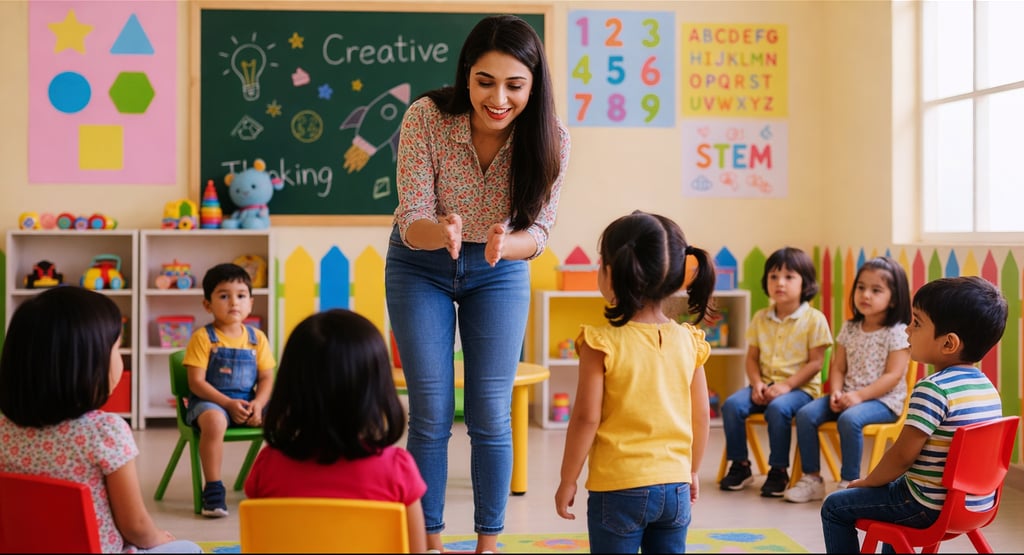
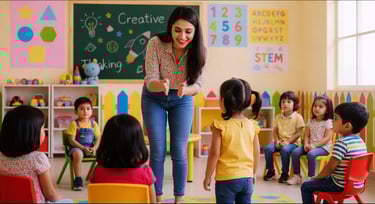
Education is no longer confined to chalkboards, textbooks, and fixed lesson plans. Classrooms today are dynamic ecosystems shaped by technology, emotional complexity, diverse learners, and rapid change. In this evolving landscape, mastering future-ready teaching skills for modern educators is not optional — it is essential.
Students are growing up in a world driven by artificial intelligence, digital collaboration, and constant innovation. If teaching methods remain static, learning becomes disconnected. Therefore, educators must upgrade not just their tools, but their mindset.
Let us explore the skills that define truly effective teaching in today’s era.
1. AI Literacy: Understanding, Not Resisting, Technology
Artificial Intelligence is transforming industries — and education is no exception. From personalized learning platforms to automated assessments, AI is already embedded in the learning ecosystem.
However, being future-ready does not mean becoming a programmer. It means:
Understanding how AI tools work
Using AI responsibly in lesson planning
Teaching students how to critically evaluate AI-generated information
Maintaining academic integrity in the age of ChatGPT and smart tools
Teachers who develop AI literacy position themselves as guides, not gatekeepers.
A key component of future-ready teaching skills for modern educators is knowing when to use technology and when human intervention matters more. Technology can personalize content, but it cannot replace empathy, encouragement, or moral guidance.
The teacher of tomorrow must combine technological confidence with human sensitivity.
2. Advanced Communication Skills: Beyond Giving Instructions
Communication in teaching has evolved. It is no longer about delivering information — it is about facilitating understanding.
Modern educators must master:
Active listening
Constructive feedback
Culturally sensitive communication
Conflict resolution
Digital communication etiquette
Students today are more expressive, more aware, and often more emotionally complex. Effective teaching requires clarity, tone awareness, and adaptability in communication style.
For example, a child struggling with attention issues requires a different communication approach than a high-performing but anxious student.
Among the core future-ready teaching skills for modern educators, communication stands at the center because it shapes trust, engagement, and classroom culture.
Without strong communication, even the best curriculum fails.
3. Emotional Intelligence: The Hidden Superpower
Modern classrooms are emotionally layered spaces. Students deal with social media pressure, family dynamics, comparison anxiety, and information overload.
Teachers must therefore develop:
Self-awareness
Emotional regulation
Empathy
Relationship-building skills
Awareness of student mental health signals
Emotional intelligence allows teachers to respond rather than react.
Consider this: When a student disrupts a class, the traditional response may focus on discipline. A future-ready educator pauses and asks — What is driving this behavior?
That shift changes outcomes dramatically.
The strongest future-ready teaching skills for modern educators are rooted in emotional intelligence because learning happens best where psychological safety exists.
4. Adaptability: Thriving in Uncertainty
If the pandemic taught education one lesson, it is this: rigidity fails.
From online classes to hybrid models to flipped classrooms, teachers have had to reinvent themselves rapidly. Adaptability is no longer a soft skill — it is a survival skill.
Adaptable educators:
Update lesson plans based on student response
Integrate new teaching tools quickly
Adjust strategies for diverse learning needs
Remain calm during sudden institutional changes
Adaptability is deeply connected to mindset. Teachers who view change as growth rather than threat consistently outperform those who resist innovation.
One cannot discuss future-ready teaching skills for modern educators without emphasizing flexibility as a core pillar.
The classroom of tomorrow will continue evolving — and so must the teacher.
5. Critical Thinking and Problem-Solving Facilitation
Students do not need more information — they need help processing it.
Modern educators must move from being information providers to learning facilitators. This includes:
Designing inquiry-based lessons
Encouraging debate and discussion
Teaching research verification skills
Challenging students to analyze rather than memorize
When teachers model critical thinking, students mirror it.
This transformation is central to future-ready teaching skills for modern educators, because the future workplace rewards thinkers, not passive learners.
Effective educators now ask:
Why do you think this is true?
What evidence supports this?
Can you see another perspective?
That shift cultivates lifelong learners.
6. Digital Pedagogy: Teaching in a Hybrid World
Digital competence goes beyond knowing how to use PowerPoint.
Future-ready educators must understand:
Online engagement strategies
Interactive digital tools
Virtual classroom management
Cyber safety awareness
Blended learning design
The ability to teach effectively both online and offline expands professional relevance.
Digital pedagogy strengthens future-ready teaching skills for modern educators by ensuring they remain effective across formats.
Education is no longer location-bound. Teachers must be comfortable teaching across screens and spaces.
7. Cultural Intelligence and Inclusivity
Modern classrooms are diverse — culturally, linguistically, and socially.
Teachers must cultivate:
Bias awareness
Inclusive lesson planning
Sensitivity to socioeconomic differences
Respect for varied learning abilities
Inclusive educators create environments where every child feels seen.
This dimension of future-ready teaching skills for modern educators ensures that classrooms reflect equity and belonging.
A teacher who understands diversity strengthens not just academic outcomes but social harmony.
8. Lifelong Learning Mindset
Perhaps the most important skill of all is this: the willingness to keep learning.
Future-ready educators:
Attend professional development programs
Stay updated with educational research
Experiment with new teaching models
Reflect on classroom practices
The most effective teachers do not assume mastery. They embrace growth.
In fact, continuous development is the foundation of future-ready teaching skills for modern educators, because education itself is constantly transforming.
A stagnant teacher cannot prepare students for a dynamic world.
The Bigger Picture: Teaching as Leadership
Teaching today is not just instruction — it is leadership.
Modern educators influence:
Digital behavior
Ethical reasoning
Emotional resilience
Career awareness
Social responsibility
When teachers upgrade their skills, they upgrade society.
Mastering AI, communication, emotional intelligence, and adaptability ensures educators remain relevant, respected, and impactful.
The future of teaching will not belong to those who simply complete syllabi. It will belong to those who inspire thinking, model resilience, and guide students through complexity.
And that begins with consciously developing future-ready teaching skills for modern educators.
Final Thoughts
The education system is evolving at an unprecedented pace. Technology will advance. Student psychology will shift. Curriculum demands will change.
But one truth remains constant: Teachers who combine human depth with technological awareness will always lead. At LevelUp Online Education, we believe teachers don’t just need certifications — they need clarity, confidence, and competence for tomorrow’s classrooms. Our programs are designed to help educators develop real-world skills in AI integration, communication, adaptability, and modern classroom leadership.
Northern Hills Supremus, A-306, Opp. Northern Heights, Dahisar East, Mumbai, Maharashtra 400068
LevelUp
admissions@leveluponline.in
© 2026. All rights reserved
levelup_online_education


LevelUp Online Education