
Future-Ready Teaching Skills Every Educator Needs Beyond Traditional Teacher Training
Discover the future-ready teaching skills educators need in modern classrooms that no traditional course teaches today. Learn how adaptability, emotional intelligence, creativity, digital fluency, and human-centered teaching are shaping the future of education.
TEACHER TRAINING
LevelUp Online Education
5/21/20264 min read
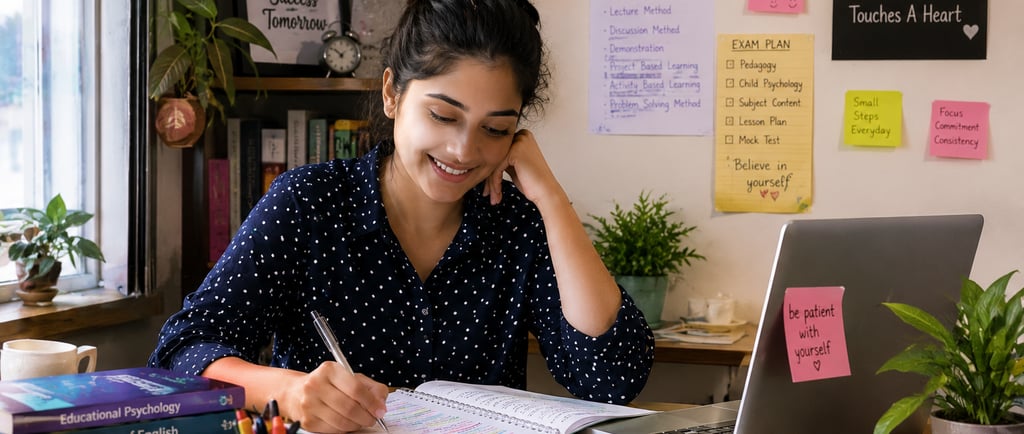

The world is changing faster than most classrooms can keep up with. Artificial Intelligence is writing essays, children are learning from YouTube before they learn from textbooks, attention spans are shrinking, and emotional struggles among students are rising rapidly. Yet many teacher training programs still focus heavily on lesson plans, classroom discipline, and theoretical pedagogy alone.
While these foundations are important, the truth is becoming increasingly clear: tomorrow’s educators will need far more than academic knowledge to survive and thrive in modern classrooms.
A teacher of the future is not just someone who delivers information. They are mentors, emotional anchors, technology navigators, creative thinkers, communicators, and lifelong learners. The most successful educators in the coming decade will possess future-ready teaching skills that cannot always be learned from textbooks or certification programs.
Let us explore the real-world abilities future teachers will need and why these skills matter more now than ever before.
1. Emotional Intelligence Will Matter More Than Subject Knowledge
Imagine a classroom where a child suddenly refuses to participate. Years ago, teachers may have labeled the child as “disobedient” or “lazy.” Today, educators are beginning to understand that behavior often reflects emotional struggles.
Many children now face anxiety, overstimulation, loneliness, parental pressure, and digital addiction from a very young age. Teachers who lack emotional awareness may struggle to connect with them.
This is why future-ready teaching skills must include emotional intelligence.
Teachers will need the ability to:
Understand emotional triggers in children
Handle classroom stress calmly
Build trust with students
Communicate with empathy
Create emotionally safe learning environments
In real classrooms, children remember how teachers made them feel far longer than what they taught academically.
A teacher who can emotionally support students during difficult moments will always have a stronger impact than one who only completes the syllabus.
2. Adaptability Will Become a Survival Skill
The pandemic taught the education industry one powerful lesson: teaching can change overnight.
Teachers who had never used digital tools suddenly had to conduct online classes, create virtual worksheets, manage Zoom fatigue, and communicate with parents digitally. Some adapted quickly, while others struggled immensely.
The future will continue bringing unexpected educational shifts. Hybrid classrooms, AI-assisted learning, virtual learning environments, and personalized education systems are already becoming normal.
This is why adaptability is among the most essential future-ready teaching skills educators must develop.
Future teachers must learn to:
Embrace technological changes
Shift teaching methods quickly
Customize lessons for different learning styles
Continue learning throughout their careers
Stay flexible instead of resisting change
The teachers who succeed in the future will not necessarily be the smartest. They will be the ones willing to evolve continuously.
3. Human Connection Will Become More Valuable in the AI Era
As Artificial Intelligence grows, information is becoming easier to access than ever before. Students can now ask AI tools to summarize chapters, solve equations, generate essays, or explain concepts instantly.
This raises an important question:
If machines can provide information, what becomes the teacher’s role?
The answer lies in human connection.
No AI can replace genuine encouragement, emotional warmth, ethical guidance, or the confidence a teacher builds in a child. In the future, education will become less about information delivery and more about meaningful mentorship.
Among the most important future-ready teaching skills will be:
Relationship building
Active listening
Motivation and encouragement
Storytelling and inspiration
Building classroom belonging
Students may forget textbook chapters, but they never forget teachers who believed in them.
4. Creativity Will Be More Important Than Memorization
Traditional education has rewarded students for memorizing answers. However, future workplaces are increasingly valuing creativity, innovation, and problem-solving instead.
This means teachers themselves must become creative thinkers.
Consider two classrooms:
In one classroom, students simply copy notes from the board.
In another classroom, children build models, role-play situations, solve real-world problems, and explore concepts through storytelling and activities.
Which classroom prepares children for the future?
Clearly, the second one.
Modern educators need future-ready teaching skills that encourage:
Creative lesson planning
Experiential learning
Curiosity-driven discussions
Critical thinking
Hands-on activities
Future classrooms will not reward teachers who only “finish portions.” They will reward those who inspire thinking.
5. Digital Fluency Will No Longer Be Optional
Many educators still see technology as an “extra skill.” In reality, it is becoming a basic teaching necessity.
Digital fluency does not simply mean knowing how to use PowerPoint presentations. It means understanding how technology affects learning, attention, communication, and child development.
Future educators must know how to:
Use digital learning platforms effectively
Identify harmful screen habits
Integrate technology meaningfully into lessons
Teach online safety and media literacy
Balance digital learning with human interaction
One of the most critical future-ready teaching skills today is knowing when technology should support learning — and when it should step aside.
Technology should enhance teaching, not replace genuine classroom experiences.
6. Teachers Will Need Entrepreneurial Thinking
An interesting shift is happening globally: many educators are no longer working only inside traditional schools.
Teachers are becoming:
Online educators
Learning consultants
Course creators
Education influencers
Skill trainers
Preschool entrepreneurs
This means educators increasingly need entrepreneurial thinking.
Future teachers must understand:
Personal branding
Communication skills
Online visibility
Value creation
Audience engagement
Continuous upskilling
These future-ready teaching skills help educators remain relevant in a highly competitive educational landscape.
The future teacher may not work in just one classroom. They may teach globally through digital platforms.
7. Cultural Sensitivity Will Shape Better Educators
Today’s classrooms are becoming increasingly diverse. Children come from different family structures, languages, emotional experiences, and learning abilities.
Future teachers cannot use a “one-size-fits-all” mindset anymore.
They must learn how to:
Respect diverse backgrounds
Avoid unconscious bias
Support neurodiverse learners
Create inclusive learning environments
Encourage respectful communication
A culturally sensitive teacher creates classrooms where every child feels seen and valued.
These inclusive approaches are becoming essential future-ready teaching skills in modern education systems worldwide.
8. Lifelong Learning Will Define Great Teachers
Perhaps the biggest lesson for future educators is this:
Teacher training never truly ends.
The most impactful teachers are not those who know everything. They are the ones willing to keep learning.
Education is evolving rapidly:
Child psychology research changes
Technology changes
Parenting styles change
Student behavior changes
Learning methods change
Teachers who stop learning eventually become disconnected from modern learners.
Future educators must regularly:
Attend workshops
Learn new tools
Read educational research
Observe changing student needs
Upgrade their communication methods
The strongest future-ready teaching skills come from continuous self-development and openness to growth.
Final Thoughts
The future classroom will look very different from today’s classroom. However, one thing will remain constant: children will always need compassionate, adaptable, inspiring educators.
Degrees and certifications may open doors, but real teaching success will depend on qualities that many courses still fail to teach — empathy, adaptability, creativity, emotional intelligence, digital awareness, and human connection.
The future does not need robotic teachers who simply complete lesson plans.
It needs educators who can prepare children for a world that is changing every single day.
Northern Hills Supremus, A-306, Opp. Northern Heights, Dahisar East, Mumbai, Maharashtra 400068
LevelUp
admissions@leveluponline.in
© 2026. All rights reserved


levelup_online_education



LevelUp Online Education