
Future preschool classrooms 2035: How technology, empathy, and flexible learning will shape early education
Discover how future preschool classrooms 2035 will transform learning through smart technology, emotional well-being, nature-based education, and inclusive teaching practices for young children.
PRESCHOOL MANAGEMENT
LevelUp Online Education
5/18/20265 min read
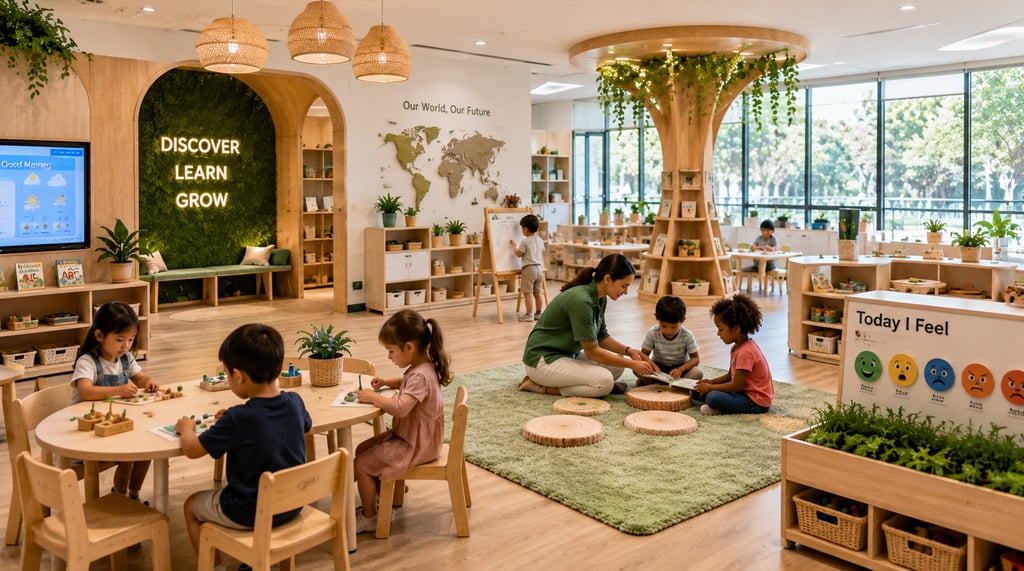
Walk into a preschool classroom today, and you may find colorful walls, alphabet charts, small chairs, toys, and children singing rhymes together. But what if we step into a preschool classroom in 2035? Will children still sit in rows? Will teachers still use whiteboards? Will learning remain the same?
The answer is both yes and no.
The heart of early childhood education will always remain human connection, emotional security, play, and curiosity. However, the way classrooms are designed, managed, and experienced is likely to change dramatically. The future preschool classrooms 2035 may become more flexible, emotionally intelligent, technologically integrated, and deeply personalized to each child’s needs.
Instead of classrooms being just places to “teach,” they may become spaces that help children think, feel, create, explore, and connect with the world around them.
Let us explore what this future may realistically look like.
Learning Spaces Will Become Flexible Instead of Fixed
One of the biggest changes in the future preschool classrooms 2035 will be the physical setup of the classroom itself.
Today, many classrooms still follow a fixed structure where children sit at assigned tables for most activities. In 2035, classrooms may become highly flexible environments that can change according to the learning activity.
For example:
A storytelling session may transform the room into a cozy forest-themed corner with soft lighting and floor seating.
A science exploration activity may include movable tables, sensory walls, and interactive projection floors.
Quiet children may choose calm sensory zones for independent work.
Active learners may use movement-based learning stations.
The focus will shift from “controlling children” to designing environments that naturally support different learning styles.
Real-world research already shows that children learn better when they can move freely, interact physically with materials, and feel emotionally comfortable in their surroundings. Future classrooms will likely apply these findings more intentionally.
Technology Will Support Learning, Not Replace Teachers
Many people imagine robotic teachers and fully digital classrooms when they think about the future. However, the reality of the future preschool classrooms 2035 may be more balanced.
Technology will probably act as a supportive tool rather than replacing human educators.
For instance:
Smart screens may help children interact with animated stories.
AI-based learning tools may track a child’s interests and developmental progress.
Speech-recognition systems may help teachers identify language delays early.
Augmented reality could allow children to “visit” oceans, farms, or space without leaving the classroom.
Imagine a preschool lesson about butterflies where children wear lightweight AR glasses and observe a butterfly lifecycle happening around them in 3D. Such experiences can make learning immersive and memorable.
However, technology alone cannot comfort a crying child, build trust, or teach empathy. Teachers will remain emotionally central to the classroom experience.
In fact, in the future preschool classrooms 2035, teachers may become even more important because emotional intelligence and human connection will be valued more in an increasingly digital world.
Emotional Well-Being Will Become a Core Subject
In today’s fast-moving world, anxiety, overstimulation, and emotional stress are affecting children earlier than ever before. By 2035, emotional development may become just as important as academic readiness.
Future preschool classrooms may include:
Calm-down corners
Emotional expression walls
Mindfulness activities
Breathing exercises
Daily emotional check-ins
Children may learn how to identify feelings like frustration, sadness, excitement, and fear through interactive games and guided conversations.
A teacher may begin the day by asking children to select emotion cards that describe how they feel. This small practice can help children develop self-awareness from an early age.
The future preschool classrooms 2035 may recognize that emotionally secure children are more capable of learning, communicating, and building healthy relationships.
Instead of asking only, “What did the child learn today?” educators may also ask, “How did the child feel today?”
Nature-Based Learning Will Return Strongly
Ironically, as technology grows, many schools may begin reconnecting children with nature more intentionally.
Experts are already noticing that excessive screen exposure and indoor lifestyles can reduce attention span, creativity, and sensory development in young children. As a result, the future preschool classrooms 2035 may integrate nature into daily learning experiences.
Future classrooms may include:
Indoor gardens
Natural lighting and ventilation
Outdoor classrooms
Mud kitchens
Sensory nature trails
Farming and planting activities
Instead of learning about plants only from books, children may grow vegetables themselves. Instead of watching videos about rain, they may observe weather changes outdoors.
This shift may help children become calmer, more environmentally responsible, and more connected to real-world experiences.
Classrooms Will Become More Inclusive Than Ever
Another important transformation in the future preschool classrooms 2035 will be inclusion.
Future classrooms may be designed to support children with diverse learning needs, sensory sensitivities, languages, and developmental differences without separating them from others.
For example:
Noise-sensitive children may use sound-controlled headphones.
Children with speech delays may access visual communication tools.
Learning materials may be available in multiple languages.
Furniture may be adapted for physical accessibility.
Instead of labeling children as “slow” or “difficult,” educators may focus on understanding how each child learns best.
This shift can create classrooms where every child feels respected and emotionally safe.
Real-world educational trends already show growing awareness about neurodiversity and inclusive education. By 2035, these practices may become standard rather than optional.
Parents and Teachers Will Work More Closely Together
In the future preschool classrooms 2035, communication between schools and parents may become more transparent and collaborative.
Parents may receive:
Real-time learning updates
Emotional development observations
Digital portfolios of children’s work
Personalized activity suggestions for home learning
However, this does not mean parents will constantly monitor children through surveillance systems. Ethical concerns around privacy and child development will likely shape how technology is used.
The goal will be partnership rather than pressure.
For example, if a child shows interest in music during classroom activities, teachers may suggest simple music-based activities parents can continue at home. This creates consistency in learning without forcing academic pressure on young children.
Creativity and Problem-Solving Will Matter More Than Memorization
The future workplace will demand creativity, adaptability, collaboration, and emotional intelligence. Therefore, preschool education in 2035 may focus less on memorization and more on thinking skills.
Children may spend more time:
Building
Experimenting
Asking questions
Solving real-life problems
Creating projects in groups
Instead of memorizing facts, children may learn through exploration.
For instance, a teacher may ask:
“How can we build a bridge strong enough for toy animals?”
Children may test materials, fail, rebuild, and discover solutions together. Such experiences develop resilience and critical thinking naturally.
The future preschool classrooms 2035 may understand that mistakes are not failures but important learning opportunities.
Teachers Will Need New Skills
As classrooms evolve, teachers will also need to evolve.
Future preschool educators may require skills in:
Emotional coaching
Technology integration
Inclusive education
Child psychology
Creative facilitation
Digital safety awareness
However, despite all technological advancements, one thing will remain timeless: children still need warmth, patience, and encouragement.
No machine can replace the reassuring smile of a caring teacher who makes a child feel seen and valued.
Conclusion
The preschool classrooms of 2035 may look very different from what we see today. They may include smart technologies, flexible learning spaces, emotional wellness programs, and nature-based experiences. Yet, at the center of all these changes will remain one powerful truth: young children learn best when they feel safe, curious, respected, and loved.
The future preschool classrooms 2035 will not simply prepare children for exams. They may prepare them for life itself — teaching them how to think independently, care for others, adapt to change, and remain connected to the human side of learning.
Northern Hills Supremus, A-306, Opp. Northern Heights, Dahisar East, Mumbai, Maharashtra 400068
LevelUp
admissions@leveluponline.in
© 2026. All rights reserved


levelup_online_education




LevelUp Online Education