Early Childhood Educators: Why Children Need Educators, Not Babysitters in Their Early Years
Discover why Early Childhood Educators play a vital role in a child's development. Learn how trained educators shape learning, behavior, confidence, and future success during the early years.
EARLY CHILDHOOD & CARE EDUCATION
LevelUp Online Education
6/23/20264 min read
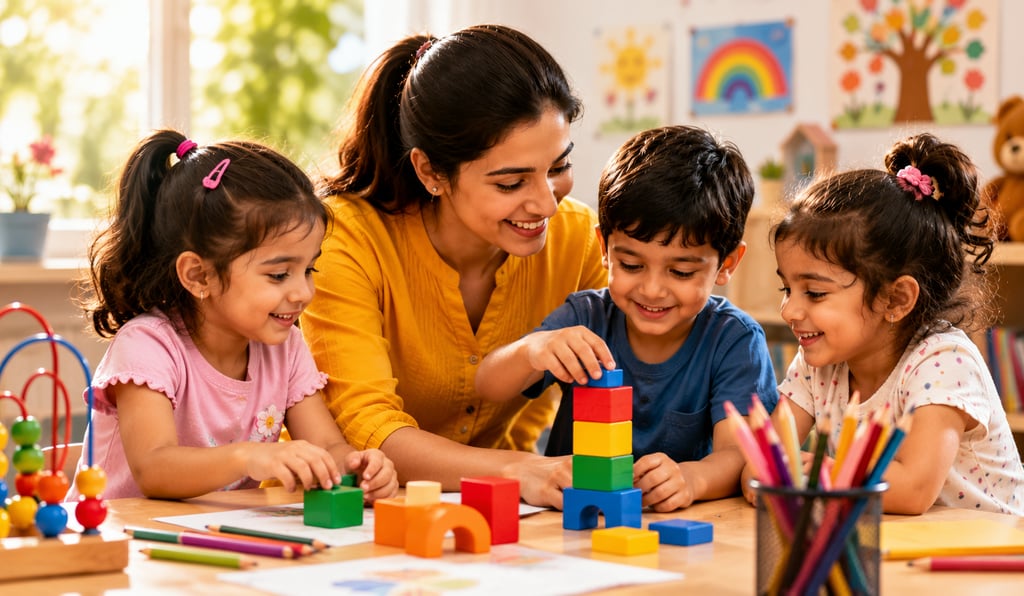

The first few years of a child's life are among the most important. During this period, children develop language, emotional intelligence, social skills, problem-solving abilities, and the foundations of lifelong learning. Yet many people still assume that caring for young children is simply about keeping them safe, fed, and occupied.
This misunderstanding often leads to an important question: Do children need babysitters, or do they need educators?
The answer is clear. While care and safety are essential, children thrive when they are guided by Early Childhood Educators who understand how young minds learn and grow. These professionals do much more than supervise children. They intentionally create experiences that shape development, confidence, curiosity, and future success.
For both parents and teachers, understanding this distinction is critical.
The Difference Between Care and Education
A babysitter's primary role is supervision. Their focus is often on ensuring that children are safe and occupied while parents are away.
An educator, on the other hand, focuses on development. Every interaction, activity, story, song, and conversation becomes an opportunity for learning.
When a child builds blocks, an educator encourages problem-solving.
When children play together, an educator supports communication and emotional regulation.
When a child asks questions, an educator turns curiosity into learning.
This intentional approach is what makes Early Childhood Educators so valuable during the formative years.
Why the Early Years Matter So Much
Research consistently shows that a child's brain develops more rapidly during the first five years than at any other stage of life. Neural connections form at an extraordinary rate, influenced by experiences, relationships, language exposure, and environment.
This means that everyday interactions have long-term consequences.
Children are not simply growing physically. They are building the foundations for:
Language development
Emotional intelligence
Social skills
Creativity
Cognitive abilities
Self-confidence
Learning habits
Qualified Early Childhood Educators understand these developmental milestones and know how to nurture them through age-appropriate experiences.
Learning Happens Through Play
Many parents see children playing and assume they are simply having fun.
However, quality early childhood education recognizes play as a powerful learning tool.
When children engage in pretend play, they develop imagination, communication, and social skills.
When they sort objects by color or size, they build mathematical thinking.
When they listen to stories, they strengthen language comprehension and vocabulary.
Trained educators intentionally design these experiences to support development. This is one of the key reasons why Early Childhood Educators are far more than caregivers.
They transform ordinary moments into meaningful learning opportunities.
The Role of Educators in Building Emotional Security
Children learn best when they feel safe, valued, and understood.
Young children often struggle to express emotions. They may feel frustrated, anxious, excited, or overwhelmed without knowing how to communicate those feelings.
A skilled educator helps children identify emotions, manage conflicts, and develop healthy relationships.
These emotional skills are not extras. They are essential life skills that influence future academic performance, friendships, and mental well-being.
Experienced Early Childhood Educators understand that emotional development is just as important as academic learning.
What Parents Should Look For
When selecting a preschool, daycare, or learning center, parents often focus on facilities, fees, or location.
While these factors matter, one of the most important considerations should be the quality of educators.
Parents should ask:
Are the teachers trained in early childhood education?
Do they understand child development?
How do they support emotional growth?
What learning experiences do they provide daily?
How do they communicate with families?
The answers to these questions reveal whether a child is being supervised or truly educated.
The presence of qualified Early Childhood Educators can significantly influence a child's overall development and school readiness.
Why Professional Training Matters
Teaching young children requires specialized knowledge.
Educators need to understand:
Child psychology
Learning styles
Developmental milestones
Classroom management
Inclusive education practices
Language and literacy development
Observation and assessment techniques
Without proper training, even well-intentioned adults may miss opportunities to support children's growth.
Professional development programs and certification courses help educators gain the knowledge and confidence needed to make a meaningful impact.
This is why investing in training for Early Childhood Educators benefits not only teachers but also the children and families they serve.
The Growing Expectations from Early Years Teachers
Today's parents expect more than supervision.
They want environments where children learn communication skills, develop confidence, explore creativity, and build strong foundations for future education.
As expectations continue to evolve, educators must continuously update their skills and knowledge.
Modern early childhood classrooms require teachers who can balance care, education, technology integration, emotional support, and family engagement.
This growing responsibility highlights the importance of preparing and supporting Early Childhood Educators through high-quality training programs.
How Educators and Parents Can Work Together
Children achieve the best outcomes when educators and parents work as partners.
Parents know their child best.
Educators understand learning and development.
When both collaborate, children receive consistent support across home and school environments.
Regular communication, shared goals, and mutual respect create a strong foundation for growth.
Parents should view educators not as service providers but as professional partners in their child's development journey.
Likewise, educators should recognize the valuable role families play in reinforcing learning beyond the classroom.
The Future Starts in the Early Years
The early years are not a waiting period before "real education" begins.
They are the beginning of education.
The experiences children have during this stage shape their attitudes toward learning, relationships, confidence, and problem-solving for years to come.
When society views early education as mere childcare, children miss valuable opportunities for growth. When society recognizes the expertise of trained educators, children benefit from rich learning experiences that prepare them for life.
The question is no longer whether children need supervision.
The real question is whether we are providing them with the educational support they deserve.
The answer lies in recognizing the essential role of Early Childhood Educators. They do far more than watch children. They inspire curiosity, build confidence, nurture development, and help shape the future one child at a time.
For parents, choosing qualified educators is one of the most important decisions they can make. For teachers, investing in professional growth is one of the most meaningful ways to create lasting impact.
Because children do not simply need someone to care for them. They need someone who knows how to help them grow.
Northern Hills Supremus, A-306, Opp. Northern Heights, Dahisar East, Mumbai, Maharashtra 400068
LevelUp
admissions@leveluponline.in
© 2026. All rights reserved
levelup_online_education



LevelUp Online Education