Classroom Training Course for Teachers: Why Practical Teaching Skills Matter
Discover why a classroom training course for teachers is essential for early educators today. Learn how hands-on training builds confidence, classroom control, and child-centered teaching skills.
CLASSROOM TRAINING FOR TEACHERS
LevelUp Online Education
1/29/20264 min read
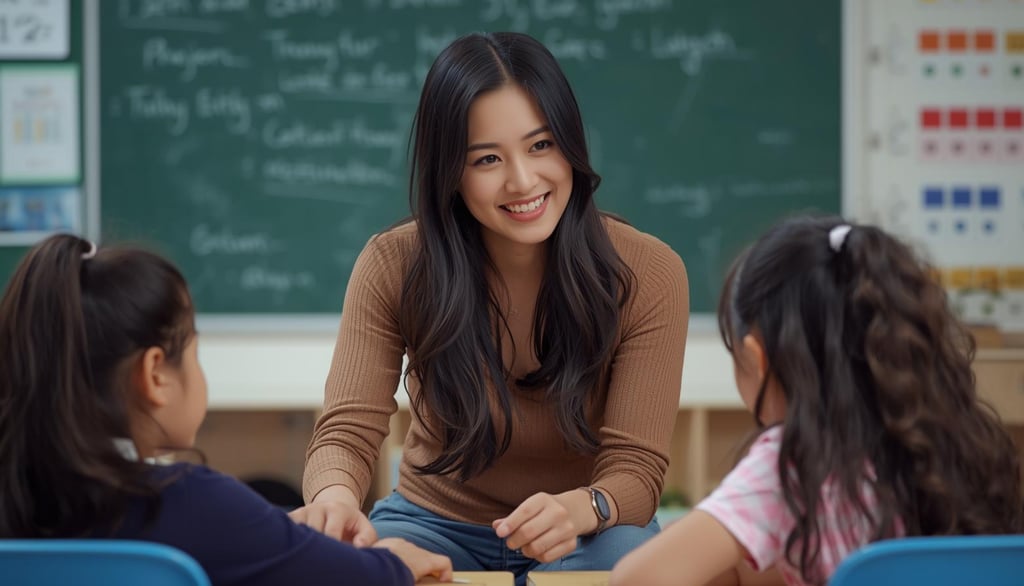
Teaching young children is often spoken about as a “natural skill.” Many people believe that patience, love for children, and basic training are enough to manage a preschool or kindergarten classroom. However, anyone who has actually stood in front of twenty young learners knows the truth: teaching is complex, demanding, and deeply human work.
Early childhood classrooms today are very different from what they were even a decade ago. Children come with diverse emotional needs, shorter attention spans, exposure to screens, and varying levels of social readiness. At the same time, teachers are expected to manage learning outcomes, behaviour, parents’ expectations, safety, and documentation — all at once. This is why a classroom training course for teachers is no longer optional; it is essential.
The Gap Between Theory and the Real Classroom
Most teacher education programs focus heavily on theory. Educators learn about child development stages, teaching philosophies, and learning outcomes. While this knowledge is important, it often leaves teachers unprepared for real classroom situations.
What happens when:
A child refuses to separate from a parent every morning?
Two children have repeated conflicts during free play?
A lesson plan completely fails within five minutes?
A parent questions your classroom decisions?
These situations cannot be solved through textbooks alone. They require practice, observation, reflection, and guided correction. A well-designed classroom training course for teachers bridges this gap by allowing educators to experience classroom realities in a safe, supported environment before facing them alone.
Teaching Is a Skill That Must Be Practiced
Just like medicine, music, or sports, teaching improves through structured practice. Knowing what to do is different from knowing how to do it calmly, consistently, and confidently.
Practical classroom training helps teachers:
Use their voice effectively without shouting
Read children’s body language and emotional cues
Transition smoothly between activities
Handle disruptions without escalating them
These skills are rarely developed through lectures. They are learned by doing, making mistakes, and receiving feedback. This is where immersive training becomes valuable — it treats teaching as a lived skill, not just an academic subject.
Understanding Children Beyond Behaviour
Many classroom challenges are labelled as “discipline problems.” In reality, they are often communication problems. Young children express unmet needs through behaviour because they lack emotional vocabulary.
A strong classroom training course for teachers helps educators understand:
Why children have tantrums even when routines are in place
How attachment and emotional security affect learning
The link between sensory needs and restlessness
How stress impacts memory and attention
When teachers understand the why behind behaviour, their responses change. Instead of reacting, they begin responding thoughtfully. This reduces classroom stress for both children and teachers.
Inclusive Classrooms Are Now the Norm
Today’s classrooms are diverse. Children may be neurodivergent, multilingual, emotionally sensitive, or developmentally uneven. Inclusion is no longer a special category; it is everyday teaching.
However, inclusion requires skill, not just intention. Teachers need to know how to:
Adapt activities without singling out children
Use differentiated instructions naturally
Build routines that support all learners
Create emotionally safe environments
Without proper training, teachers may feel overwhelmed or inadequate. A classroom training course for teachers prepares educators to see differences as part of learning, not as obstacles.
The Physical Environment Shapes Learning
Classroom setup is often underestimated. Furniture placement, learning corners, sensory materials, and visual clutter all affect how children behave and engage.
Hands-on training allows teachers to:
Design play spaces that encourage independence
Reduce chaos through thoughtful organisation
Understand safety, hygiene, and movement flow
Use nature and tactile materials meaningfully
These are practical decisions made daily in real classrooms. Training that includes environment design helps teachers work with the space, not against it.
Technology Needs Intention, Not Excess
Children today grow up surrounded by screens. The role of the teacher is not to reject technology entirely, but to use it thoughtfully.
Practical training helps educators learn:
When technology adds value and when it distracts
How to document learning through digital portfolios
How to balance screen exposure with hands-on play
How to introduce early STEAM concepts meaningfully
This kind of clarity only comes when teachers are guided through real examples, not trends.
Building Professional Confidence and Identity
Many early educators struggle with confidence. They may know their subject but hesitate when speaking to parents, managing assistants, or asserting classroom boundaries.
A classroom training course for teachers focuses on:
Classroom presence and authority without fear
Clear communication with families
Ethical decision-making
Professional self-respect
When teachers feel confident, classrooms feel calmer. Children sense stability, and learning becomes smoother.
From Surviving to Teaching Well
Without proper preparation, many teachers operate in survival mode — managing day to day, feeling exhausted, and doubting themselves. Over time, this leads to burnout.
Practical training shifts teachers from:
Reacting → Responding
Managing chaos → Designing structure
Guessing → Understanding
This transformation is not dramatic, but it is powerful. Teachers begin to enjoy teaching again.
Career Growth Comes From Skill, Not Just Experience
Experience alone does not guarantee growth. Skill does. Teachers who invest in structured training are better prepared for leadership roles such as:
Lead teacher
Program coordinator
Academic head
Trainer or mentor
A classroom training course for teachers builds a strong foundation that supports long-term career development without rushing educators into roles they are not ready for.
Why This Matters Now
Children today need emotionally aware, grounded, and skilled teachers more than ever. Early education shapes how children view learning, relationships, and themselves.
Courses that focus on real classrooms, real children, and real challenges help teachers grow in ways that matter. They do not promise perfection. They build competence, clarity, and confidence.
Northern Hills Supremus, A-306, Opp. Northern Heights, Dahisar East, Mumbai, Maharashtra 400068
LevelUp
admissions@leveluponline.in
© 2026. All rights reserved


levelup_online_education




LevelUp Online Education