
Classroom Design and Behaviour in ECCE: How Space Influences Discipline Naturally
Discover how classroom design and behaviour in ECCE are deeply connected. Learn how thoughtful classroom spaces influence discipline, emotional regulation, focus, and positive learning experiences in young children.
ECCE
LevelUp Online Education
5/15/20265 min read
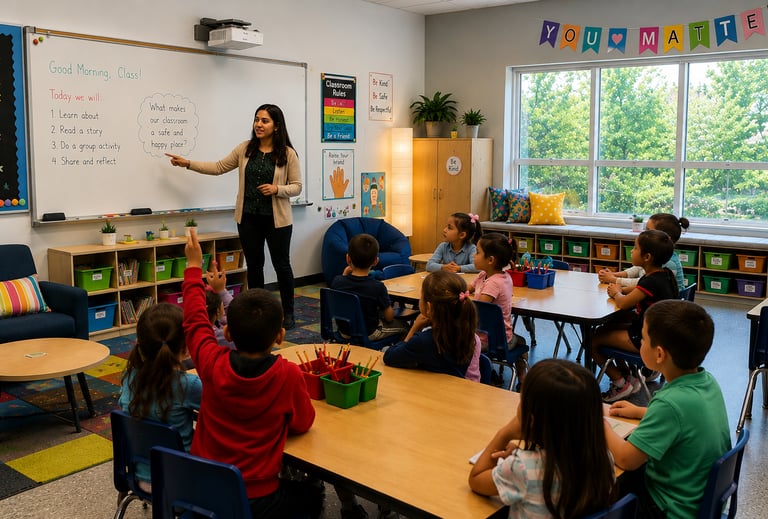
Walk into any preschool classroom, and before a single word is spoken, the environment already communicates something to the child. A brightly lit reading corner may invite calmness. A crowded, noisy classroom may create restlessness. A well-organized activity area may encourage independence, while a chaotic arrangement may lead to confusion and behavioural struggles.
In early childhood education, discipline is often viewed only through rules, routines, or teacher intervention. However, one of the most overlooked influences on children’s behaviour is the physical classroom itself. Young children are deeply affected by what they see, hear, touch, and experience around them every day. Their environment shapes how safe they feel, how they interact with others, and even how they regulate emotions.
This is why understanding classroom design and behaviour in ECCE is becoming increasingly important for educators and parents alike. A thoughtfully designed classroom does not simply look beautiful; it actively supports emotional balance, cooperation, focus, and positive behaviour.
Why Classroom Space Matters More Than We Think
Adults often underestimate how intensely children respond to their surroundings. A preschool child’s brain is still developing the ability to filter noise, manage impulses, and organize thoughts. Unlike adults, young children cannot easily ignore environmental stressors.
Imagine a classroom where toys are piled together without clear organization, movement spaces are cramped, and loud visuals cover every wall. In such settings, children may become overstimulated. This overstimulation often appears as behavioural issues such as shouting, aggression, inability to focus, or emotional meltdowns.
On the other hand, a classroom that provides structure, movement freedom, calm zones, and predictable layouts creates emotional security. Children feel more in control of their environment, which naturally reduces disruptive behaviour.
This connection between classroom design and behaviour in ECCE is not theoretical alone. Teachers across the world notice that when classroom spaces are redesigned thoughtfully, discipline problems often decrease without strict punishment.
The Psychology Behind Space and Discipline
Children experience spaces emotionally. Every element in a classroom sends psychological signals.
Open Spaces Encourage Calm Movement
When children have enough room to move safely, they feel less frustrated. Crowded classrooms often increase pushing, conflicts, and hyperactivity because children struggle to navigate physically.
For example, in many urban preschools where classrooms are small, teachers frequently report increased arguments during transition time. Simply rearranging furniture to create smoother walking paths can significantly reduce collisions and frustration.
Defined Learning Areas Create Predictability
Children feel secure when they understand where activities happen.
A classroom with clearly defined sections for reading, art, pretend play, sensory work, and group learning helps children mentally prepare for expected behaviour in each zone.
A reading corner naturally encourages quieter voices. A dramatic play area allows expressive interaction. A sensory station gives children opportunities to release energy constructively.
This is one of the strongest examples of how classroom design and behaviour in ECCE directly influence discipline in subtle but powerful ways.
The Role of Calm Corners in Emotional Regulation
Many modern ECCE classrooms now include “calm corners” or emotional regulation spaces. These are not punishment areas. Instead, they provide children with a safe place to calm themselves when overwhelmed.
A calm corner may include:
Soft cushions
Emotional expression charts
Sensory toys
Picture books
Gentle lighting
Breathing prompts
In real classrooms, teachers often observe that children gradually begin using these spaces independently. Instead of reacting aggressively or crying uncontrollably, children learn to recognize their emotions and self-regulate.
This approach changes discipline from external control to internal emotional understanding.
When educators understand classroom design and behaviour in ECCE, they begin seeing discipline not as “controlling children” but as supporting emotional development.
Noise Levels and Behavioural Impact
Noise is one of the biggest hidden stressors in early childhood classrooms.
Young children are highly sensitive to sound. Constant loud noise can increase irritability, reduce concentration, and trigger impulsive behaviour.
Teachers sometimes believe children are “misbehaving,” when in reality, the environment itself is dysregulating them.
Real-world observations show that classrooms with soft furnishings, carpets, curtains, and acoustic materials tend to have calmer children compared to spaces with constant echo and harsh sound reflection.
Even small changes matter:
Lowering background music
Using soft voice cues
Adding fabric elements
Reducing unnecessary visual clutter
These adjustments create a calmer sensory atmosphere and positively influence behaviour.
Lighting and Emotional Well-Being
Lighting also affects children’s behaviour more than many educators realize.
Harsh fluorescent lighting can sometimes contribute to headaches, irritability, or sensory discomfort, especially for neurodivergent children.
Natural lighting, warm tones, and balanced brightness often create a calmer emotional environment.
Many ECCE centres that redesign classrooms using natural light report noticeable improvements in children’s attention span and emotional stability.
The relationship between classroom design and behaviour in ECCE becomes especially visible when environmental stressors are minimized.
Classroom Ownership and Responsibility
Children behave more responsibly when they feel ownership over their space.
A classroom that includes children’s artwork, labeled shelves, child-height furniture, and accessible materials communicates trust and belonging.
For example, when children can independently return materials to clearly marked spaces, they gradually develop responsibility without repeated adult reminders.
This is very different from classrooms where adults control every movement and children constantly hear instructions like:
“Don’t touch that.”
“Sit properly.”
“Stop making a mess.”
In well-designed classrooms, the environment itself guides behaviour naturally.
This is another important reason why classroom design and behaviour in ECCE should be considered a central part of teacher training.
How Visual Clutter Affects Focus
Many classrooms are decorated with good intentions but become visually overwhelming.
Walls completely covered with posters, excessive colours, and crowded displays may overstimulate young learners.
Research and classroom observations increasingly show that simplified visual environments help children focus better.
This does not mean classrooms should feel empty or dull. Instead, displays should be meaningful, organized, and purposeful.
For example:
Rotating displays seasonally
Displaying children’s own work
Keeping learning aids at eye level
Maintaining clean visual balance
Children are more likely to stay attentive and emotionally regulated in spaces that feel calm rather than chaotic.
The Teacher’s Position in the Classroom
Classroom design is not only about furniture or decoration. It also includes how teachers position themselves.
When teachers can easily move around the classroom, maintain eye contact, and access all learning zones, classroom management improves naturally.
A teacher constantly blocked by furniture or unable to observe children properly may struggle with behaviour management.
In effective ECCE classrooms, educators intentionally design spaces that allow supervision without making children feel controlled.
This balance supports independence while maintaining safety.
Real Discipline Begins with Emotional Safety
One of the biggest misconceptions in education is that discipline comes mainly from strictness.
In reality, young children behave better when they feel emotionally safe, physically comfortable, and mentally regulated.
A child who feels overwhelmed by noise, crowding, confusion, or sensory overload is more likely to display behavioural challenges.
This is why conversations around classroom design and behaviour in ECCE are so essential today. Behaviour cannot be separated from environment.
When educators focus only on correcting behaviour without examining classroom conditions, they may miss the real cause behind children’s struggles.
Building Classrooms That Support Positive Behaviour
Creating behaviour-friendly classrooms does not always require expensive renovations. Even small intentional changes can make a meaningful difference.
Educators can start by asking:
Does the classroom feel emotionally safe?
Are movement pathways clear?
Is there space for quiet regulation?
Are materials accessible and organized?
Is sensory stimulation balanced?
Do children feel ownership in the space?
These questions shift discipline from punishment toward prevention.
The future of ECCE lies not in controlling children more strictly, but in understanding them more deeply.
Conclusion
A classroom is never just a physical room. For young children, it becomes an emotional world that shapes how they think, behave, interact, and learn.
When environments are chaotic, overstimulating, or restrictive, children often communicate their discomfort through behaviour. But when classrooms are thoughtfully designed with emotional and developmental needs in mind, discipline becomes more natural, respectful, and effective.
Understanding classroom design and behaviour in ECCE helps educators move beyond surface-level behaviour management and create learning spaces where children genuinely thrive.
Northern Hills Supremus, A-306, Opp. Northern Heights, Dahisar East, Mumbai, Maharashtra 400068
LevelUp
admissions@leveluponline.in
© 2026. All rights reserved


levelup_online_education




LevelUp Online Education