
Child Refuses to Speak in Class? Effective Strategies for Teachers | LevelUp Online Education
Discover why a child refuses to speak in class and learn practical, research-backed strategies for teachers and parents. Improve classroom communication with LevelUp Online Education insights.
ECCE
LevelUp Online Education
5/6/20263 min read
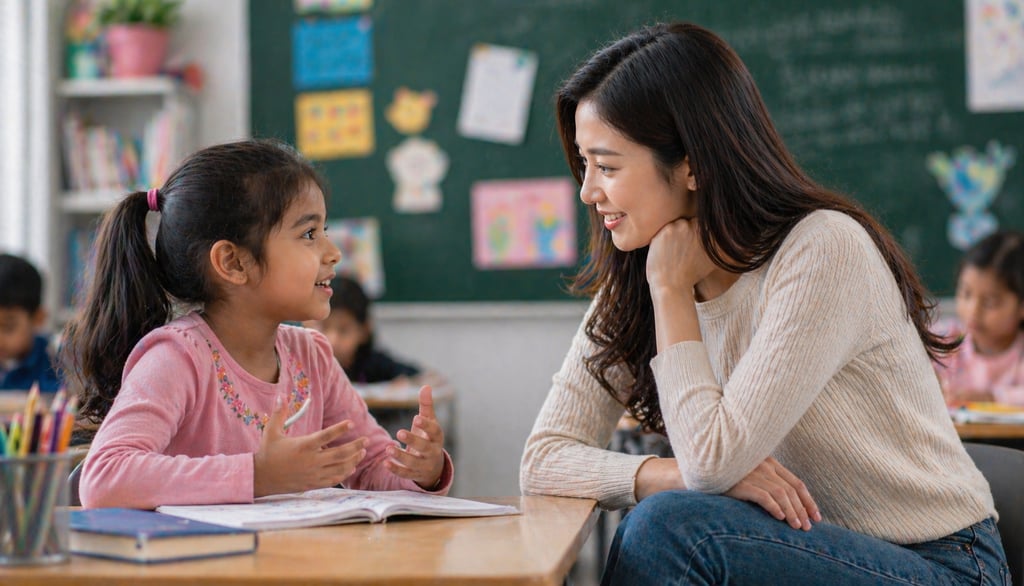
What to Do When a Child Refuses to Speak in Class
It can be puzzling, even concerning, when a child refuses to speak in class. In a space designed for interaction, expression, and participation, silence can feel like a barrier—not just for teachers, but for the child’s learning journey too.
However, silence is not always a problem—it’s often a message.
At LevelUp Online Education, we believe that understanding the why behind a child’s behavior is the first step toward meaningful teaching. When a child refuses to speak in class, it is rarely about defiance. More often, it reflects emotional, psychological, or developmental needs that require sensitive handling.
Let’s explore this deeply.
Understanding Why a Child Stays Silent
Before trying to “fix” the issue, we need to decode it. When a child refuses to speak in class, several underlying reasons may be at play.
1. Shyness or Introverted Personality
Some children are naturally reserved. They may prefer observing over speaking, especially in unfamiliar or group settings.
2. Fear of Judgment or Mistakes
Young children can be highly sensitive to criticism. If they fear being laughed at or corrected harshly, they may choose silence as a safe option.
3. Language Barriers
In multilingual classrooms, children may struggle to express themselves if the medium of instruction is not their first language.
4. Selective Mutism
In some cases, a child refuses to speak in class due to anxiety disorders like selective mutism—where they speak comfortably at home but not in school.
5. Lack of Emotional Safety
If the classroom environment feels intimidating or overly structured, children may withdraw instead of participating.
Why This Matters More Than We Think
When a child refuses to speak in class, it doesn’t just affect communication—it impacts learning, confidence, and social development.
Academic impact: Verbal participation reinforces understanding
Social impact: Limited interaction can affect friendships
Emotional impact: Silence can reinforce anxiety and self-doubt
Ignoring this behavior can unintentionally widen the gap between the child and the learning environment.
What Teachers Should NOT Do
Before we talk about solutions, let’s address a common mistake.
Forcing a child to speak can backfire.
Statements like:
“Why aren’t you talking?”
“Speak up right now.”
“Everyone else is answering, why not you?”
…can increase anxiety and make the child retreat further.
At LevelUp, we emphasize gentle facilitation over forced participation.
Effective Strategies to Support Silent Children
1. Build Emotional Safety First
Children speak where they feel safe.
Use warm body language
Maintain eye contact without pressure
Smile and acknowledge their presence
A child refuses to speak in class often because they don’t feel emotionally secure. Your first goal is to create that safety.
2. Start with Non-Verbal Communication
Speaking is not the only form of participation.
Encourage:
Nodding or pointing
Showing answers with flashcards
Drawing responses
This helps the child engage without the pressure of speaking immediately.
3. Use Small Group Interactions
Large groups can feel overwhelming.
Try:
Pair work
Small group discussions
Buddy systems
Children often open up in smaller, less intimidating settings.
4. Give Processing Time
Some children need more time to think and respond.
Instead of expecting instant answers:
Ask a question
Give 10–15 seconds
Revisit gently
When a child refuses to speak in class, it may simply mean they need more time—not more pressure.
5. Celebrate Small Wins
If the child whispers, nods, or attempts to speak—acknowledge it.
Avoid exaggerated praise, but gently reinforce:
“I liked how you tried today.”
“That was a great effort.”
Confidence grows in small steps.
6. Avoid Labeling the Child
Labels like “shy,” “quiet,” or “non-responsive” can become self-fulfilling.
Instead, focus on behavior—not identity.
7. Partner with Parents
Understanding the child’s behavior at home is crucial.
Ask:
Does the child speak freely at home?
Are there recent changes or stressors?
What motivates the child?
When a child refuses to speak in class but speaks at home, it may indicate situational anxiety rather than a developmental issue.
8. Incorporate Play-Based Learning
Children express more through play than formal instruction.
Use:
Role play
Storytelling
Puppet conversations
These methods reduce pressure and make communication feel natural.
When Should You Be Concerned?
While silence is often temporary, certain signs require attention:
The child never speaks in school but speaks normally elsewhere
Silence persists for months
Visible anxiety (freezing, avoiding eye contact, physical distress)
In such cases, professional evaluation may be needed.
The Role of Teacher Training in Handling Such Situations
This is where professional training makes a real difference.
At LevelUp Online Education: Teacher Training Centre, we train educators to:
Understand child psychology deeply
Identify behavioral patterns early
Use inclusive teaching strategies
Create emotionally responsive classrooms
Handling situations where a child refuses to speak in class is not about quick fixes—it’s about informed, empathetic teaching.
Creating Classrooms Where Every Child Feels Heard
Imagine a classroom where:
Silence is understood, not judged
Every child is given space to express
Communication is nurtured, not forced
That’s the goal.
When a child refuses to speak in class, it’s an opportunity—not a problem. It invites us to become better observers, more patient educators, and more compassionate humans.
Final Thoughts
Every child communicates—just not always in words.
The real question is not:
“Why is this child not speaking?”
But:
“What is this child trying to tell us through silence?”
When educators shift this perspective, classrooms transform.
Northern Hills Supremus, A-306, Opp. Northern Heights, Dahisar East, Mumbai, Maharashtra 400068
LevelUp
admissions@leveluponline.in
© 2026. All rights reserved


levelup_online_education




LevelUp Online Education