ChatGPT for Teachers: 15 Smart Ways to Save Time and Improve Teaching
Discover 15 practical ways to use ChatGPT for Teachers to save time, create engaging lessons, improve classroom communication, and enhance student learning outcomes. Learn expert strategies that deliver real results.
AI FOR TEACHERS
LevelUp Online Education
6/15/20264 min read
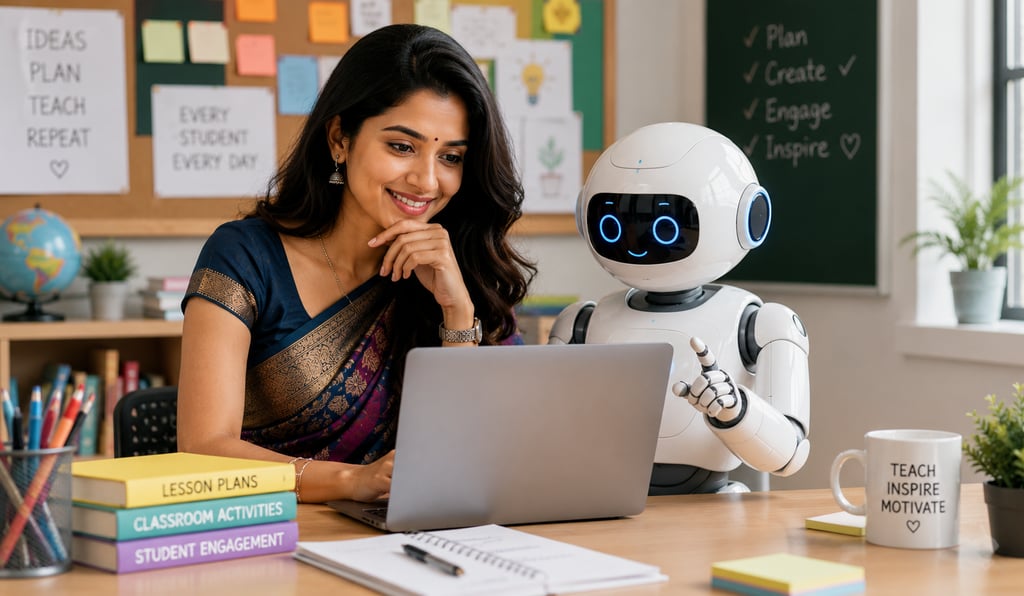

Teaching is one of the most rewarding professions, but it is also one of the most demanding. Between lesson planning, preparing worksheets, grading assignments, communicating with parents, and managing classroom activities, teachers often find themselves overwhelmed with administrative tasks. Fortunately, artificial intelligence is changing the way educators work, and one of the most powerful tools available today is ChatGPT.
When used correctly, ChatGPT for Teachers can become a virtual teaching assistant that helps educators save hours every week while improving the quality of instruction. However, simply using ChatGPT is not enough. The real value comes from knowing how to use it effectively.
In this guide, we'll explore 15 practical strategies that can help teachers achieve the best results and transform their daily teaching practices.
Why Teachers Should Use ChatGPT
Before exploring the strategies, it's important to understand that ChatGPT is not designed to replace teachers. Instead, it helps teachers become more productive by handling repetitive tasks and generating ideas quickly.
The key to success with ChatGPT for Teachers is providing clear instructions and using the tool strategically to support educational goals.
1. Create Detailed Lesson Plans in Minutes
Lesson planning often takes a significant amount of time. Instead of starting from scratch, teachers can ask ChatGPT to generate detailed lesson plans based on the subject, age group, learning objectives, and duration.
Best Practice:
Rather than asking:
"Create a lesson plan on plants."
Ask:
"Create a 40-minute lesson plan on plant life cycles for 5-year-old children, including activities, learning objectives, and assessment methods."
Result:
More structured and classroom-ready lesson plans.
2. Generate Creative Classroom Activities
Students learn better when lessons are interactive. ChatGPT can suggest games, hands-on activities, role-playing exercises, and collaborative learning tasks.
Best Practice:
Mention:
Student age
Learning objectives
Available classroom resources
Result:
Activities become more relevant and engaging for learners.
3. Design Age-Appropriate Worksheets
Creating worksheets can consume hours of preparation time.
Using ChatGPT for Teachers, educators can instantly generate:
Fill-in-the-blanks
Matching exercises
Comprehension questions
Vocabulary activities
Math practice sheets
Best Practice:
Specify the difficulty level and learning outcomes.
Result:
Customized worksheets that match student abilities.
4. Simplify Complex Concepts
Some topics can be difficult for young learners to understand.
Teachers can ask ChatGPT to explain concepts using:
Stories
Analogies
Real-life examples
Visual descriptions
Example:
"Explain photosynthesis to an 8-year-old using a story."
Result:
Better student comprehension and retention.
5. Create Assessment Questions Quickly
Assessments help measure learning progress, but creating quality questions takes time.
ChatGPT can generate:
Multiple-choice questions
Short-answer questions
True or false statements
Higher-order thinking questions
Best Practice:
Request questions across different difficulty levels.
Result:
Balanced assessments that evaluate understanding effectively.
6. Draft Professional Parent Communication
Parent communication is an important responsibility for educators.
Teachers can use ChatGPT to write:
Progress updates
Meeting invitations
Classroom newsletters
Event announcements
Best Practice:
Provide specific details and maintain a professional tone.
Result:
Clear and polished communication that strengthens parent relationships.
7. Personalize Learning Materials
Every classroom includes students with varying learning abilities.
One of the most powerful applications of ChatGPT for Teachers is differentiation.
Teachers can generate:
Simplified versions of lessons
Advanced extension activities
Additional practice exercises
Result:
Every student receives learning materials suited to their needs.
8. Develop Story-Based Learning Experiences
Children love stories, and storytelling enhances engagement.
Teachers can ask ChatGPT to create:
Educational stories
Character-based lessons
Moral stories
Subject-integrated narratives
Best Practice:
Include learning objectives within the prompt.
Result:
Students learn while remaining actively engaged.
9. Create Classroom Discussion Questions
Meaningful discussions encourage critical thinking.
ChatGPT can generate:
Open-ended questions
Reflection prompts
Debate topics
Problem-solving scenarios
Result:
Higher student participation and deeper understanding.
10. Save Time on Classroom Management Resources
Managing behavior and classroom routines requires preparation.
Teachers can use ChatGPT to create:
Classroom rules
Reward systems
Behavior tracking templates
Morning routines
Best Practice:
Describe classroom challenges specifically.
Result:
More organized and productive learning environments.
11. Generate Rubrics for Fair Assessment
Many teachers struggle with creating objective grading criteria.
ChatGPT can develop detailed rubrics for:
Projects
Presentations
Group activities
Creative assignments
Result:
Consistent and transparent evaluation processes.
12. Plan Engaging Educational Projects
Project-based learning encourages creativity and collaboration.
Using ChatGPT for Teachers, educators can quickly generate project ideas aligned with curriculum goals.
Example Prompt:
"Create a 2-week project on environmental awareness for Grade 4 students."
Result:
Well-structured projects with clear learning outcomes.
13. Prepare Teaching Resources for Special Events
Schools regularly celebrate:
Festivals
Awareness days
Cultural events
National holidays
ChatGPT can help create:
Activity plans
Speeches
Quiz questions
Interactive learning tasks
Result:
Reduced preparation time and more engaging celebrations.
14. Improve Professional Development
Teachers themselves are lifelong learners.
ChatGPT can assist educators by:
Summarizing research articles
Explaining educational theories
Suggesting teaching strategies
Providing classroom improvement ideas
Best Practice:
Ask for practical implementation examples.
Result:
Continuous professional growth and improved teaching effectiveness.
15. Use Better Prompts for Better Results
This is the most important strategy of all.
The quality of ChatGPT's output depends on the quality of the instructions provided.
Poor Prompt:
"Create a worksheet."
Effective Prompt:
"Create a Grade 2 English worksheet on nouns with 10 multiple-choice questions, 5 fill-in-the-blanks, and an answer key."
The more specific your prompt, the better the output.
Formula for Great Prompts:
Role + Topic + Grade Level + Learning Objective + Output Format
Example:
"Act as an experienced preschool teacher. Create a 30-minute activity plan to teach colors to 4-year-old children using hands-on learning."
Result:
Highly relevant and classroom-ready content.
Common Mistakes Teachers Should Avoid
While using ChatGPT for Teachers, avoid these common errors:
1. Copying Content Without Reviewing
Always verify accuracy and suitability before using materials in class.
2. Using Generic Prompts
Vague instructions produce generic results.
3. Ignoring Student Needs
Always adapt AI-generated content to your learners.
4. Over-Relying on AI
Remember that teacher expertise, creativity, and human connection remain irreplaceable.
Final Thoughts
Artificial intelligence is transforming education, and teachers who learn to use it effectively can significantly improve their productivity and classroom impact. The true power of ChatGPT for Teachers lies not in replacing educational expertise but in amplifying it.
By applying these 15 practical strategies, teachers can save valuable time, create higher-quality learning materials, communicate more effectively with parents, and provide more personalized learning experiences for students.
The educators who achieve the best results are not necessarily those who use AI the most—they are the ones who use it the smartest. Start with one or two strategies, refine your prompts, and gradually integrate AI into your workflow.
As you gain experience, you'll discover that ChatGPT for Teachers can become one of the most valuable tools in your teaching toolkit, helping you focus less on repetitive tasks and more on what truly matters: inspiring and educating young minds.
Northern Hills Supremus, A-306, Opp. Northern Heights, Dahisar East, Mumbai, Maharashtra 400068
LevelUp
admissions@leveluponline.in
© 2026. All rights reserved
levelup_online_education


LevelUp Online Education