Brain Development in Early Childhood: How Ages 2–6 Shape Lifelong Learning
Discover how brain development in early childhood (ages 2–6) shapes lifelong learning ability. Learn why these years are critical and how educators can maximize them.
ECCE
LevelUp Online Education
4/28/20263 min read
Introduction: The Window That Never Reopens
What if we told you that a child’s ability to learn, think, adapt, and succeed in life is largely shaped before they even turn six?
It may sound surprising, but neuroscience confirms that brain development in early childhood is one of the most critical phases of human growth. Between the ages of 2 and 6, a child’s brain is forming connections at a rate that will never be matched again in life.
At LevelUp Online Education, we believe that understanding this phase is not just important—it is transformational for educators, parents, and anyone involved in early childhood care.
Let’s explore why these years matter so deeply—and how they influence learning forever.
The Science Behind Early Brain Development
Between ages 2–6, the brain undergoes rapid growth. During this time:
Neural connections (synapses) are formed at lightning speed
The brain becomes highly responsive to experiences
Learning happens through interaction, play, and environment
This stage is often referred to as a “sensitive period” because the brain is especially open to learning new skills.
In fact, research shows that brain development in early childhood lays the foundation for:
Language acquisition
Emotional regulation
Problem-solving skills
Social understanding
What happens—or doesn’t happen—during these years has a lasting impact.
Why Ages 2–6 Are So Powerful
1. The Brain Is Highly Plastic
Neuroplasticity is at its peak during early childhood. This means:
Children can learn faster than adults
Experiences shape brain structure
Repetition strengthens learning pathways
Positive stimulation leads to strong neural connections, while lack of stimulation can weaken development.
This is why brain development in early childhood depends heavily on the quality of interactions children receive.
2. Language and Communication Explode
Between 2–6 years, children go from speaking simple words to forming full sentences and expressing complex thoughts.
This period is crucial because:
Vocabulary grows rapidly
Listening skills develop
Communication builds confidence
Children exposed to rich language environments develop stronger cognitive abilities later in life.
3. Emotional Intelligence Begins Here
Emotional regulation is not something children are born with—it is learned.
During this stage, children begin to:
Understand emotions
Build empathy
Manage frustration
Supportive environments help children develop resilience and self-control, both of which are essential for lifelong learning.
4. Social Skills Take Shape
Preschool years are where children learn how to:
Share and cooperate
Resolve conflicts
Build relationships
These skills directly influence classroom behavior and future academic success.
Again, brain development in early childhood plays a crucial role in shaping these abilities.
The Role of Environment: Why It Matters More Than You Think
A child’s brain does not develop in isolation—it develops through experiences.
Positive Influences Include:
Responsive caregivers
Play-based learning
Safe and stimulating environments
Encouragement and emotional support
Negative Influences Include:
Neglect or lack of interaction
Excessive screen time
High-stress environments
The difference between these environments can significantly alter how the brain develops.
Play: The Most Powerful Learning Tool
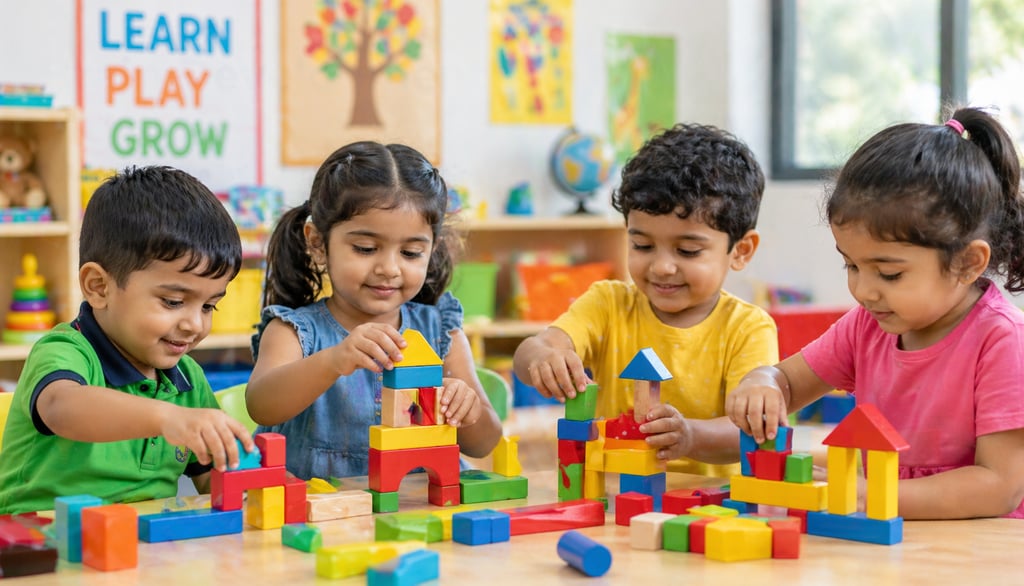
If there’s one thing educators and parents often underestimate, it’s the power of play.
Play is not just fun—it is how children learn best.
Through play, children develop:
Creativity
Problem-solving skills
Social interaction
Motor skills
At LevelUp Online Education, we emphasize play-based methodologies because they align perfectly with how brain development in early childhood naturally occurs.
How Early Experiences Shape Lifelong Learning
Let’s connect the dots.
Children who experience strong early development are more likely to:
Perform better academically
Have higher self-confidence
Adapt to challenges easily
Develop critical thinking skills
On the other hand, gaps during early years can lead to:
Learning difficulties
Behavioral challenges
Lower academic performance
This is why early education is not just preparation—it is the foundation.
The Educator’s Role: More Than Just Teaching
Early childhood educators are not just teachers—they are brain architects.
Their role includes:
Creating meaningful learning experiences
Encouraging curiosity
Building emotional safety
Observing and guiding development
At LevelUp Online Education, we train educators to understand the science behind brain development in early childhood so they can teach with purpose and impact.
Practical Strategies to Support Brain Development
Whether you are a parent or educator, here are some powerful ways to support children aged 2–6:
1. Talk More, Explain More
Engage in conversations, ask questions, and encourage expression.
2. Encourage Play-Based Learning
Use games, storytelling, and hands-on activities.
3. Provide Emotional Security
Children learn best when they feel safe and valued.
4. Limit Passive Screen Time
Focus on interactive and real-world experiences.
5. Encourage Exploration
Allow children to ask “why” and discover answers.
These small actions create big changes in how the brain develops.
Why This Matters for India’s Education Future
In a country like India, where early education is often overlooked or academically pressured, understanding brain development in early childhood is critical.
We must shift from:
Rote learning → Experiential learning
Pressure → Exploration
Instruction → Interaction
LevelUp Online Education is committed to empowering educators with modern teaching strategies that align with how children actually learn.
Conclusion: The Foundation of a Lifetime
The years between 2–6 are not just another phase—they are the blueprint of a child’s future.
Every word spoken, every interaction made, and every experience provided shapes how a child will think, learn, and grow for the rest of their life.
When we invest in brain development in early childhood, we are not just teaching children—we are shaping futures.
And that is a responsibility we cannot afford to overlook.
Final Thought from LevelUp
If you are an educator, parent, or aspiring teacher, understanding early brain development is your superpower.
Because when you understand the brain, you don’t just teach better—you transform lives.
Northern Hills Supremus, A-306, Opp. Northern Heights, Dahisar East, Mumbai, Maharashtra 400068
LevelUp
admissions@leveluponline.in
© 2026. All rights reserved


levelup_online_education




LevelUp Online Education