Best Techniques for Teaching Letter Sounds to Kindergarten Students for Strong Reading Foundations
Discover the best techniques for teaching letter sounds to kindergarten students using simple, creative, and effective phonics strategies that build strong reading foundations in early learners.
BEST TECHNIQUES TO TEACH LETTER SOUNDS TO KG KIDS
LevelUp Online Education
3/20/20264 min read
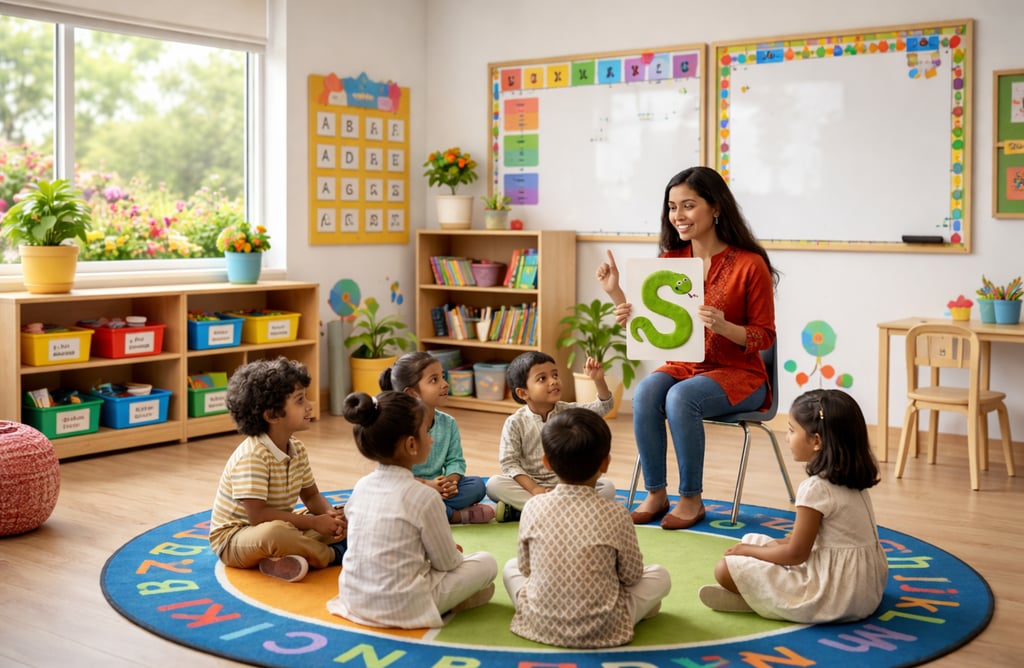
Early childhood is the most crucial stage for building literacy skills, and one of the first stepping stones in this journey is teaching letter sounds to kindergarten students. Before children begin reading words or sentences, they must understand the relationship between letters and their sounds. This foundational skill not only supports reading but also enhances spelling, pronunciation, and overall language development.
However, teaching letter sounds is not just about repetition—it requires creativity, engagement, and thoughtful strategies that make learning meaningful and memorable for young minds. When taught effectively, children don’t just memorize sounds—they internalize them for life.
Let’s explore some of the best and most practical techniques that teachers can use to make this process both effective and enjoyable.
Why Letter Sounds Matter in Early Learning
Before diving into techniques, it is important to understand why teaching letter sounds to kindergarten students holds such significance.
Letter sounds form the basis of phonemic awareness, which is the ability to hear, identify, and manipulate sounds in words. Without this skill, children may struggle with decoding words, leading to reading difficulties later on.
A strong grasp of letter sounds helps children:
Recognize patterns in words
Blend sounds to read new words
Develop confidence in reading independently
Improve spelling and pronunciation
This is why the approach to teaching must be intentional, engaging, and developmentally appropriate.
1. Use Multi-Sensory Learning Techniques
Young children learn best when multiple senses are involved. Instead of relying only on visual or auditory methods, combine touch, movement, and sound.
How to apply:
Let children trace letters in sand or clay
Use air writing while saying the sound aloud
Encourage body movements for each sound
For example, while teaching the sound “S,” children can move their hands like a snake and say “ssss.”
This approach makes teaching letter sounds to kindergarten students more interactive and helps children retain information longer because they are physically involved in the learning process.
2. Incorporate Songs and Rhymes
Music has a powerful impact on memory. Children naturally remember rhythms, tunes, and repetitive patterns.
How to apply:
Use phonics songs for each letter
Create simple rhymes linking letters to sounds
Repeat songs daily for reinforcement
For instance, a catchy tune for “A says aaaa as in apple” can stay in a child’s mind far longer than plain instruction.
This technique transforms teaching letter sounds to kindergarten students into a joyful experience rather than a structured lesson.
3. Connect Sounds with Real-Life Objects
Children understand better when they can relate learning to their everyday environment.
How to apply:
Show real objects or pictures (Apple for A, Ball for B)
Encourage children to bring objects from home
Create a “sound corner” in the classroom
This method strengthens associations and ensures that teaching letter sounds to kindergarten students is meaningful and context-based rather than abstract.
4. Use Play-Based Learning Activities
Play is the natural language of children. When learning feels like play, engagement increases significantly.
How to apply:
Sound matching games (match letter to picture)
Flashcard treasure hunts
Letter-sound bingo
Through play, children practice without pressure, making teaching letter sounds to kindergarten students both effective and stress-free.
5. Introduce Sounds Before Letter Names
One common mistake teachers make is focusing on letter names first. However, sounds are more important for reading.
How to apply:
Teach the sound first (“mmm”) before saying “this is M”
Use consistent sound pronunciation
Avoid adding extra sounds (say “b” not “buh”)
This approach ensures clarity and prevents confusion, making teaching letter sounds to kindergarten students more aligned with how reading actually works.
6. Story-Based Learning for Deeper Connection
Stories capture attention and imagination, making them a powerful teaching tool.
How to apply:
Create short stories around each letter sound
Use characters that represent sounds
Encourage children to repeat sounds during storytelling
For example, a story about a “Bouncy Bear” who loves saying “b-b-b” can make learning memorable.
Storytelling adds emotional connection, enhancing the effectiveness of teaching letter sounds to kindergarten students.
7. Repetition with Variation
Repetition is essential, but it should never be boring. Children need repeated exposure to sounds in different formats.
How to apply:
Rotate between songs, games, worksheets, and storytelling
Revise previously learned sounds daily
Use quick recap activities
Consistent and varied repetition ensures that teaching letter sounds to kindergarten students leads to long-term retention rather than temporary recall.
8. Focus on Listening and Sound Discrimination
Before children can produce sounds, they must be able to hear and differentiate them.
How to apply:
Play sound identification games
Ask children to identify beginning sounds in words
Use activities like “What sound do you hear?”
This strengthens phonemic awareness, making teaching letter sounds to kindergarten students more effective at a foundational level.
9. Keep Sessions Short and Engaging
Kindergarten students have limited attention spans. Long sessions can lead to disengagement.
How to apply:
Limit activities to 10–15 minutes
Include movement breaks
Use quick transitions between tasks
Short, focused sessions make teaching letter sounds to kindergarten students more impactful and enjoyable.
10. Encourage Practice Through Daily Integration
Learning should not be limited to one specific session—it should be part of daily routines.
How to apply:
Ask children to identify sounds in everyday conversations
Label classroom objects with sounds
Encourage parents to reinforce sounds at home
When learning becomes part of everyday life, teaching letter sounds to kindergarten students becomes natural and continuous.
Final Thoughts
The goal of teaching letter sounds to kindergarten students is not just to help them recognize sounds, but to build a strong and confident foundation for reading. When children understand letter sounds deeply, they are better equipped to decode words, comprehend texts, and develop a lifelong love for reading.
The key lies in making learning:
Interactive
Meaningful
Consistent
Enjoyable
By using creative, simple, and child-friendly techniques, teachers can transform what might seem like a basic skill into a powerful learning experience.
Because at the end of the day, it’s not just about teaching sounds—it’s about shaping confident readers for life.
Northern Hills Supremus, A-306, Opp. Northern Heights, Dahisar East, Mumbai, Maharashtra 400068
LevelUp
admissions@leveluponline.in
© 2026. All rights reserved
levelup_online_education




LevelUp Online Education