30 Fun Learning Activities for 3–5 Year Old | Boost Early Brain Development
Discover 30 fun learning activities for 3–5 year olds that boost early brain development. These creative cognitive, sensory, language, and motor skill activities help children learn through play at home or in preschool.
FUN LEARNING ACTIVITIES FOR 3-5 YRS OLD
LevelUp Online Education
3/10/20265 min read
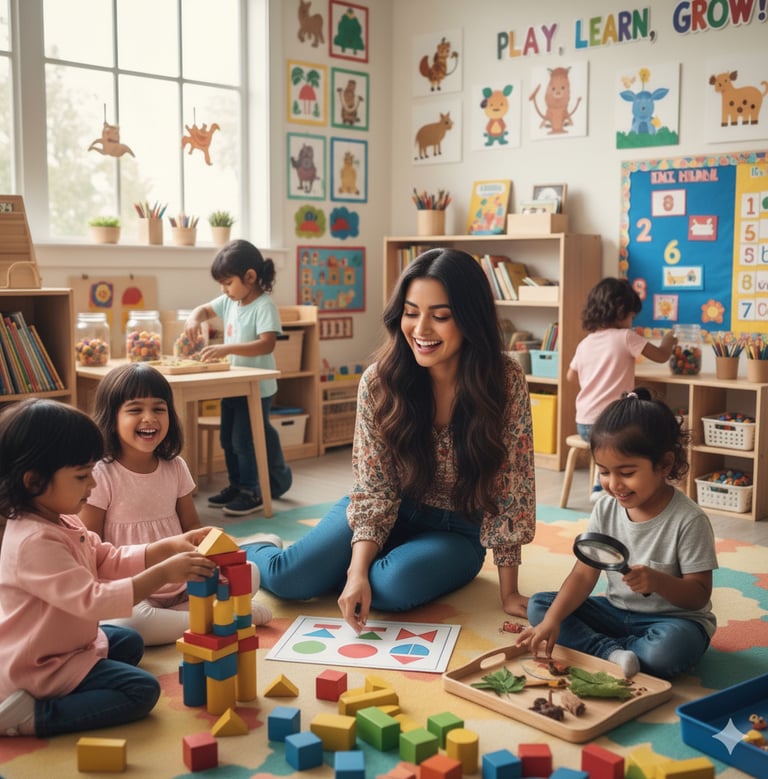
The years between three and five are some of the most important for a child’s brain development. During this stage, children are naturally curious, energetic, and eager to explore the world around them. Every question they ask, every object they touch, and every game they play contributes to building new neural connections in the brain.
This is why parents and educators often search for fun learning activities for 3–5 year olds that combine play with meaningful learning experiences. At this age, learning should never feel like a classroom lesson. Instead, it should happen through hands-on exploration, movement, creativity, and conversation.
Well-planned fun learning activities for 3–5 year olds allow children to develop essential cognitive skills, strengthen their language abilities, build creativity, and improve physical coordination. By introducing a variety of playful experiences, adults can ensure that children discover something new every time they learn.
The following 30 activities are organized into five developmental categories that support balanced early childhood learning.
Cognitive Activities
Cognitive activities help children develop thinking, reasoning, and early problem-solving abilities. These fun learning activities for 3–5 year olds encourage observation, memory, and logical thinking.
1. Sorting Treasure Basket
Provide children with a basket filled with different everyday objects such as buttons, stones, leaves, shells, and small toys. Ask them to sort the objects based on color, size, shape, or texture. For example, they may place all round objects together or group items by color.
This activity helps children understand classification and pattern recognition while strengthening their ability to notice similarities and differences.
2. Pattern Block Challenge
Give children colored blocks or shapes and demonstrate a simple pattern such as red-blue-red-blue. Encourage them to continue the pattern or create their own.
Pattern recognition strengthens mathematical thinking and helps children understand sequences and logical relationships.
3. “What’s Missing?” Memory Game
Place five or six objects on a tray and allow children to observe them carefully. Ask them to close their eyes while you remove one object. When they open their eyes, they must identify which object is missing.
This simple game improves observation skills, memory, and concentration.
4. Puzzle Exploration
Offer age-appropriate puzzles with large pieces. Encourage children to explore how shapes fit together and guide them with questions rather than giving direct answers.
Puzzles strengthen spatial awareness, patience, and problem-solving skills.
5. Number Treasure Hunt
Hide number cards around the room and invite children to find them in order from one to ten. As they discover each number, ask them to count objects around them that match that number.
This activity introduces early numeracy in a playful way.
6. Simple Science Observation
Give children magnifying glasses and natural materials such as leaves, flowers, or shells. Encourage them to observe patterns, shapes, and textures.
These observation-based fun learning activities for 3–5 year olds nurture curiosity and early scientific thinking.
Sensory Activities
Sensory play allows children to explore the world through touch, smell, sight, and sound. Sensory-based fun learning activities for 3–5 year olds strengthen brain connections and improve focus.
7. Sensory Bin Exploration
Fill a container with rice, beans, or sand and hide small toys inside. Children dig through the materials to find hidden objects.
This activity enhances tactile awareness and concentration.
8. Water Transfer Station
Provide cups, spoons, funnels, and containers filled with water. Children experiment with pouring water between containers.
This develops coordination, patience, and problem-solving skills.
9. Texture Walk
Create a path using different materials such as cotton, bubble wrap, fabric, grass, or pebbles. Children walk barefoot and describe how each texture feels.
This encourages sensory awareness and vocabulary development.
10. Scent Guessing Game
Place different scents in small containers, such as cinnamon, lemon, mint, or coffee. Ask children to smell each one and guess what it is.
This activity strengthens memory and sensory discrimination.
11. Sound Matching Game
Fill pairs of containers with materials like rice, beads, or stones. Children shake them and try to match the sounds.
Listening skills and auditory recognition develop through this activity.
12. Ice Discovery Activity
Freeze small toys inside ice cubes. Give children warm water or salt to help melt the ice and free the toys.
This exciting activity introduces basic science concepts such as melting and temperature.
Language Development Activities
Language skills grow rapidly during preschool years. Carefully designed fun learning activities for 3–5 year olds can help children expand vocabulary and express ideas clearly.
13. Story Basket
Place objects related to a familiar story inside a basket. Children pick items and retell the story using the objects as prompts.
This improves storytelling skills and comprehension.
14. Puppet Conversations
Provide simple puppets and encourage children to create conversations between them.
Puppet play helps children practice dialogue and emotional expression.
15. Picture Description Game
Show children pictures from books or magazines and ask them to describe what they see.
This strengthens vocabulary and observation.
16. Rhyming Word Game
Introduce simple rhymes such as cat–hat or sun–fun. Encourage children to think of more rhyming words.
Rhyming improves phonological awareness, which is essential for reading.
17. Alphabet Treasure Hunt
Hide alphabet cards around the room and ask children to identify the letters they find.
This activity introduces early literacy concepts.
18. Question Circle
Sit in a circle and allow children to ask questions about objects or pictures.
This encourages curiosity and communication skills.
Creativity and Imagination Activities
Creative play allows children to explore ideas and express emotions freely. Imaginative fun learning activities for 3–5 year olds nurture innovation and confidence.
19. Story Creation Game
Provide picture cards and encourage children to create their own stories using them.
This strengthens imagination and narrative thinking.
20. Dramatic Play Corner
Set up a pretend play area with costumes and props such as toy kitchen sets or doctor kits.
Children learn social roles and problem-solving through pretend play.
21. Build-a-City with Blocks
Children use blocks to design buildings, roads, and parks.
This activity promotes spatial awareness and creativity.
22. Shadow Storytelling
Using a flashlight and toys, children create shadow stories on a wall.
This activity combines storytelling with visual creativity.
23. Music and Movement
Play music and encourage children to dance, clap, or invent movements.
Music supports rhythm, coordination, and emotional expression.
24. Art from Nature
Children collect leaves, flowers, and sticks to create artwork.
Nature-based activities encourage creativity and environmental awareness.
Motor Skill Activities
Physical movement is essential for healthy development. Active fun learning activities for 3–5 year olds strengthen muscles and coordination.
25. Obstacle Course Adventure
Create a simple obstacle course using cushions, tunnels, and chairs. Children crawl, jump, and balance their way through.
This builds confidence and physical coordination.
26. Balloon Volleyball
Children gently tap balloons back and forth.
This activity improves hand-eye coordination.
27. Threading Beads
Children thread beads onto strings to create patterns.
This strengthens fine motor control and finger muscles.
28. Jumping Number Game
Place numbers on the floor and ask children to jump on them in order.
This combines movement with early math learning.
29. Animal Movement Game
Children imitate animal movements such as hopping like frogs or crawling like bears.
This builds body awareness and imagination.
30. Play Dough Sculpting
Children shape play dough into animals, objects, or letters.
This activity improves finger strength and creativity.
Planning Meaningful Learning Experiences
Parents and teachers do not need expensive materials to create meaningful learning opportunities. Rotating different fun learning activities for 3–5 year olds throughout the week ensures children experience a variety of skills and challenges.
When planning activities, adults should encourage exploration, ask open-ended questions, and allow children to experiment freely. Learning becomes more powerful when children feel curious and confident.
Conclusion
Early childhood learning should always be joyful, playful, and meaningful. The fun learning activities for 3–5 year olds described above help children develop cognitive abilities, sensory awareness, language skills, creativity, and motor coordination.
Northern Hills Supremus, A-306, Opp. Northern Heights, Dahisar East, Mumbai, Maharashtra 400068
LevelUp
admissions@leveluponline.in
© 2026. All rights reserved
levelup_online_education


LevelUp Online Education